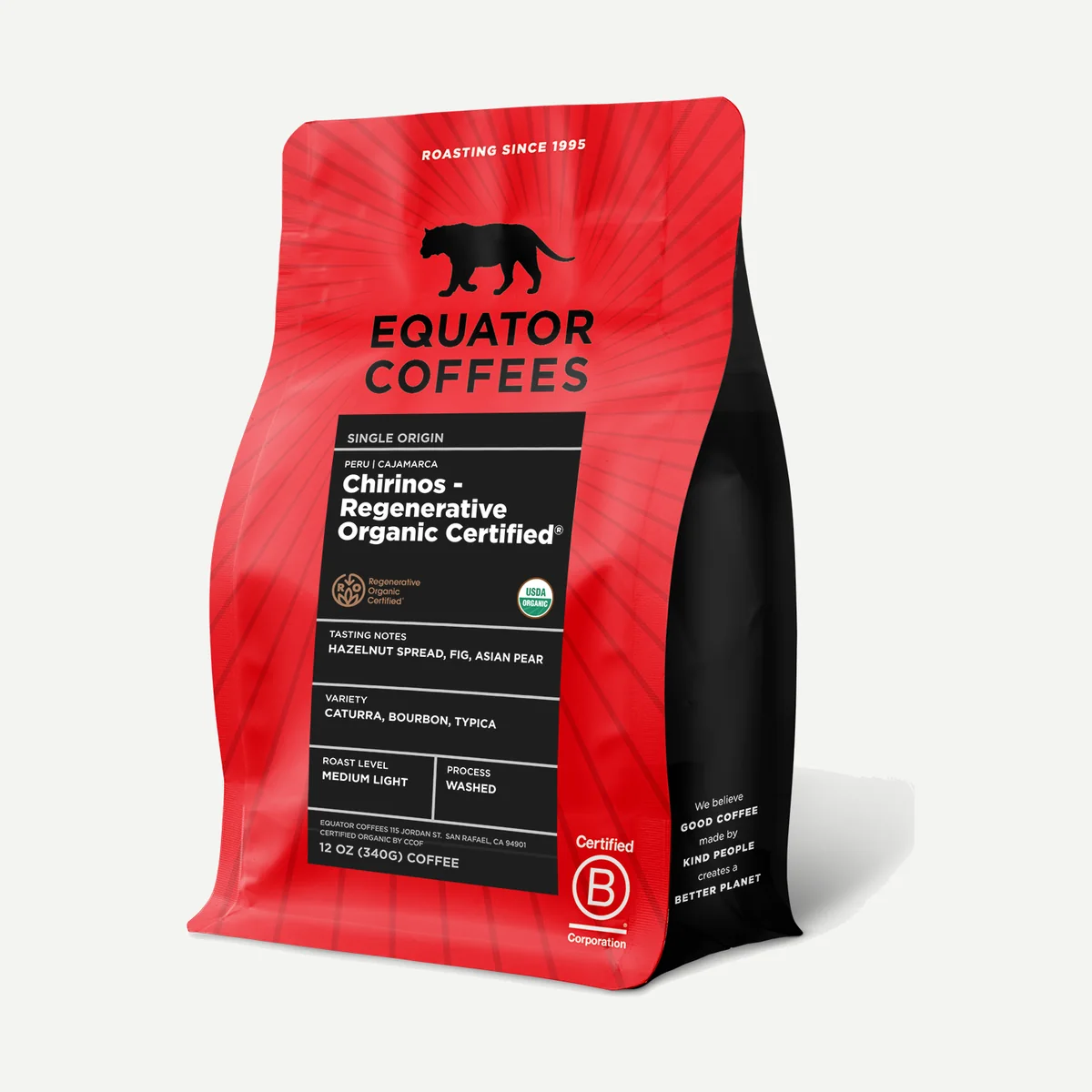
What is Equator Jaguar Espresso?
A dark, certified espresso blend that its roaster calls its all-time bestseller.
Equator describes Jaguar as a new world approach to a traditional style espresso: sweet enough to taste great on its own, with enough richness and intensity to stand up to milk. It is roasted dark, and the tasting notes Equator gives are bittersweet chocolate, baking spices, apricot and hazelnut. The bag carries the USDA Organic seal, certified by CCOF, and the Fair Trade mark.
It is sold whole bean, or ground coarse for French press, medium for drip and pour over, or fine for espresso, in 12 oz, 2 lb and 5 lb bags. It sits on the Equator Coffees roaster page with the rest of the range.
What is in the blend
Three coffees, and Equator names every one of them.
| Component | Producer | Varieties | Altitude | Process |
|---|---|---|---|---|
| Honduras, Marcala, La Paz | COMUCAP, a women-led co-op | Bourbon, Catuai, Caturra, Pacas, Typica | 4,000 to 5,900 ft (1,219 to 1,798 m) | Washed |
| Honduras, Marcala, La Paz | APROCOMSA | Bourbon, Catuai, Caturra, Lempira, Ihcafe 90, Pacas, Typica | 4,200 to 5,500 ft (1,280 to 1,676 m) | Natural |
| Sumatra, Aceh | PT. Ihtiyeri Keti Ara | Bourbon, Catimor, Typica | 4,900 to 5,200 ft (1,494 to 1,585 m) | Wet hulled |
Equator explains what each one does. The washed COMUCAP coffee lays the foundation, adding clarity and clean sweetness. The natural from APROCOMSA brings fruit and a creamy texture. The wet-hulled Sumatra adds body and earthy depth. That is the classic logic of an espresso blend: a clean base, a fruity accent, and weight from Indonesia to carry milk.
Very few roasters publish this much. Most espresso blends say a region or two and stop. If knowing who grew your coffee matters to you, this is the level of detail to look for.
Roasted to order in San Rafael
Equator's freshness claim is roasting to order. It does not publish a roast date on the bag.
Equator says it roasts to order in small batches at its roastery at 115 Jordan Street, San Rafael, California, where it has roasted since 2003, and it has used energy efficient Loring roasters since 2007. Its own advice is to buy whole bean every week or two and brew within a week or two of opening the bag. What it does not publish is a roast date on the bag, at least not on the front of the bag it shows, so unlike a roaster that prints the date you cannot check how old a bag is when it arrives.
Price, and what a cup costs
Specialty prices, with a useful saving in the bigger bags.
| Bag | Price | Per kilo | Per cup (15 g) |
|---|---|---|---|
| 340 g (12 oz) | $19.50 | $57.32 | $0.86 |
| 907 g (2 lb) | $44.25 | $48.78 | $0.73 |
| 2.27 kg (5 lb) | $104.00 | $45.86 | $0.69 |
Shipping is free on orders of $50 or more, for one-off orders and subscriptions alike. Under $50 you pay the carrier rate at checkout, so three 12 oz bags or one 2 lb bag and a 12 oz bag is the cheapest way to order.
For espresso the per cup figure is closer to a double shot at 18 g, which Equator's own brew guide uses, so a 12 oz bag makes about 19 doubles.
Equator Jaguar vs Intelligentsia Organic Black Cat Espresso
Two organic espresso blends from specialty roasters, one dark, one medium.
The Intelligentsia Organic Black Cat Espresso is the closest rival here: also organic, $18.50 for 12 oz and $44.75 a kilo, roasted medium from Colombian and Ethiopian coffees with notes of caramel, honeydew and grape. It is the brighter, fruitier espresso, and a dollar cheaper per bag. Jaguar is darker and chocolate led, and it adds a Fair Trade certificate and bigger bags. For milk drinks, Jaguar; for espresso drunk straight, the Black Cat is the lighter choice.
How to brew Jaguar Espresso
Equator publishes recipes for three brewers, and all three suit a dark blend.
- Espresso: 18 g of coffee to 36 g of espresso, a 1:2 ratio, pulled for about 25 seconds.
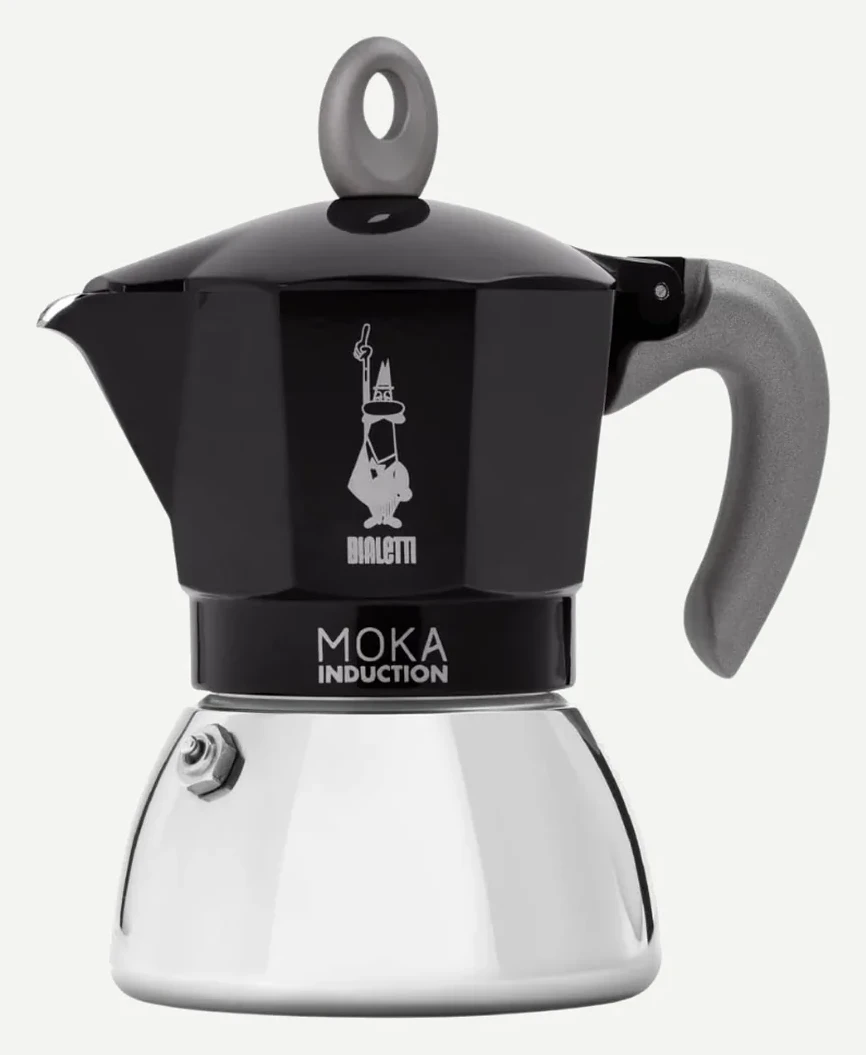
- Moka pot: 30 g of coffee to 300 g of water, 1:10, with the water heated to about 200F before it goes in.
- AeroPress: 18 g to 200 g, 1:11, with a 50 g bloom, the rest poured at 40 seconds, and a stir and plunge at two minutes.
A dark roast extracts easily, so if the shot tastes bitter or ashy, grind a little coarser or cut the shot shorter rather than finer. You need a grinder that can make small steps for espresso; our grinders for espresso list covers them. In a moka pot, Jaguar makes a strong, chocolatey cup that takes milk well, which is the closest thing to a cafe latte without a machine.
Is it worth it?
Yes, if you want a certified, fully traceable dark espresso for milk drinks.
You pay a little more than for the Intelligentsia, and for that you get two certifications, the most detailed sourcing of any espresso blend on this site and a roast built for lattes and cappuccinos. What you do not get is a date on the bag.
Who should buy it (and who should not)
Buy it if
- You make milk drinks and want an espresso that does not disappear in them.
- You want organic and Fair Trade, and to know which co-ops grew it.
- You like chocolate and spice more than bright fruit.
Skip it if
- You drink espresso black and like it bright; try Tigerwalk Espresso, Equator's medium roast.
- You want a roast date on every bag.
Frequently Asked Questions
Is Equator Jaguar Espresso organic?
Yes. The bag carries the USDA Organic seal, certified by CCOF, and the Fair Trade mark.
What does Jaguar Espresso taste like?
Equator lists bittersweet chocolate, baking spices, apricot and hazelnut, and roasts it dark.
Where is it from?
Two Honduran coffees from Marcala, La Paz, from COMUCAP and APROCOMSA, and a Sumatran coffee from Aceh.
Can I use it for drip coffee?
Yes. Equator sells it ground for French press and drip as well as espresso, and whole bean.
How do I brew it as espresso?
Equator's guide uses 18 g of coffee to 36 g of espresso, a 1:2 ratio, pulled for about 25 seconds.