What is Mocha Java?
The oldest named blend in coffee, rebuilt with three named producers.
Mocha Java began as a pairing of two ports: coffee shipped from Mocha, in Yemen, and coffee from the island of Java. The Yemeni coffee brought wild fruit and the Javanese coffee brought weight, and the two balanced each other. Few roasters use Yemeni and Javanese coffee today, so a modern Mocha Java keeps the idea rather than the ports: a fruity African coffee with a heavy Indonesian one. Equator Coffees calls its version an iconic union of Indonesian and East African coffees, and adds a third.
Equator roasts it medium and lists dark chocolate, almond and berry as the tasting notes. Its head roaster says the three coffees are processed three different ways, washed, natural and wet hulled, to put "the history of coffee in a cup". It is sold whole bean, or ground for French press, drip and pour over, or espresso.
What is in the blend
Three countries, three processes, and every producer named.
- Ethiopia, Odo Shakisso, Guji. A natural-process coffee from Kayon Mountain Estate, produced by Ismael Hassen Aredo from local heirloom varieties at 6,400 to 7,380 feet. Equator calls it the fruit-forward foundation of the blend.
- Guatemala, Huehuetenango. A washed coffee from Asociacion Civil Guaya'b, a cooperative of almost entirely indigenous producers, with Catuai, Caturra and Typica grown at 4,700 to 5,200 feet. Equator adds it for brightness and floral notes.
- Sumatra, Takengon, Aceh. A wet-hulled coffee from the women producers of the Koperasi Ketiara cooperative in the Gayo highlands, grown at 4,000 to 5,000 feet. Wet hulling is Sumatra's own process, and it is what gives Sumatran coffee its heavy body and earthy depth.
That is a rare amount of detail for a blend. Most Mocha Javas on supermarket shelves name two countries at most, and none name a farm.
How fresh it arrives
Roasted after you order, with the date on the bag.
Equator roasts to order in small batches at its roastery on Jordan Street in San Rafael, California, Monday to Friday, and says orders ship from the roastery in one to two business days. The bag carries a ROASTED ON date on the bottom, so you can see exactly how old the coffee is rather than trusting a best-before date set a year out. That is the single most useful thing a coffee bag can print, and most supermarket bags do not. Equator ships within the US only, free on orders of $50 or more.
What it costs
The 5 lb bag takes about a fifth off the price per cup.
| Bag | Price | Per kilo | Per cup (15 g) |
|---|---|---|---|
| 340 g (12 oz) | $20.00 | $58.82 | $0.88 |
| 907 g (2 lb) | $45.50 | $50.17 | $0.75 |
| 2.27 kg (5 lb) | $106.75 | $47.07 | $0.71 |
Per-cup figures assume 15 g of coffee to a cup. At $58.82 a kilo in the 12 oz bag, this is a little dearer than Equator Blend, at about $0.88 a cup; the 5 lb bag brings it to $47.07 a kilo. The certificates account for part of the gap: Equator Blend carries neither Fair Trade nor Organic. Only buy the big bag if you will finish it while it is fresh, or freeze what you will not use in the first month; our guide to storing coffee beans covers how.
How to brew it
A versatile medium roast that holds up to milk.
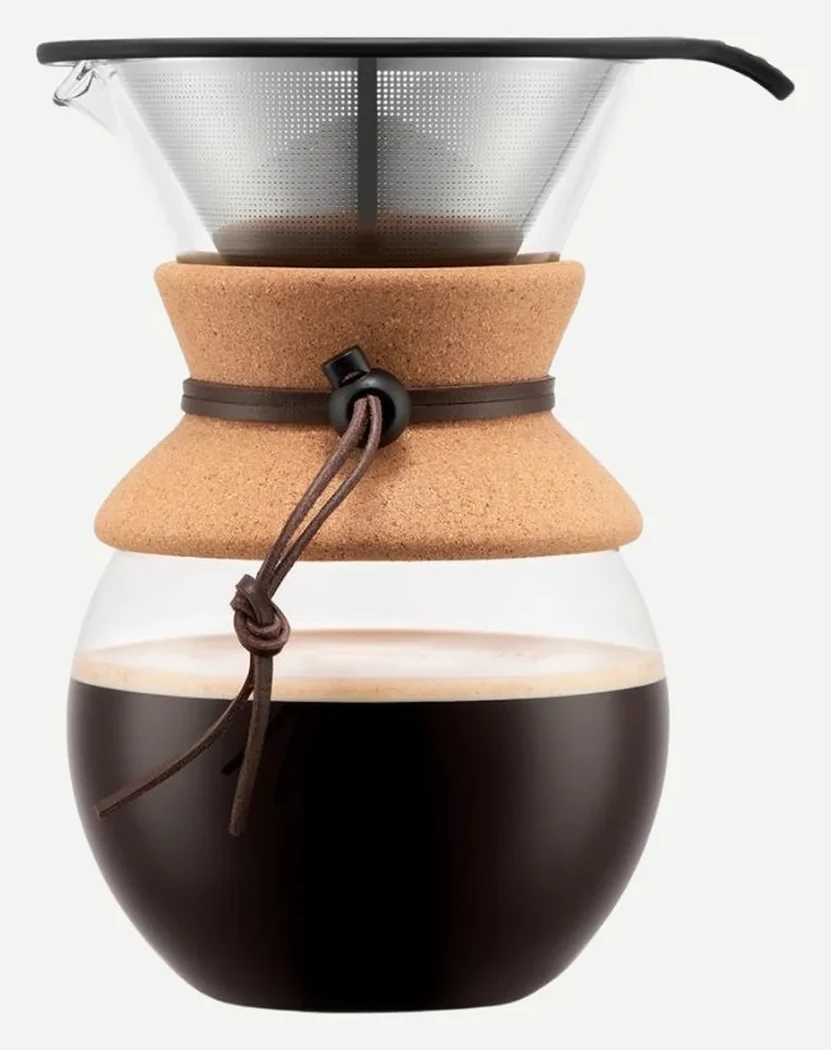
Equator gives three recipes on the page. For a Chemex, 45 g of coffee to 720 g of water, a 1:16 ratio, bloomed with 90 g and poured in three stages. For a French press, 45 g to 675 g, steeped four minutes. For cold brew in a Hario Mizudashi, 100 g to 1,200 g, left 12 to 14 hours in the fridge. The Sumatran body is what lets it carry milk; the Ethiopian fruit is what keeps it from tasting flat when you drink it black. Our moka pot vs French press guide helps if you are choosing between the two.
Mocha Java vs Equator Blend
Two Indonesian-and-Africa blends from the same roaster.
Equator Blend is the company's best seller, a medium-dark roast of Sumatran, Kenyan, Colombian and Guatemalan coffee, with notes of cedar, apricot and milk chocolate, at $18.50 for 12 oz. Mocha Java is lighter, adds a natural Ethiopian for berry, and carries Fair Trade and Organic certificates for $1.50 more. Choose Equator Blend for a roastier everyday cup; choose Mocha Java for more fruit, or if the certificates matter to you.
Why the roast date matters
Coffee is at its best for weeks, not the year a best-before date implies.
Roasted coffee gives off carbon dioxide for days after roasting, which is why espresso tastes harsh and filter coffee bubbles hard in the first few days. After that it is at its sweetest for a few weeks, then slowly goes flat as the aromatic oils oxidise. A best-before date, usually set a year or more after packing, tells you nothing about where a bag sits on that curve. A printed roast date does. We list every coffee on the site that prints one in coffee with roast dates, and our scores give real weight to it.
Buy only what you will drink in about a month, keep it in the bag it came in or an airtight container, away from light and heat, and grind just before brewing. Do not keep beans in the fridge: they pick up moisture and smells.
Is Equator Mocha Java worth it?
For a certified, fully documented Mocha Java, yes.
It is not the cheapest Mocha Java you can buy, but cheaper ones rarely say when they were roasted, which farms grew them, or how they were processed. This one says all three, and adds two certificates. If you want the same coffee with less caffeine, Equator's 50/50 Blend is half Mocha Java and half decaf, at the same price. If you would rather taste one farm on its own, Equator's single origins and our list of single origin coffees are the place to look; for more blends, see coffee blends we have scored.
Who should buy it (and who should not)
Buy it if
- You want a Mocha Java with every component named.
- Fair Trade and Organic matter to you.
- You drink coffee both black and with milk.
Skip it if
- You want a dark, smoky roast.
- You live outside the US.
- You are looking for the lowest price per cup.
Frequently Asked Questions
What does Equator Mocha Java taste like?
Equator lists dark chocolate, almond and berry, from a medium roast with a warm, earthy finish.
Where do the beans in Mocha Java come from?
Guji in Ethiopia, Huehuetenango in Guatemala and Aceh in Sumatra, Indonesia.
Is Equator Mocha Java organic?
Yes. The bag carries USDA Organic and Fair Trade Certified seals, and Equator itself is a certified B Corp.
Is Mocha Java a dark roast?
Not this one. Equator roasts it medium, dark enough for milk but light enough to keep its fruit.
How much is Equator Mocha Java?
$20 for 12 oz, $45.50 for 2 lb and $106.75 for 5 lb, whole bean or ground.