Nescafe instant coffee is two different products sold under one name. Some of it is coffee in a jar:
a soluble powder you stir into hot water and then season to taste. The rest is a complete drink in a
sachet, where the coffee arrives already mixed with creamer and sugar. They suit different people, and
most of the shopping decision is working out which of those two you actually want.
After that it is roast, how many cups a pack gives you, and what the maker bothers to tell you. Our
instant coffee category puts these next to other brands, and
this guide stays inside the Nescafe range so you can see how its five products split the job between
them.
5Nescafe products compared
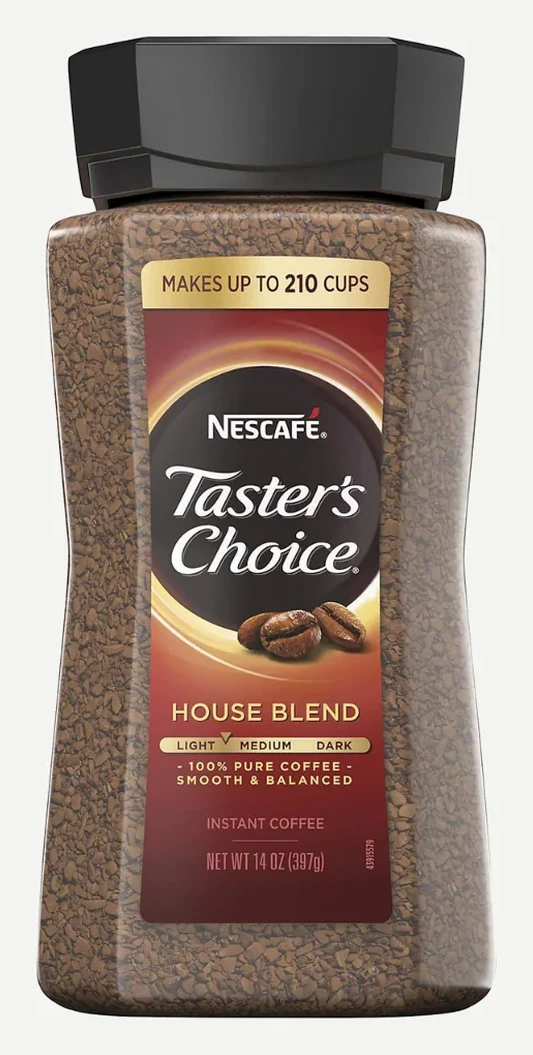
210cups from the Taster's Choice jar
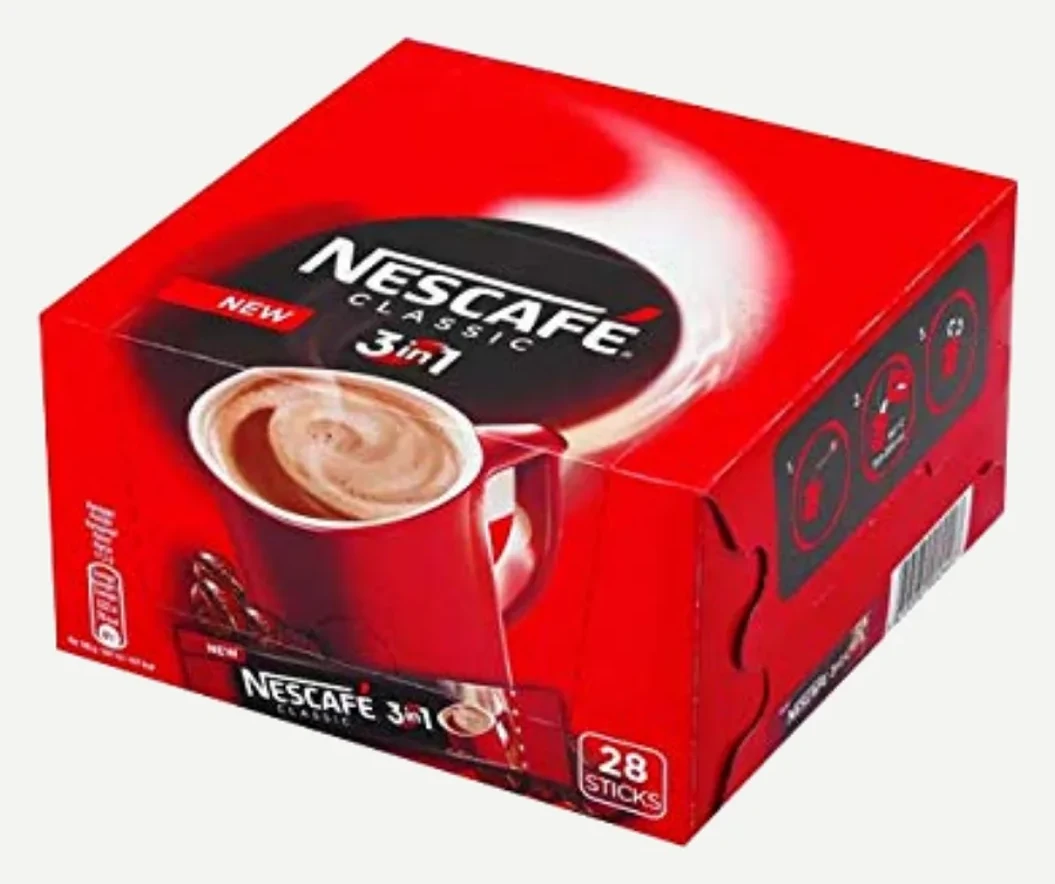
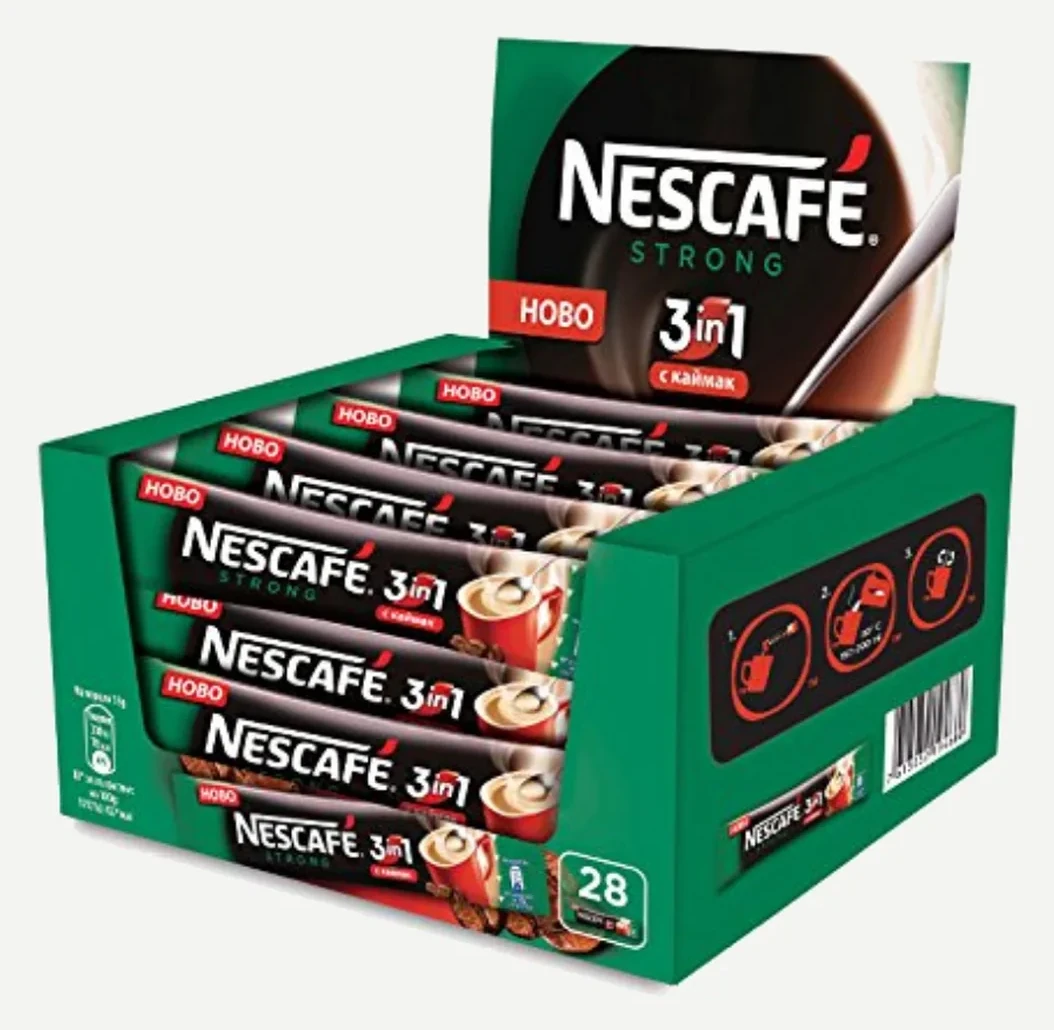
28sachets in each 3 in 1 box
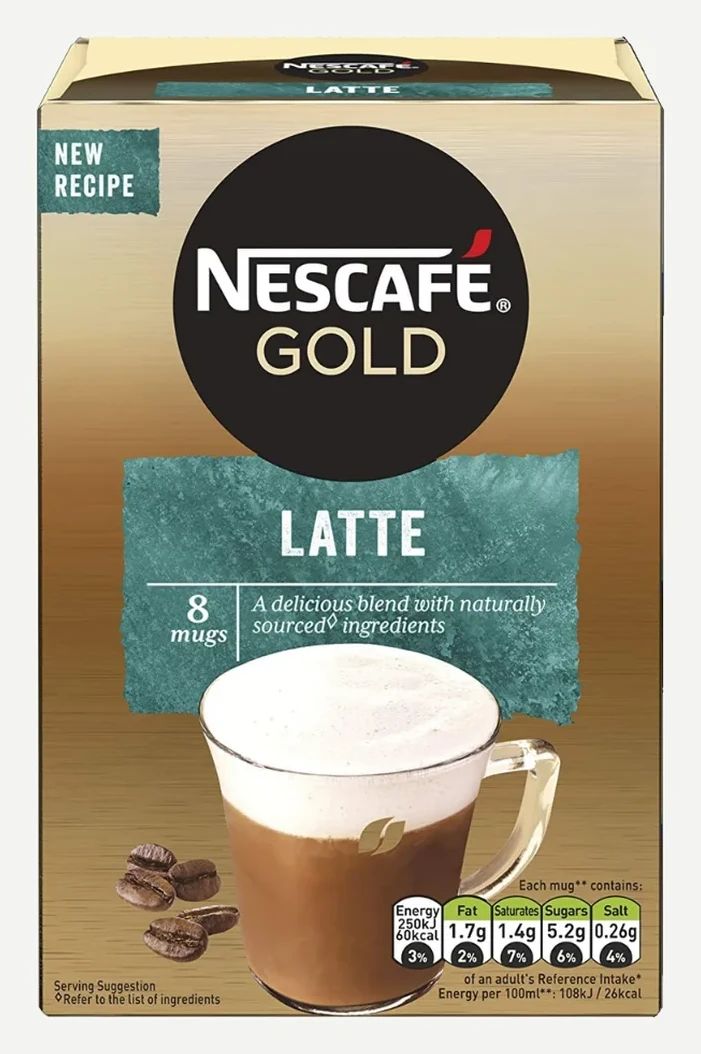
8sachets in a Gold Latte pack
Nescafe instant coffee range: jars and sachets
The short answer
Two jars are plain coffee you season yourself, and three sachets are finished drinks with creamer and sugar
already in. Pick the format first and the product follows.
The jars: Taster's Choice and Clasico
The mild jarTaster's Choice House Blend
The label carries a light, medium and dark scale with the marker set between light and medium, and the maker
describes the cup as refined, smooth and well balanced. The ingredients are given as 100% pure coffee, and you
add hot water and stir at the dose printed for your cup size. A mild roast is built to offend nobody, which is
why it works black or with milk and sugar. The jar prints "Makes up to 210 cups", the highest figure on this
page.
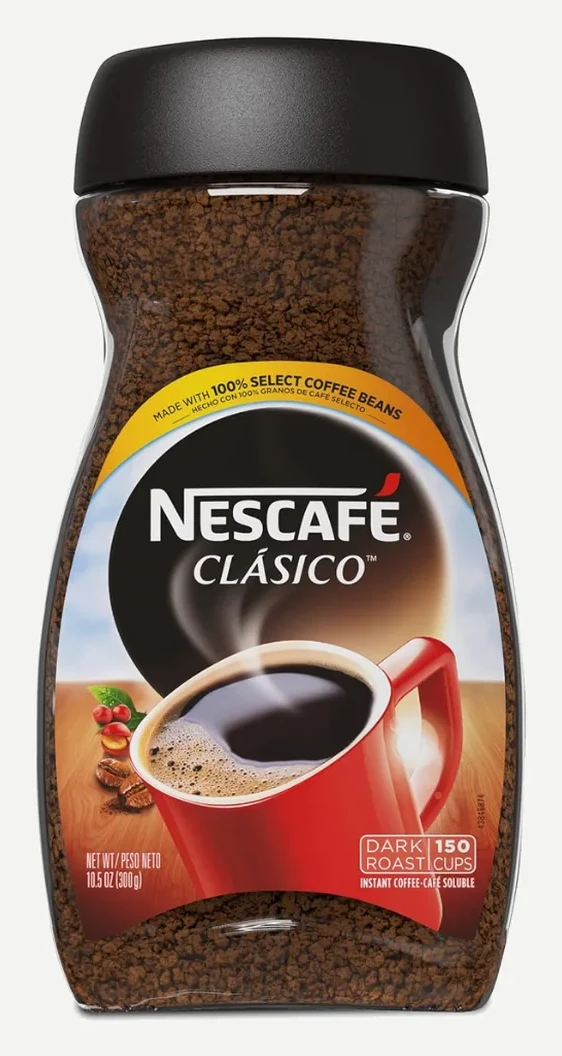
The dark jarClasico Dark Roast
Printed DARK ROAST on the label and described as bolder and richer, with a published dose of one teaspoon to
6 fluid ounces of hot water, so you can repeat the strength every time rather than guessing. It tells you least
about the beans, stating only that they come from around the world. It is the jar to buy if most instant tastes
weak to you.
Bottom line
Taster's Choice if you want it gentle and easy to drink black, Clasico if you want more punch for the same
effort.
The sachets: Classic 3 in 1, Strong and Gold Latte
A 3 in 1 is not instant coffee that happens to come with extras. It is a complete drink: coffee, creamer and
sugar, pre-dosed in one sachet, made with hot water alone.
Medium roastClassic 3 in 1
The Nescafe Classic 3 in 1 comes as 28 individual sachets of 16.5 g, one cup each, at a medium roast. Nescafe does not say how much of each sachet is sugar or creamer. What you can count on is that nothing needs
measuring and there is nothing to decide.
More coffee, less milk3 in 1 Strong
The same format with the balance moved toward the coffee, also 28 sachets. The strength is a ratio change
inside the sachet, not a darker roast or a different bean, so it fixes a Classic that is too milky rather than
chasing a stronger coffee flavor. Germany is given as the country of manufacture, one of the few origin facts
any sachet publishes. This carton is a European market pack printed in Bulgarian, so expect the box not to be
in English. Preparation is one sachet into 200 ml of water at 80 C, stirred.
Cafe styleGold Latte
A milky, coffee-shop-style drink built from a powder, made with water and no milk. It is a milk-based latte
mix with coffee whitener and sugar already in. The maker states no hydrogenated vegetable oil and says it is
suitable for vegetarians. It is the only sachet trying to taste like a cafe drink, and the least documented of
the three. It comes 8 sachets to a pack, with no process method or bean type stated.
Nescafe instant coffees compared
A dash means the maker does not publish that figure, or we have not confirmed it.
How to choose a Nescafe instant coffee
The short answer
Decide on jar or sachet, then black or 3 in 1, and only then look at roast, caffeine and cost per cup.
Jar or sachet
A jar lets you decide how strong to make each cup and gives you far more of them per pack. A sachet fixes the
dose, keeps each portion sealed until you open it, and travels without a spoon. The sachet is what you want for
a desk drawer, a hotel room, a caravan or a site kettle. The jar is what you want for a kitchen. Our look at
coffee bags against instant covers the other single-serve
habit in the same territory.
Black coffee or 3 in 1
This is the decision that matters most. The two jars are coffee on its own, and you add what you like. The
sachets include creamer and sugar and there is no way to take either out, so someone who drinks black coffee,
or who is watching sugar, should not buy a 3 in 1. Equally, someone who takes coffee white and sweet and wants
no steps will find the sachet does the whole job, which is why the format is so common in offices and on
building sites. The Gold Latte uses a coffee whitener and is not described as dairy-free, so check the pack if
that is a requirement.
Roast level
Instant coffee tends to be roasted dark because roast character survives the drying process better than
origin character does. Within Nescafe, you get a real choice: the Taster's Choice sits between light and
medium, the Clasico is printed dark, and the Classic 3 in 1 is a medium roast. The Strong and Gold Latte
sachets do not state a roast. If you add milk and sugar anyway, roast matters less than you would think,
because both soften whatever the cup would otherwise taste like.
Caffeine
None of the five publishes a caffeine figure and none is sold as decaffeinated, so treat all of them as
caffeinated and check the pack if the number matters to you. The general picture is in our guide to
caffeine in coffee. If you want a decaf cup instead, our list of
decaf coffee is the place to start, because nothing in this range is aimed at
that buyer.
Cost per cup
The cheapest way to compare is cups per pack, because the pack sizes differ so much. The Taster's Choice jar
prints "Makes up to 210 cups" and the Clasico is labeled for up to 150 at the maker's dose of one teaspoon to
6 fluid ounces. The Classic and Strong 3 in 1 give 28 cups a box, one sachet per cup. The ranked list at the
top of the page shows what each costs today, so divide that price by the number of servings here. A jar will
nearly always win on cost per cup, while a sachet earns its place on convenience.
Is Nescafe instant coffee freeze-dried? What the labels leave out
Why it matters
Nescafe says very little about what is in the jar, and the sachets cannot be taken black.
Little is published about the coffee itself
This is the biggest gap. Neither jar says whether it is freeze-dried or spray-dried, and that difference is
the biggest single quality factor in instant coffee. No bean type or origin is given for any of them beyond the
Clasico's phrase "from around the world". Because Nescafe publishes so little, the range scores modestly on the
criteria that reward a maker for saying what is in the jar.
The sachets are not black coffee
Across the three sachet products, the same con repeats: milk and sugar come in the packet. That is the point
of a 3 in 1, but it is also a limit. You cannot make a smaller portion of sugar, and the sugar content is not
stated, which for a product that contains a good deal of it is a gap worth knowing about. Compare these with a
plain instant such as those covered in our
guide to whether instant coffee is real coffee,
which explains what the powder is.
Two products say very little
The Gold Latte and Strong sachets say the least. Neither gives a roast or any bean information. The Strong
sachet adds a country of manufacture and a preparation instruction, but little else, so you are choosing on
format and brand alone.
Jars are for home
The Clasico is a 10.5 oz jar and the Taster's Choice is a 14 oz one, so neither goes in a bag comfortably. For anything portable you are back to the sachets, with the creamer and sugar that come with them. Our guide to
travel coffee makers lists gear for people who want better coffee on
the move.
Nescafe instant coffee prices
Nescafe sells these through many retailers at moving prices, so the bands below go by cost per cup rather than dollar amounts. The ranked list at the top of the page shows each one's current
price.
| Budget | Models | What you get |
|---|
| Lowest cost per cup | Taster's Choice House Blend, Clasico Dark Roast | A jar with 150 to 210 servings at the maker's dose. Black coffee that you season yourself, one mild and one dark. |
| Middle: boxed sachets | Classic 3 in 1, 3 in 1 Strong | 28 individual sachets, one cup each, with coffee, creamer and sugar included. Nothing to measure. |
| Smallest pack | Gold Latte | A milky latte-style drink from water alone, in a pack of 8. |
How to make Nescafe instant coffee
The short answer
Hot water and a mug are the whole requirement, and that is the appeal.
Water and toolsKettle and spoon
A kettle gives you more control than a tap or a hotel coffee machine, and the Strong sachet's own instruction
is 200 ml of water at 80 C, stirred. Use a spoon for the jars and stir well, because powder poured straight into
water can clump.
Milk and sugarYours to set, or already in
If you drink the jars, milk and sugar are optional and entirely yours to set. If you want a latte feel, that
means a little milk and some effort. The Gold Latte sachet exists for people who have no milk to hand.
Which Nescafe instant coffee should you buy?
The short answer
Start with whether you drink coffee black. If you do, or you add your own milk and sugar, buy a jar. If you
want a complete white, sweet cup with no steps, buy a sachet.
Black, or your own milk and sugar
The Taster's Choice House Blend is the easier cup and the one to start with, and the Clasico Dark Roast is
the one to move to if you find instant weak.
White and sweet with no steps
Buy the Classic 3 in 1 sachets, and move to the 3 in 1 Strong only if you find the Classic too milky.
No milk, or no fridge
Gold Latte is for a narrower buyer: someone without milk, or without a fridge, who wants a coffee-shop-style
drink from a kettle. It is a fine desk-drawer product, and it is the least well documented. For a daily cup at
home, the jars make more sense.
Nescafe vs other instant coffee brands
Specialty instantMainstream, but quiet
Next to specialty instant, the Nescafe range is a mainstream option. It is easy to find and consistent, but
it publishes very little, and it competes on convenience rather than on flavor. A freeze-dried instant that
states its process and origin tends to taste better for a little more money. The wider instant shelf is the
place to compare.
Brewing methodsSpeed against flavor
Against a brewing method, instant gives up flavor for speed and portability. If you have five minutes and a
mug, a pour over or a French press makes a clearly better cup. If you have a kettle and thirty seconds, none of
those is available, and a sachet or a jar does exactly what it promises.