The Three Milk Systems on Bean-to-Cup Machines
A carafe, a two-part system or a wand. The choice decides both your latte and your washing up.
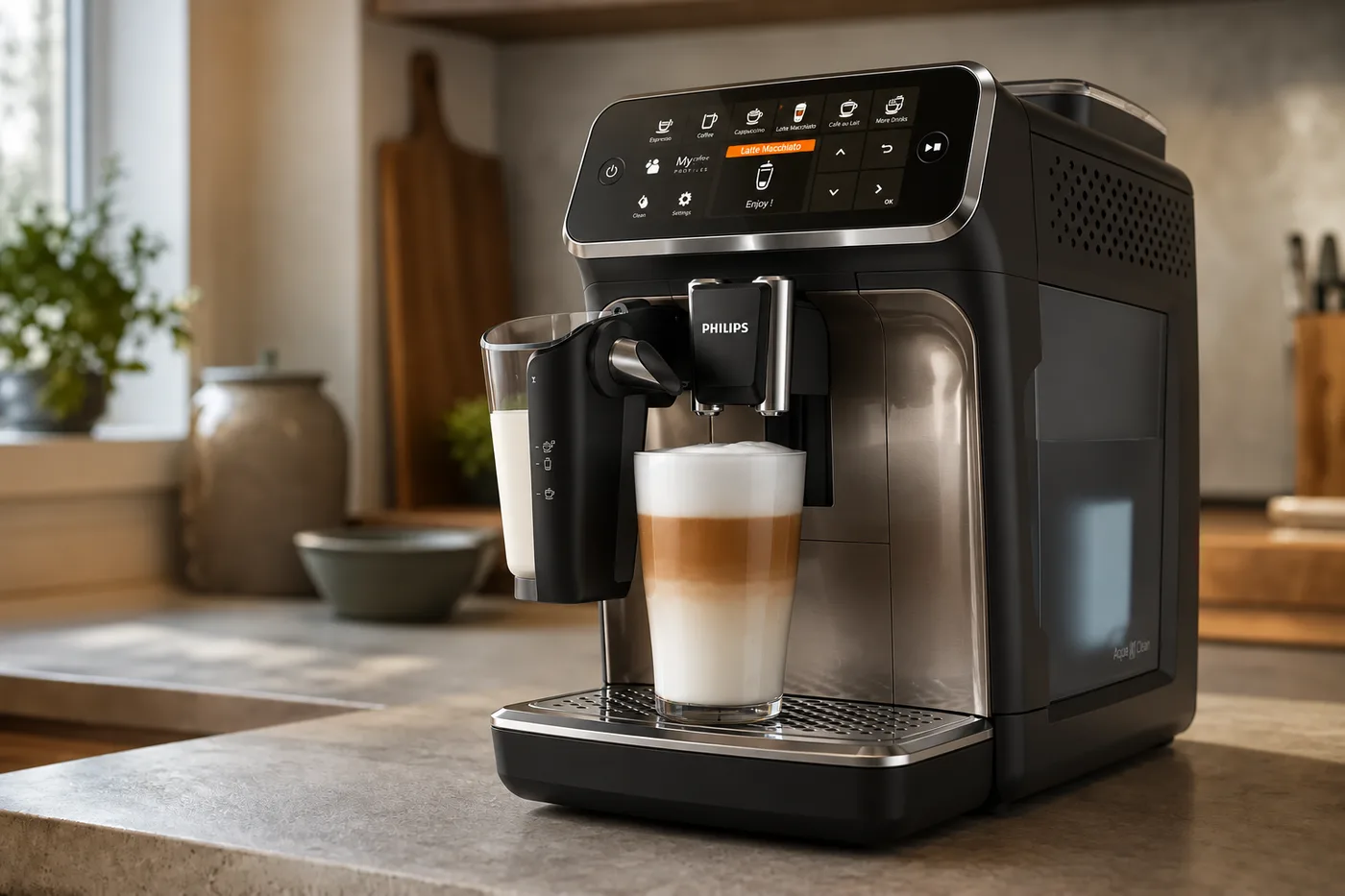
Milk is where these machines separate, and it is worth 16 of the 100 points we score them on. There are three designs and the difference between them shows up twice: once when you order a latte, and again at the sink.
Integrated carafe milk system
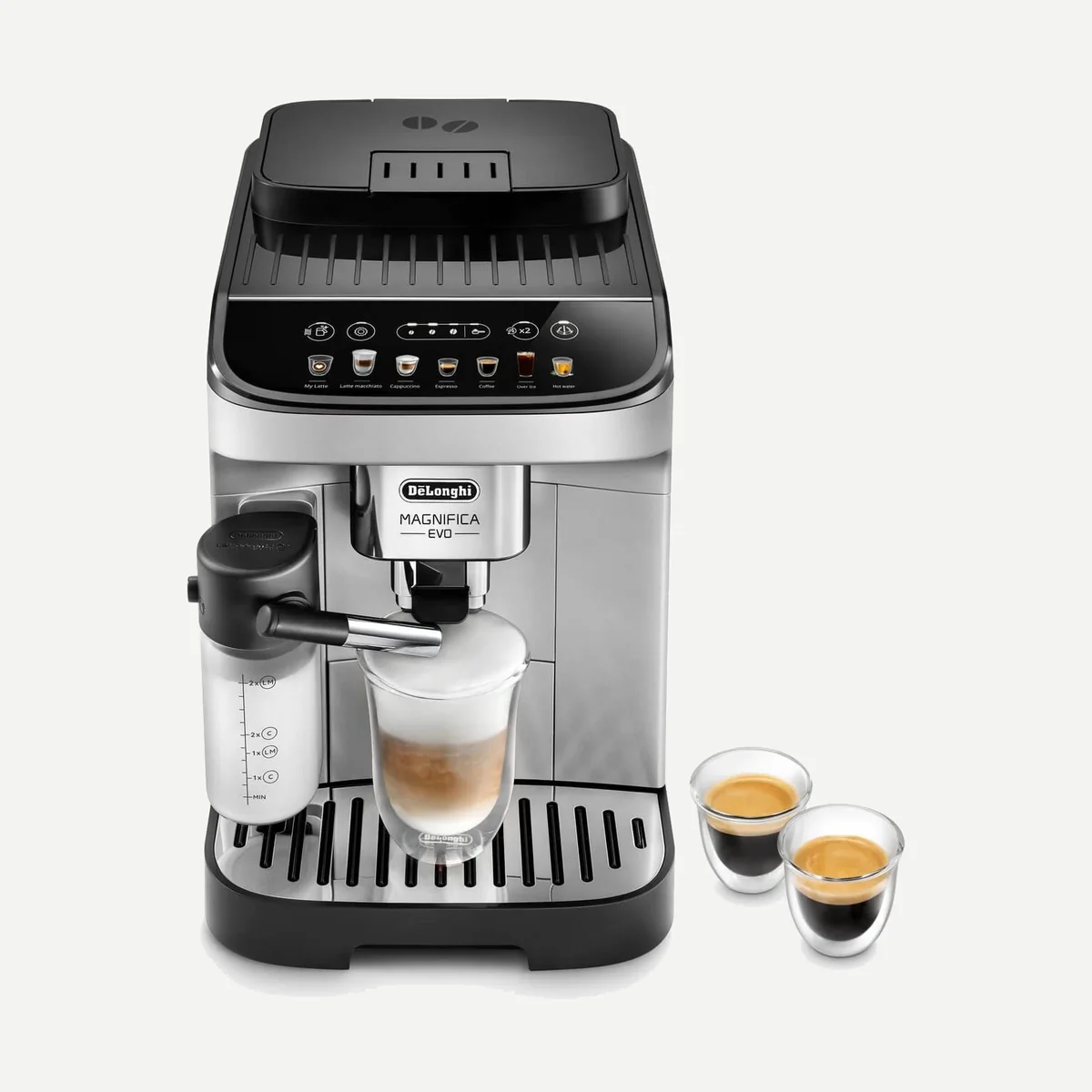
A jug of milk sits on or beside the machine, connected by a tube, and the machine draws from it. Press latte macchiato and the machine pours milk and coffee in the right order without you touching anything.
The strength is that it is genuinely hands-off, including the layering that makes a latte macchiato look like one. The weakness is parts: a carafe, a lid, a tube and usually a valve, all of which have milk in them. The good ones let you lift the whole carafe into the fridge between drinks, which is the single most useful feature on any milk system because it stops the problem rather than cleaning up after it.
The JURA E8 takes a different approach again, with an interchangeable spout and an automatic cleaning cycle for the milk path.
Two-part milk system (LatteGo)
A milk container clicks onto a spout with no tube between them. Philips calls it LatteGo and builds it from two pieces that separate for rinsing. The Series 5500 uses it to name twenty drinks including six iced ones.
The argument for this design is entirely about cleaning. There is no narrow tube for milk to dry inside, so the weekly job is two pieces under a tap or in the dishwasher. If you make milk drinks every day, that difference compounds faster than any feature on the display.
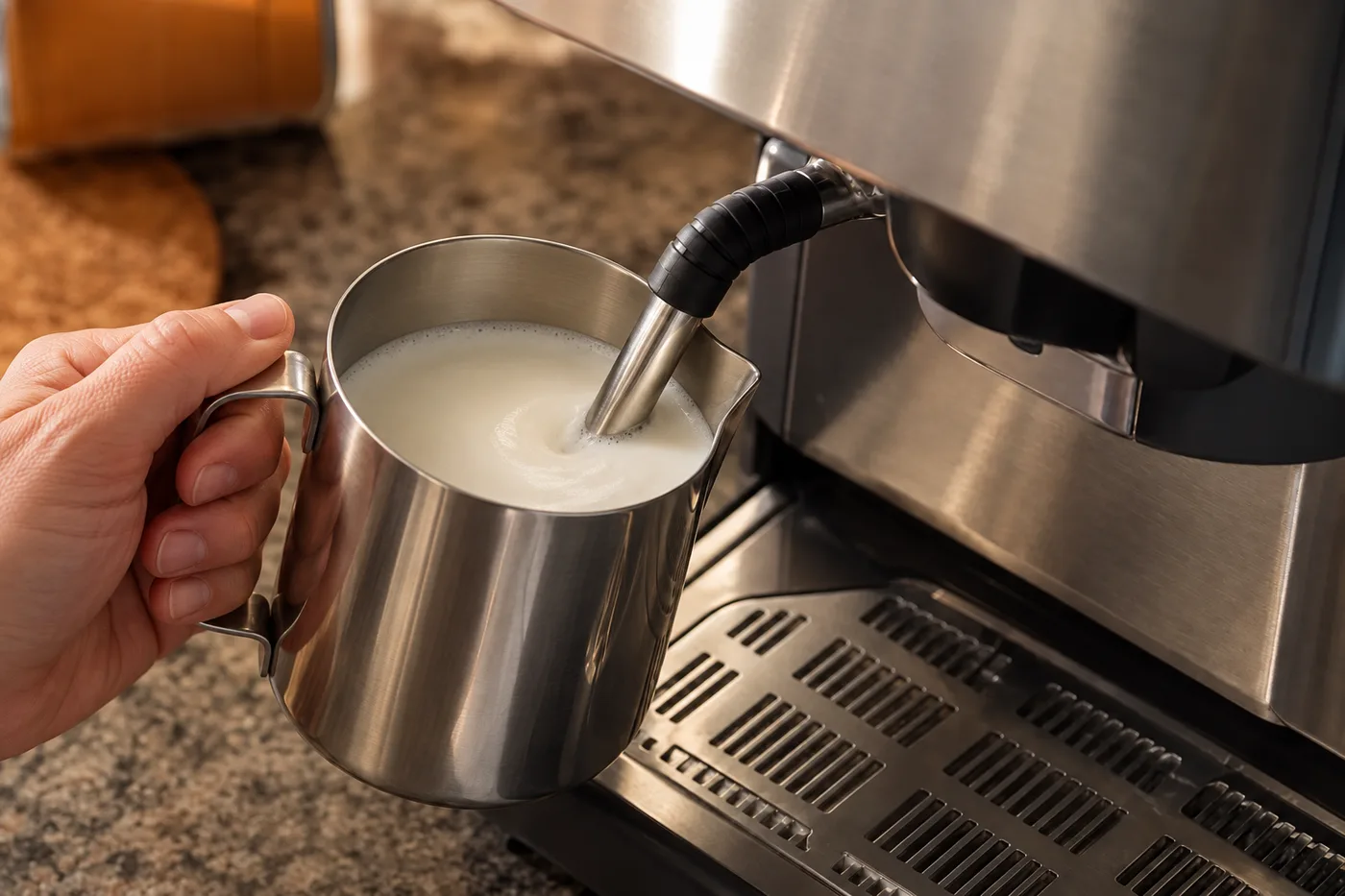
Manual steam wand on a bean-to-cup machine
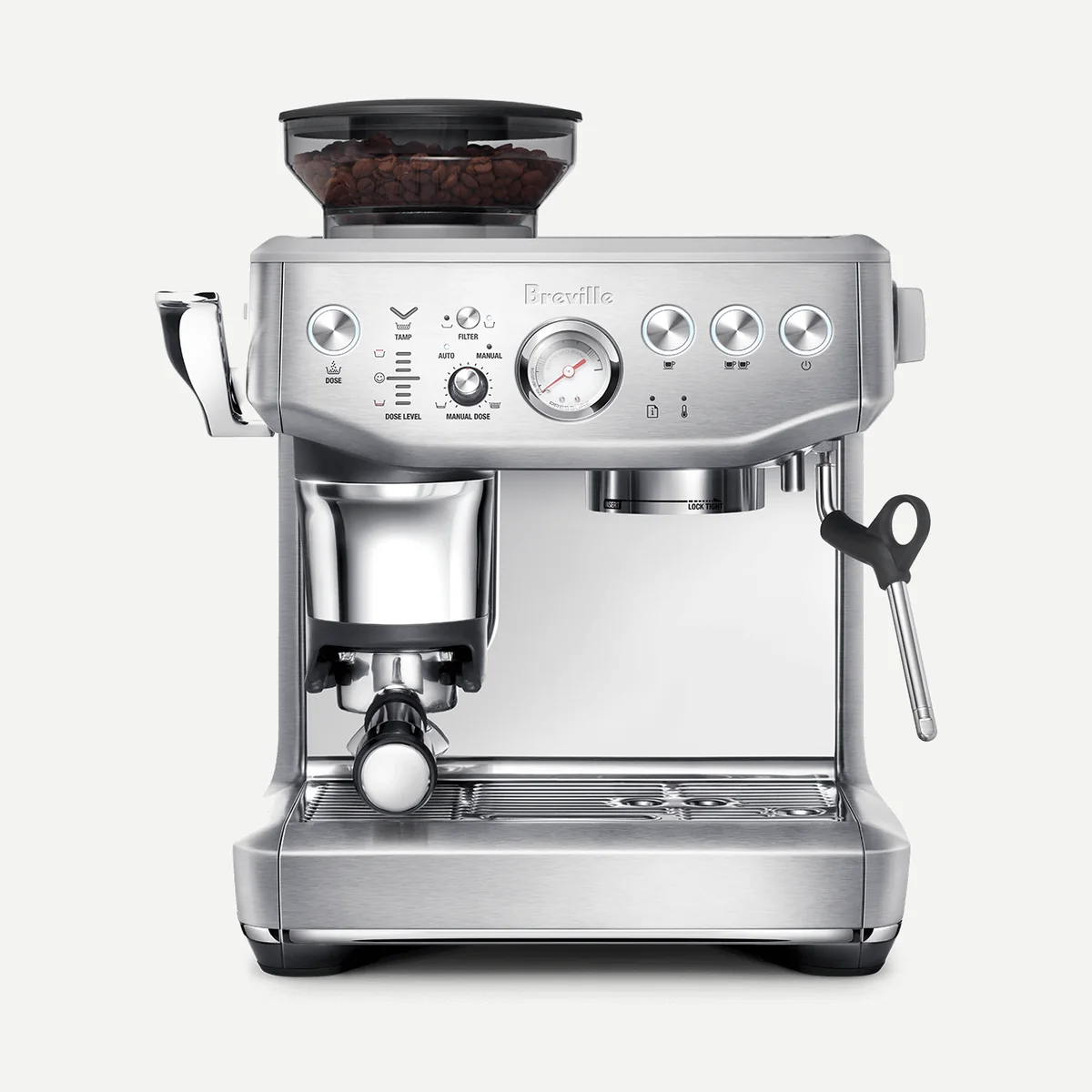
A steam wand does what a café machine does: you hold a jug under it and texture the milk yourself. The machine automates the coffee and leaves the milk to you.
The De'Longhi Magnifica Start is the pattern here, and its price shows what the wand saves you. It also explains the most common disappointment with cheaper machines in this category: people buy an automatic machine expecting one-touch cappuccino and find they are still texturing milk by hand.
If you want to learn the skill, this is the cheapest way into it and the wand will do a decent job. If you bought the machine specifically so you would not have to, check this specification before anything else.
What bean-to-cup milk system makers do not publish
No maker publishes a foam measurement you can compare across brands. There is no standard for it, so every claim about microfoam quality is marketing rather than specification, and we do not score it. What we can compare is the count of one-touch drinks, whether the milk parts are dishwasher safe and whether the machine runs its own rinse.
Those three are on the page for every machine in the listing, and between them they predict your experience better than any adjective a maker uses.
Which milk system is easiest to clean?
Rank the three designs by how many pieces touch milk and the order is the same as the cleaning effort. A wand is one surface you wipe. A two-part system is two pieces that come apart. A carafe is a jug, a lid, a tube and a valve, and each of those holds a little milk.
That count predicts whether you will still be making lattes in six months better than any feature list. A system that takes thirty seconds to clean gets cleaned. One that takes five minutes gets skipped, and a skipped milk system develops a smell that no cycle removes.
Plant milk in a bean-to-cup machine
Oat, soy and almond milks all foam, and how well depends far more on the carton than on the machine. Barista editions exist because they are formulated with a little more protein and fat to hold a foam under steam, and they behave much more like dairy than the standard versions do.
If a plant milk refuses to foam on your machine, the useful experiment is a different brand rather than a different setting. Our piece on milk alternatives in coffee covers how the main types differ in the cup.
How to choose a bean-to-cup milk system
Answer the milk question before anything else, because it is the one specification you cannot add later. A machine with a wand will never become a one-touch machine, and a machine with a carafe will never stop having a carafe to wash. Everything else on the spec sheet, the drink count, the hopper, the tank, is a preference you can live around.
Bean-to-cup milk systems FAQ
Which milk system makes the best foam?
The honest answer is that no maker publishes a measurement anyone can compare, so this is the part of a spec-led review that cannot be settled from the page. What is comparable is how many parts each system has and whether they are dishwasher safe.
Can you use oat milk in a bean-to-cup machine?
Usually yes, and barista versions of plant milks are formulated to foam. Results vary more between brands of oat milk than between machines, so if one does not foam well, try another before blaming the machine.
Is a manual wand worse?
It is slower and it asks something of you. It also gives you control no automatic system offers, and it is one part to wipe rather than several to wash. Machines with a wand tend to cost noticeably less, which is often the real reason to choose one.
What is a two-part milk system?
A container and a spout that click together with no tubes between them. Philips calls theirs LatteGo. The appeal is cleaning: two pieces, rinsed or put in the dishwasher, with nothing narrow for milk to dry inside.
Do you have to clean the milk system every time?
Rinse it after every session. Most machines run that rinse themselves. The full wash can be weekly, and taking the carafe off to the fridge between drinks is the neatest way to keep milk out of warm pipes entirely.
Reviewed on this site
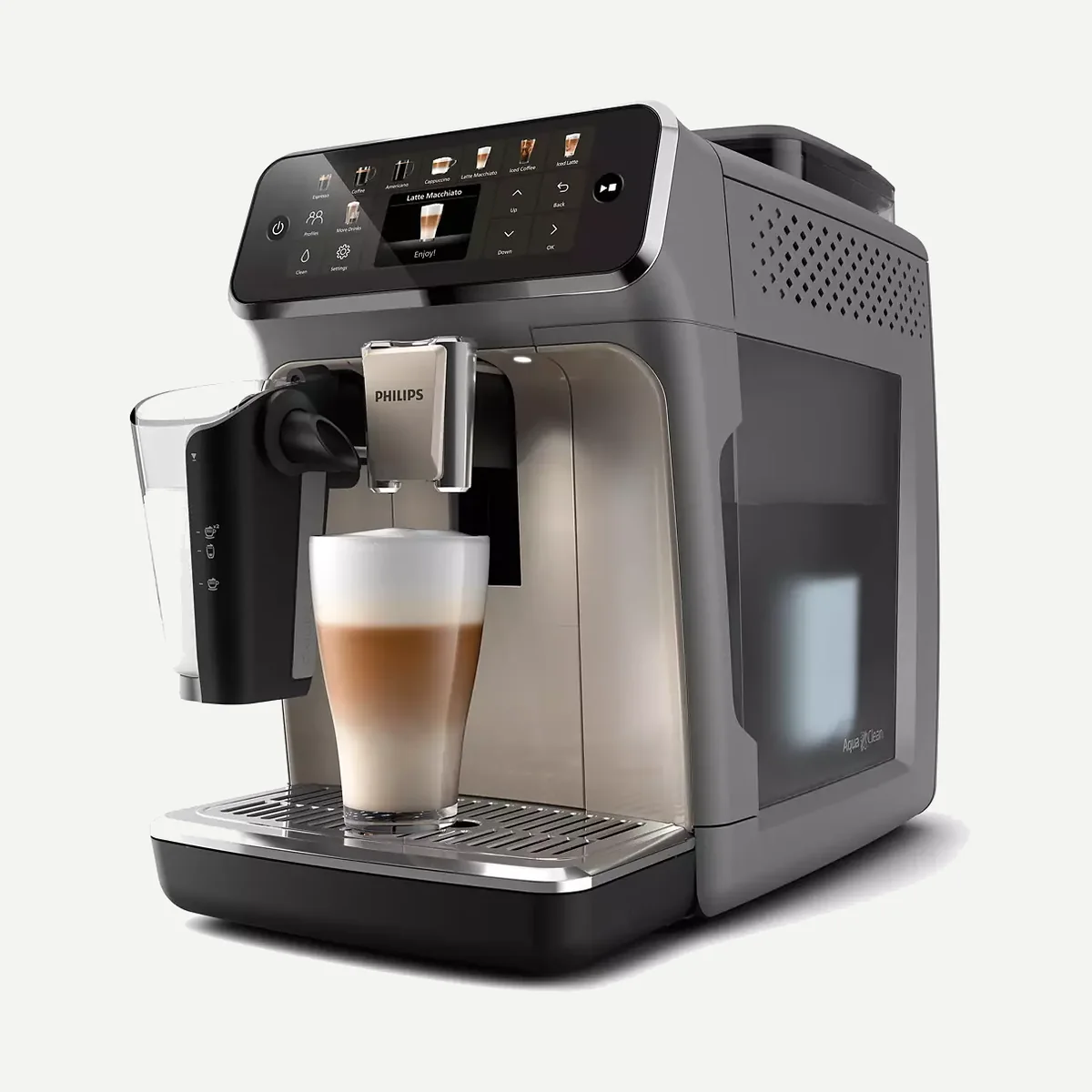 Philips Series 5500 LatteGo EP5544/90Twenty drinks including six iced, from a two-part milk system that rinses in seconds
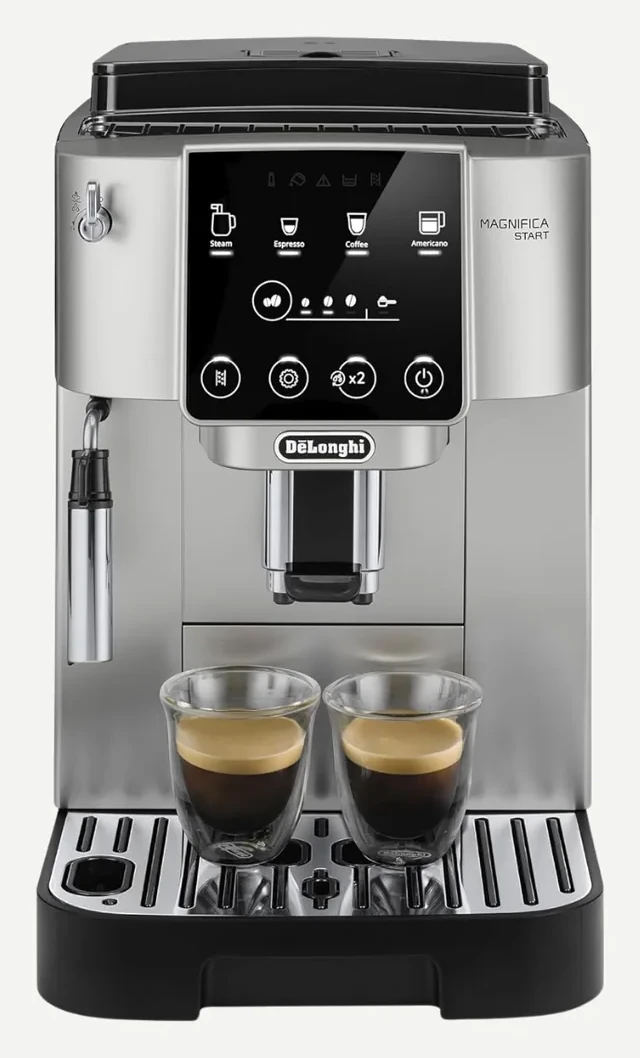 De'Longhi Magnifica Start Automatic Espresso MachineA first bean-to-cup, where the machine grinds, doses and brews and you steam the milk
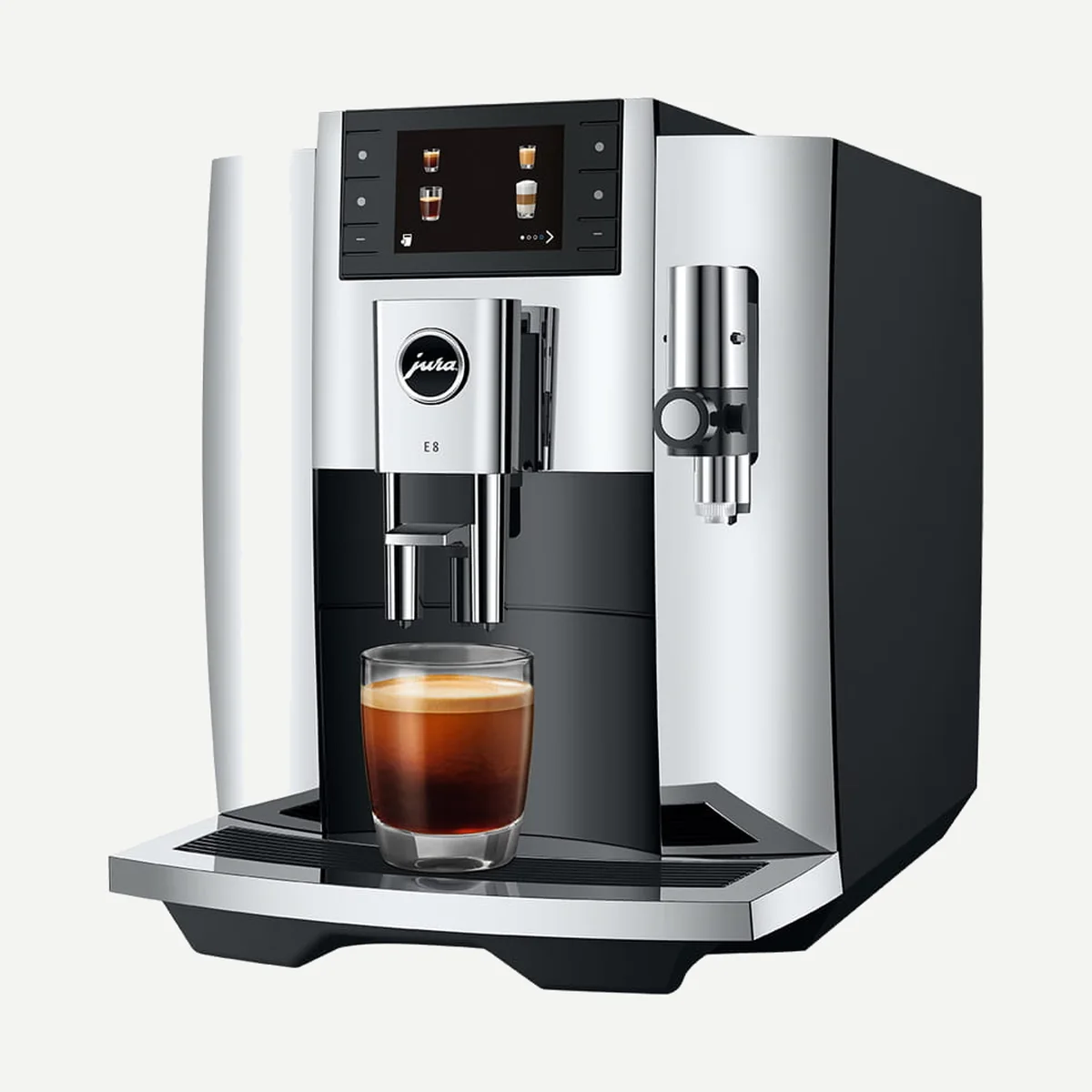 Jura E8 (NAC)A household that wants seventeen one-touch drinks, espresso to latte macchiato, with no barista skill at all