Espresso Beans vs Coffee Beans: Is There a Difference?
Espresso beans are coffee beans. The label describes how they were roasted and blended, not a different plant, and it matters less than the packet suggests.
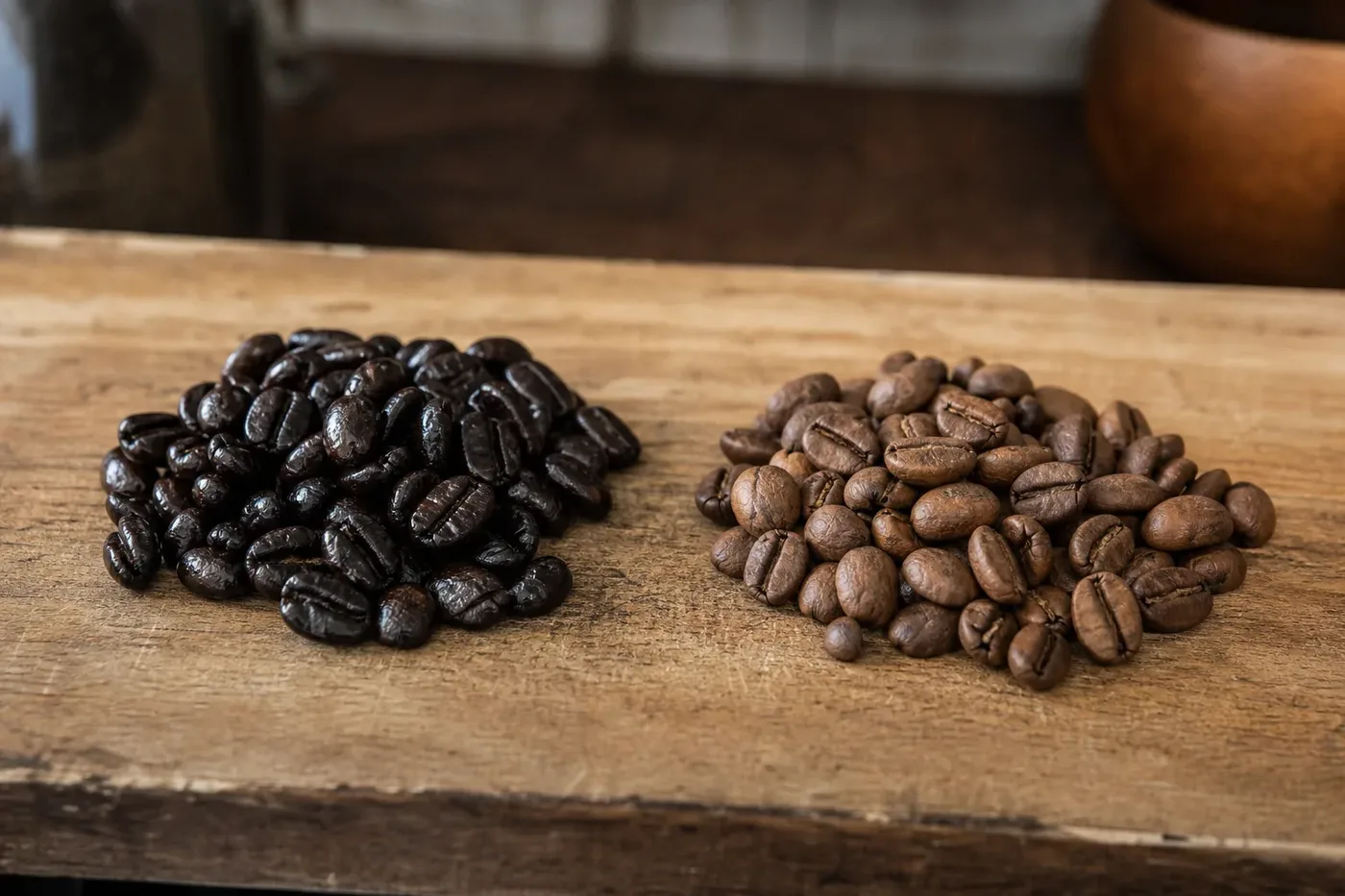
There is no such thing as an espresso bean in the way there is a coffee species. Espresso beans are ordinary coffee beans that a roaster has blended and roasted with espresso in mind, and any coffee can be brewed as espresso. The label is a recommendation, not a category of plant.
What a bag of espresso beans usually means
When a bag says espresso, the roaster is telling you it was designed to taste good pulled as a short, concentrated shot and under milk. That usually means some combination of:
- A darker roast. Medium-dark or darker, which reduces acidity and brings out chocolate and caramel notes that hold up in a latte.
- A blend. Several origins chosen to balance body, sweetness and consistency across the year.
- Sometimes robusta. A share of robusta adds body, bitterness and a thicker crema, and is common in Italian-style espresso blends.
Plenty of modern roasters now sell light-roast single origins as espresso too, so none of these is guaranteed. The label tells you the intended use; the roast level printed on the bag tells you more.
Can you use espresso beans for drip or French press?
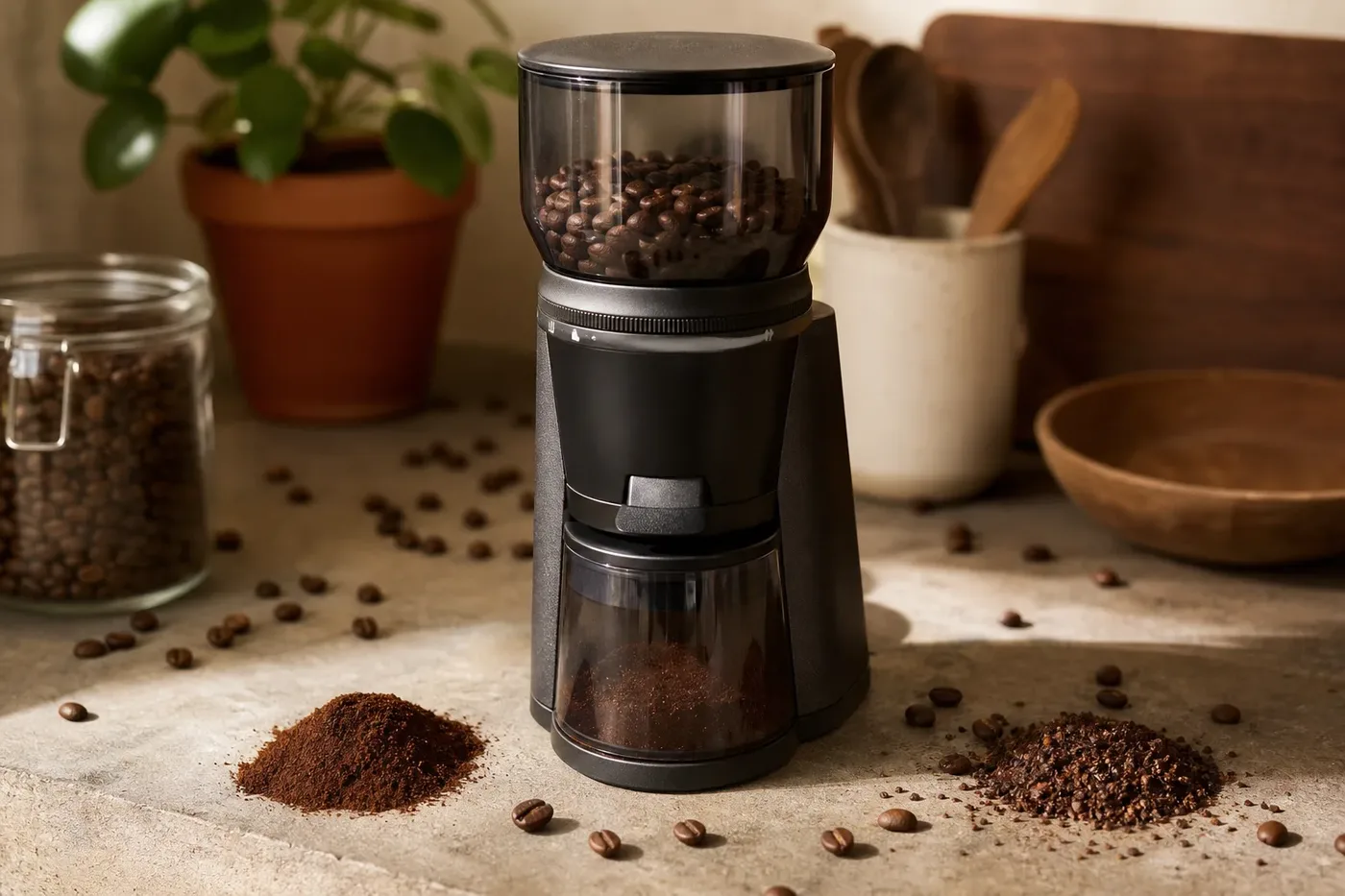
Yes. They are simply coffee, and they brew perfectly well by any method. Grind them to suit the brewer rather than the label: coarse for a French press, medium for drip, fine for espresso. A darker espresso roast will make a heavy, low-acid, chocolatey filter cup, which many people prefer. The settings for each brewer are in the grind size guide.
Can you use regular coffee beans for espresso?
Also yes, with one caveat. Very light roasts are harder to extract in a short shot and can taste sour unless you grind finer and brew hotter. Medium and darker roasts are more forgiving, which is exactly why espresso blends lean that way. If your shots taste thin and sharp with a lighter bag, the fixes are in under-extracted espresso.
What really makes espresso different from other coffee
The method, not the bean. Espresso is made by forcing hot water under pressure through a compact bed of very finely ground coffee in about half a minute. That process, and the fine grind it needs, is what separates espresso from other coffee, as explained in what espresso is. Pre-ground coffee sold as espresso is ground finer to suit that method, which is the one case where the label changes what is in the bag.
Caffeine in espresso beans vs coffee beans
Gram for gram, espresso beans carry about the same caffeine as any other beans of the same species. The roast barely changes it. A blend containing robusta will carry more, because robusta has roughly twice the caffeine of arabica. What changes how much caffeine you drink is the size of the serving, not the label: a single espresso uses far less coffee than a large mug of filter. The fuller comparison is in how much caffeine is in coffee.
Chocolate-covered espresso beans
Some searches for espresso beans are about the snack: whole roasted coffee beans coated in chocolate. They are ordinary roasted beans, usually a darker roast so the bitterness balances the chocolate, and each one carries a small amount of caffeine. Because you eat the whole bean instead of brewing it, a handful adds up faster than people expect.
How to choose espresso beans
Ignore the word and read the roast level and origin. If you want a classic, chocolatey espresso that works well with milk, a medium-dark or dark roast labelled espresso is a safe choice. If you drink your coffee black and like brighter flavours, a medium roast works for espresso and filter alike. The medium-dark roasts we have reviewed are the closest match to a traditional espresso blend.
Espresso coffees we have reviewed
The pattern above holds across the espresso coffees we cover. Most are medium or medium-dark, a few are dark, and almost all are blends. Intelligentsia's Black Cat family shows the range from one roaster: the Classic is a medium roast Brazil with cherry, cola and orange in its notes, the Analog and the Sublunar are medium-dark Brazils that lean to chocolate, molasses and brown sugar, and the Organic Black Cat blends Colombian and Ethiopian coffees. Equator's Jaguar is the dark, certified option, USDA Organic and Fair Trade, built to hold up in milk. Our list of the best coffee beans for espresso ranks them all, with roast, origin and price per kilo side by side.
What espresso beans cost
A good espresso coffee from a specialty roaster costs about $17 to $20 for a bag, or $42 to $46 a kilo, which works out at under a dollar for an 18 g double shot. Single-farm and rare-variety espressos cost more, sometimes $70 a kilo and up, and are worth it mainly if you drink espresso straight. If most of your shots go into milk, a well-made blend at the lower price gives you more for your money than a rare one.
Espresso beans vs coffee beans FAQ
Are espresso beans different from coffee beans?
No. Espresso beans are ordinary coffee beans that have been roasted and blended with espresso in mind, usually darker. Any coffee can be brewed as espresso.
Can I use espresso beans in a regular coffee maker?
Yes. Grind them for the brewer, medium for drip or coarse for a French press, and they will make a full-bodied, low-acid cup.
Do espresso beans have more caffeine?
Not by weight, unless the blend contains robusta, which has roughly twice the caffeine of arabica. Serving size matters far more than the label.
Can you use regular coffee beans for espresso?
Yes. Medium and darker roasts are easiest. Very light roasts may taste sour unless you grind finer and use hotter water.