What is the Caizen Stainless Steel Cezve?
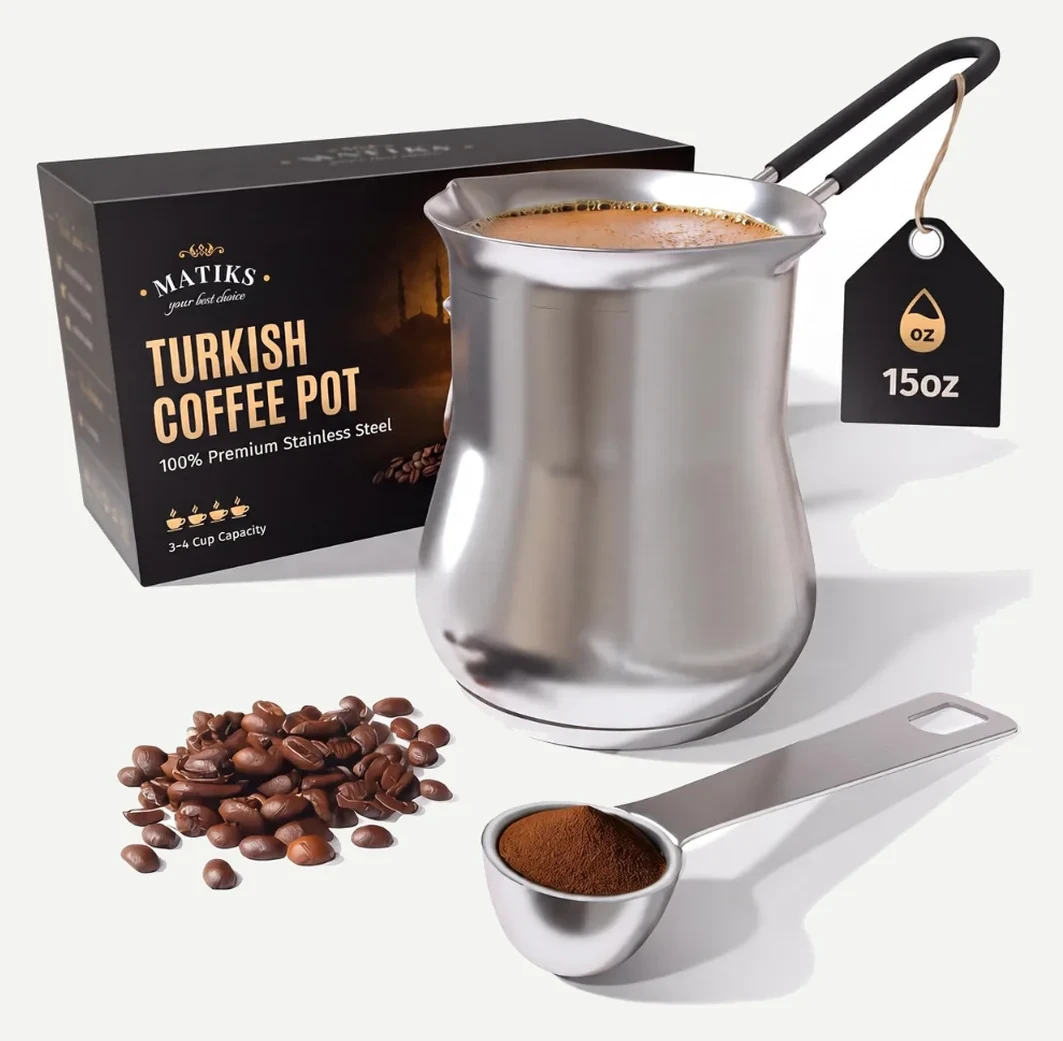
The Caizen is a stainless steel cezve, the long-handled pot Turkish coffee is brewed in, sold in 15 and 24 fluid ounce sizes. Its whole argument is that it is not copper.
The body is solid stainless steel in a plain silver finish, 3.3 inches wide and 4 inches tall, weighing 8.32 ounces. The 15 ounce size holds enough for three to four of the small servings this method is drunk in, which is a large cezve rather than a single-cup one.
Caizen open their own listing with "Forget rusting copper pots", and that is the pitch in four words. A traditional cezve is copper lined with tin, and both of those materials ask something of the owner: the tin lining wears and is eventually re-tinned, and the copper wants polishing if you care how it looks. Stainless asks nothing. It also behaves differently on the heat, which is the part the listing does not mention and the part that matters most.
Brew quality and what it is made of
Turkish coffee is decided in about two seconds. The foam builds as the pot approaches a boil and collapses the instant it reaches one, so the whole technique is watching for the rise and pulling the pot off at the right moment. A material that responds quickly gives you a wider window to react in.
Copper is the traditional choice because it conducts heat faster than almost anything else in a kitchen, so a copper cezve heats fast and, crucially, stops heating fast when you lift it. Stainless steel conducts more slowly and holds what it has. In practice that means the Caizen is slower to come up and keeps climbing for a moment after it leaves the burner, which is exactly the moment you were trying to control.
That is not a fault so much as a trade. Use a lower flame than you would under copper, and take it off earlier than feels right, and it produces the same coffee. Both of those are habits rather than difficulties, and they are learned in a handful of brews. What you get in return is a pot with no lining to wear out.
The 3.3 inch width matters more than it sounds. A cezve's narrow neck is what concentrates the foam, and a wide, shallow pot disperses it. At 3.3 by 4 inches this is a taller shape than it is wide, which is the right proportion.
What you can brew with it
Turkish coffee first, which is what the shape is for. The 15 ounce size makes three to four servings, so it suits a household or a guest rather than one person brewing alone, and it is worth knowing that a cezve is easiest to control when it is between half and two thirds full.
Caizen also push it as a general small pot: frothing milk, hot chocolate, tea, warming honey, melting butter, small sauces. That is fair rather than filler. A narrow pot with a long handle is a genuinely useful thing to own, and the stainless interior is better suited to it than tin-lined copper, which is not something you want to melt butter in repeatedly.
For the traditional method itself, see how to make Turkish coffee at home, and why cafes brew it in hot sand rather than on a burner.
Living with it, day to day
The handle is described as staying cool to the touch, which on a pot that sits directly over a flame is the feature you notice most. Traditional cezves use wood for the same reason.
Cleaning is where stainless earns its keep. Turkish coffee leaves fine sludge in the bottom of the pot every single time, and a stainless interior rinses. Tin lining has to be treated more gently than that, and copper exteriors show every mark.
The one real restriction is the hob. Gas, electric coil and ceramic are all listed as fine. Induction is explicitly ruled out, which is worth pausing on, because stainless steel is usually the material that makes a pan induction-friendly. A stainless pot that will not work on induction almost certainly has a base too small or too thin for the hob to detect, and if your kitchen is induction this is simply not the pot for you. Very few listings state that outright, and Caizen do.
Caizen Stainless Steel Cezve vs the DEMMEX Copper Cezve Ibrik
These are the two cezves reviewed here and they sit at opposite ends of the same idea.
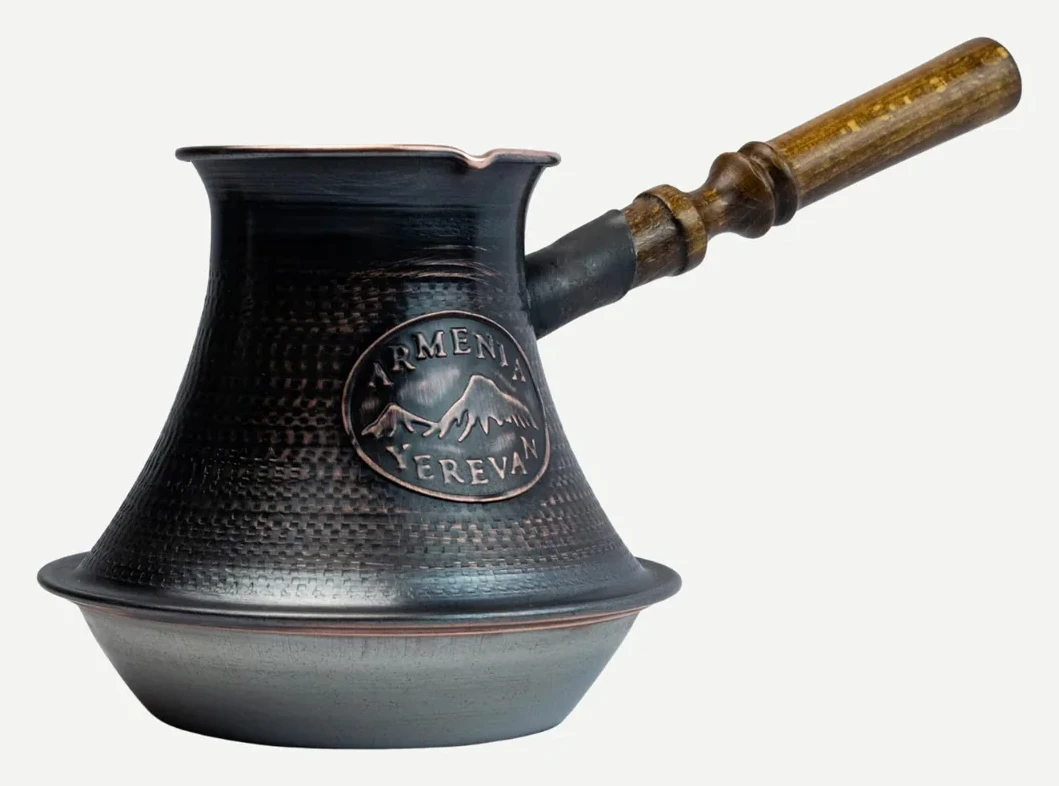
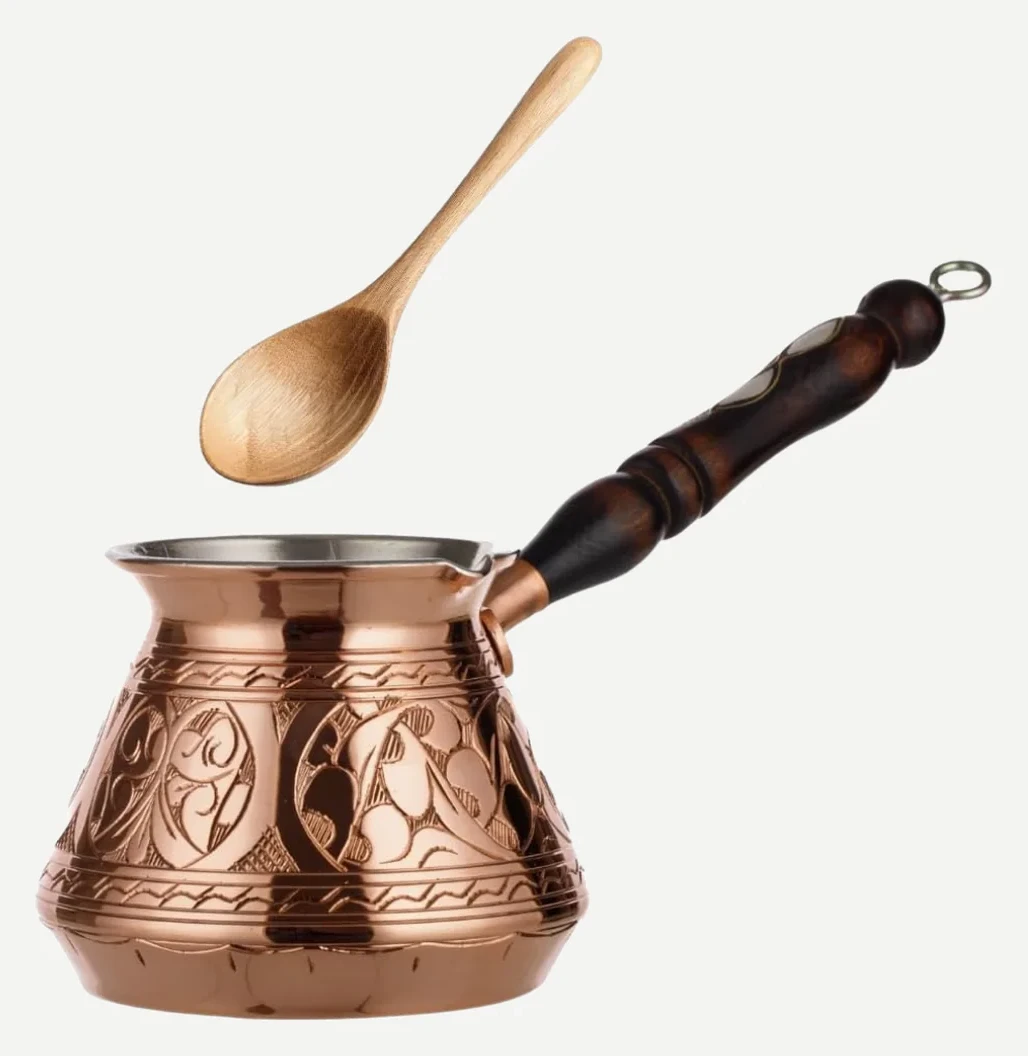
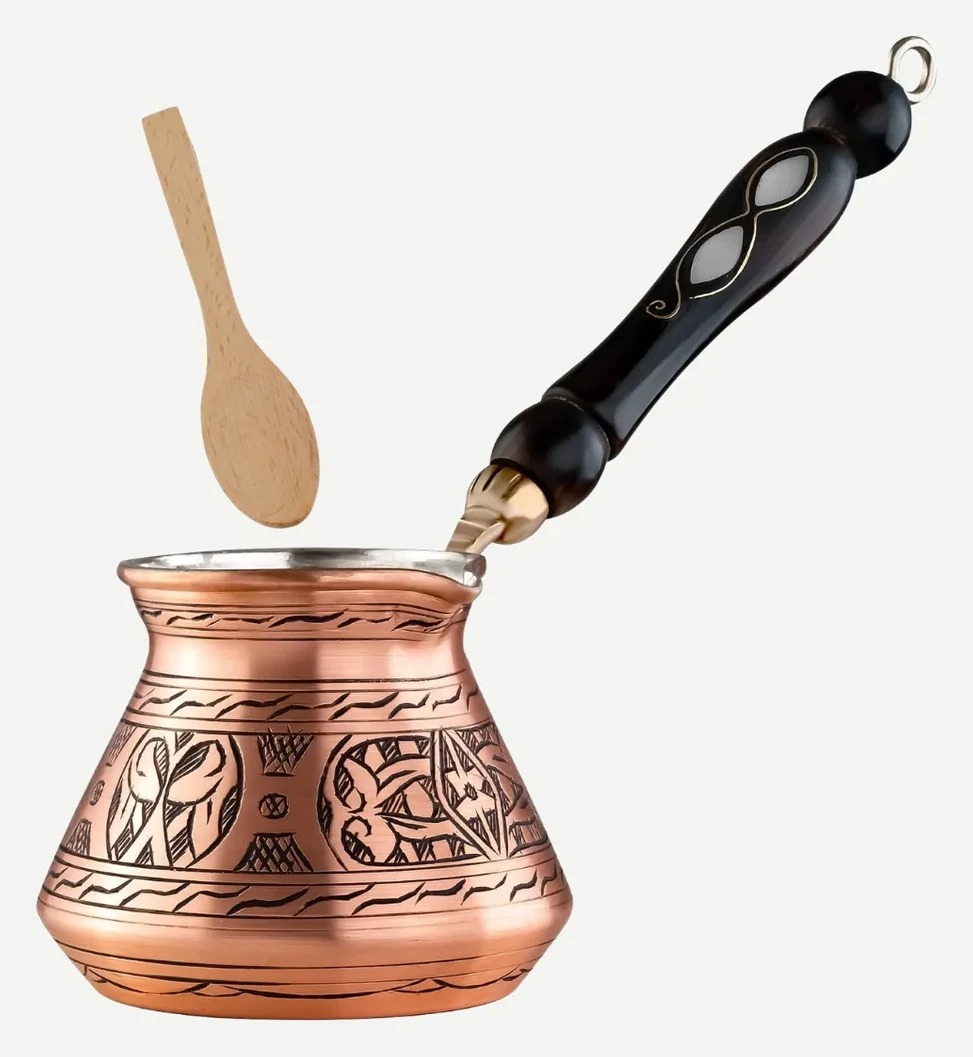
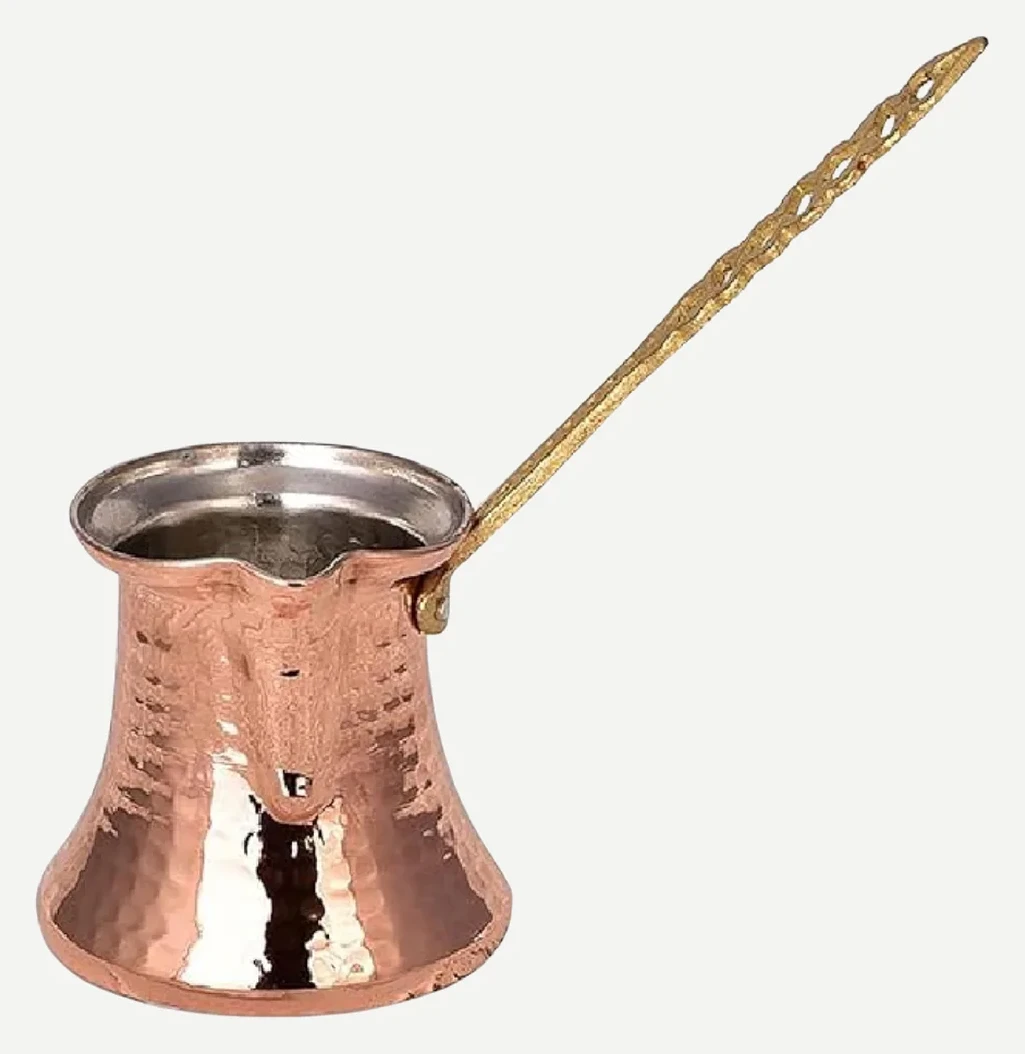
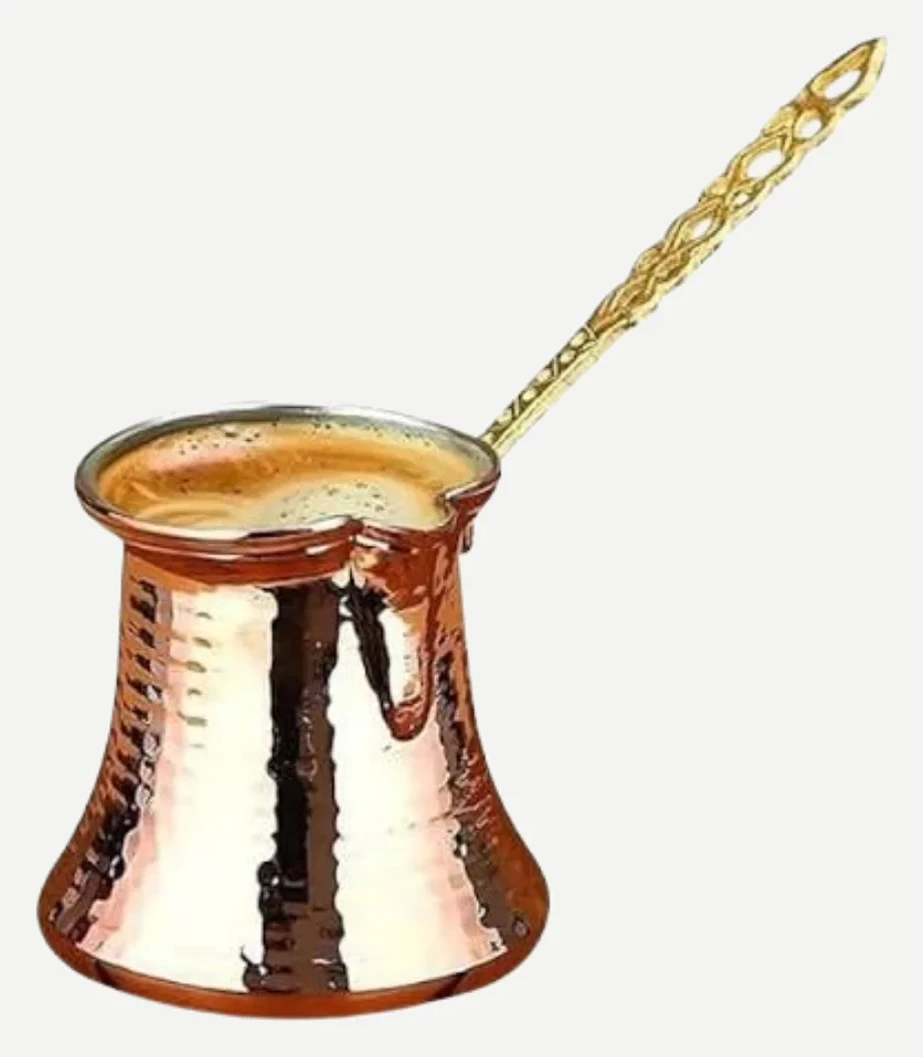
The DEMMEX Copper Cezve is handmade in Turkey from 1mm copper with a tin-lined interior and a wooden handle. It is the traditional object, it responds to heat the way the method assumes, and it will need re-tinning eventually. It is the highest-rated pot in this category and the handle is part of why.
The Caizen is a manufactured stainless pot at a stated $24.99. It is slower on the heat and it will outlive you without maintenance. It is also larger: 15 ounces against the DEMMEX's 9.
Choose the copper if you intend to take the method seriously and want the pot to help you. Choose the stainless if you want to make good Turkish coffee without owning something that needs looking after, or if you want a pot that will also do five other jobs. Neither is the wrong answer; they are answers to different questions.
Is the Caizen Stainless Steel Cezve worth it?
At $24.99 for the 15 ounce, marked down from a $29.99 list price, this is at the inexpensive end of a category where handmade copper runs to several times that. The 24 ounce is $29.99.
For the money it is straightforwardly good value, and the reason is that a cezve is a simple object. There is no mechanism, no seal, no electronics and nothing to fail. What you are buying is a shape and a material, and both are correct here.
Amazon buyers rate it 4.5 out of 5 across 838 ratings, which is a large enough sample to mean something. We do not score on other people's ratings and we do not publish an aggregate, but a pot that has been bought by 200 or more people in a month and holds that average is not a lottery.
The honest reservation is the heat response, and it is worth exactly as much as your ambitions for the coffee. If you are making Turkish coffee twice a week for guests, you will never notice. If you are chasing foam, copper is a better tool.
Who should buy it (and who should not)
Buy it if
- You want to start making Turkish coffee without spending much, you cook on gas, electric coil or ceramic, you would rather rinse a pot than maintain one, or you want a small versatile pot that also froths milk and melts butter
- The 15 ounce size suits anyone brewing for more than themselves
Skip it if
- Your hob is induction, in which case it will not work at all
- Skip it too if you already brew Turkish coffee regularly and are working on the foam, where copper's responsiveness is a real advantage, or if the object itself matters to you, because a hand-engraved copper cezve is a different kind of thing to own
If you are unsure whether this method is for you at all, Turkish coffee against espresso sets out what you are choosing between.
Frequently Asked Questions
Is the Caizen cezve induction compatible?
No. The listing states it is not compatible with induction cooktops. Gas, electric coil and ceramic are all fine. If your kitchen is induction, this is not the pot to buy.
What size Caizen cezve should I get?
The 15 ounce brews three to four of the small servings Turkish coffee is drunk in and costs $24.99. The 24 ounce is $29.99. A cezve is easiest to control between half and two thirds full, so buy for the number of people you usually brew for rather than the maximum.
Is stainless steel as good as copper for Turkish coffee?
It makes the same coffee and it is less responsive doing it. Copper heats and cools faster, which widens the window in which you can pull the pot as the foam rises. Stainless keeps climbing for a moment after it leaves the heat, so use a lower flame and take it off earlier.
Does it need re-tinning like a copper cezve?
No. Re-tinning applies to copper pots, which are lined with tin to stop the copper reacting with the coffee. Solid stainless has no lining to wear through.