What is a balance siphon?
A vacuum brewer that turns itself off, using nothing but a lever and the weight of water.
Diguo publishes glass chambers on a gold-plated double-ridged fulcrum with a Tee handle, a decorative holed balance lever, a matching black wooden base, a 500ml capacity, and a reusable cloth filter the maker says admits only the tiniest particles and lasts many brews. It measures 12.4 by 19 by 17.25 inches.
The mechanism, which is the entire product
Water leaving the boiler makes it lighter, and the lever does the rest.
A balance siphon has two vessels on a beam. One holds water over a spirit burner; the other holds the coffee. As the water heats, vapour pressure drives it along a tube into the coffee vessel, where it steeps.
Because the water has physically left the boiler, that side of the beam becomes lighter. At a set point the balance tips, and the movement snuffs or swings away the burner. With the heat gone the boiler cools, a vacuum forms, and the coffee is drawn back through the cloth filter into the now-empty vessel, ready to pour.
Nothing is timed and nothing is electronic. The brew ends because the weight of the water says so. It is a nineteenth-century idea and it is still the only self-terminating manual brewer, which is worth more than it sounds: over-extraction is what ruins most manual coffee, and this one cannot over-steep.
Why balance siphons make clean coffee
Same reasons as any siphon, plus a steep that ends at exactly the same moment every time.
Like the Yama stovetop siphon, it steeps in full immersion at a stable temperature and draws down through cloth under vacuum, which filters finer than metal while passing more oil than paper.
What it adds is repeatability. On a stovetop siphon you decide when to remove the heat, and that decision moves the flavour every time. Here the mechanism decides identically on every brew. Diguo reports the result described as clean, aromatic and without bitterness, and the mechanism is a good reason for that rather than a marketing line.
What you are actually buying
A conversation piece, and the review should say so.
This is a large gold-plated object on a wooden board that takes up most of a sideboard. Diguo's own copy calls it a conversation starter and a centre of attraction, which is honest.
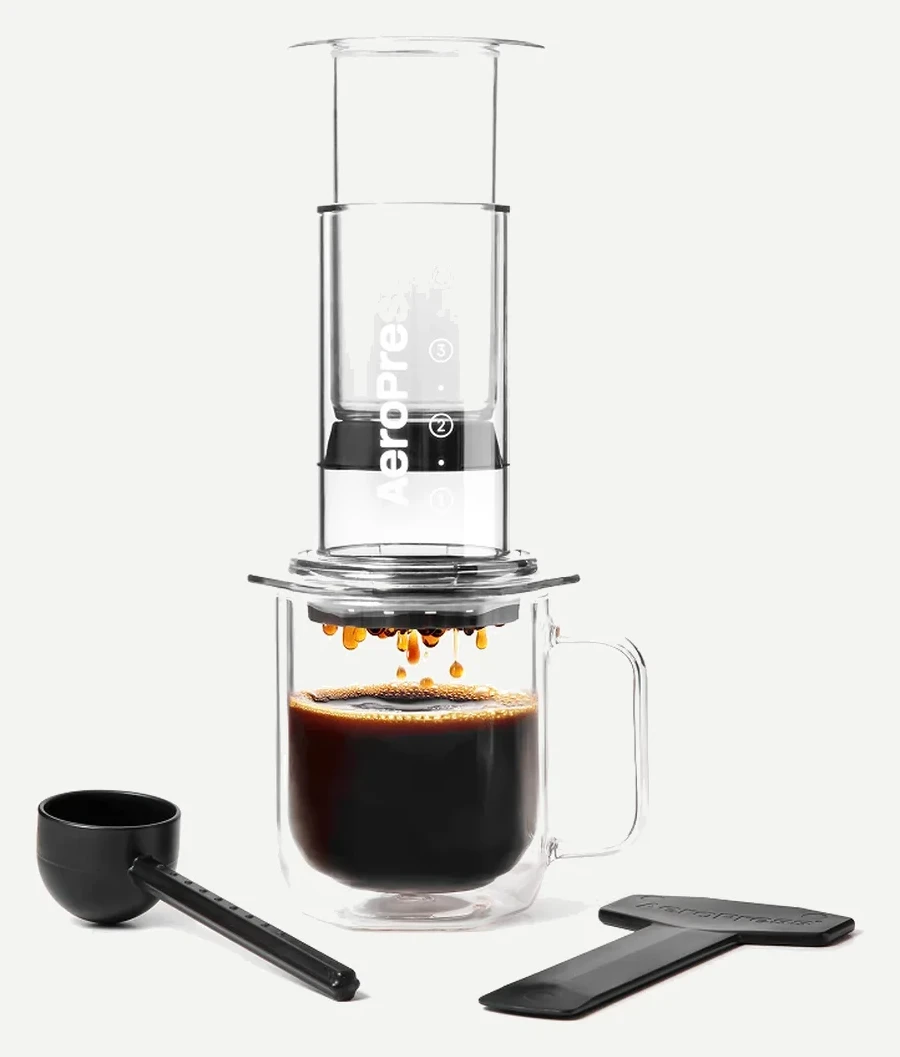
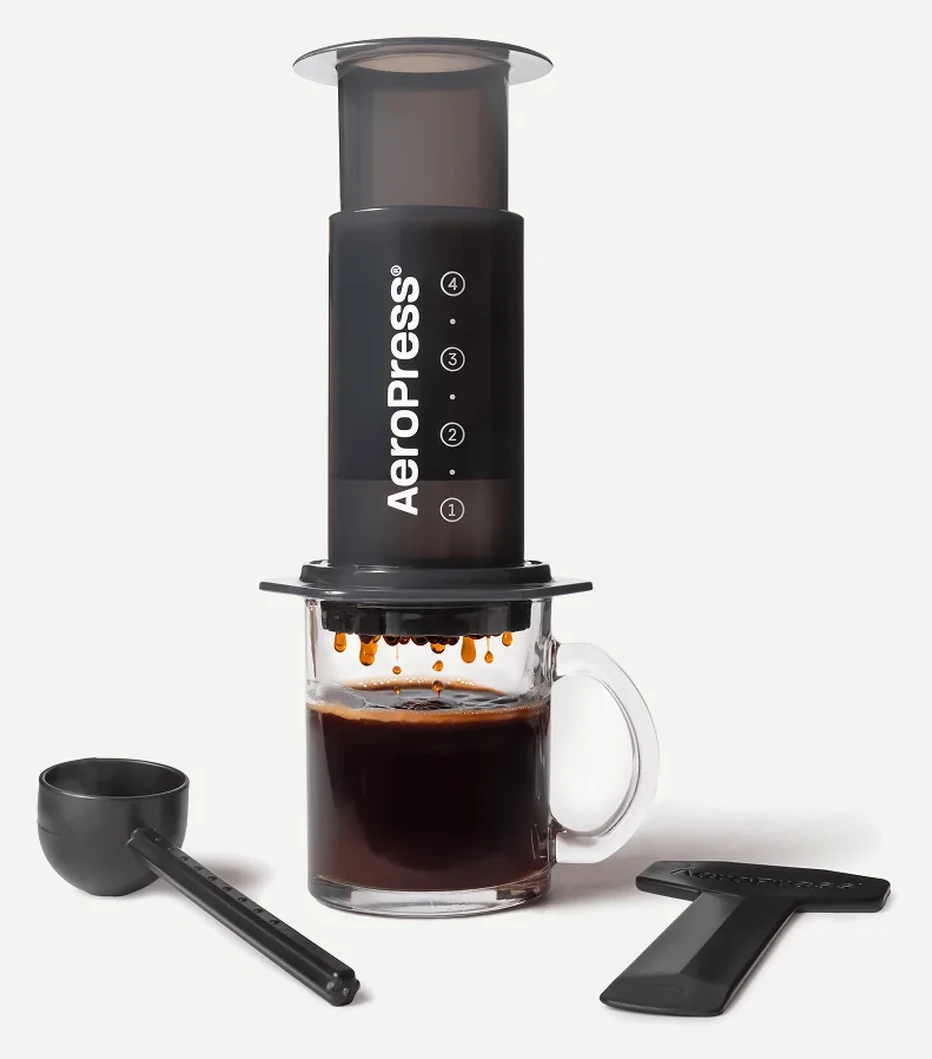
It is not a practical daily brewer. It is slow, it uses a spirit burner, it has several glass parts, and it needs cleaning after each use including the cloth filter. Nobody makes coffee in one before work. Bought as a thing to use on a Sunday or to serve guests from, it is excellent; bought as equipment, it makes no sense against an AeroPress Original at a fraction of the price.
Balance siphon vs stovetop siphon
Same physics, and the balance one removes the operator.
The Yama glass siphon is smaller, cheaper, needs a hob, and asks you to judge when to lift it off. It stores in a cupboard.
The Diguo brings its own burner, ends its own brew, and does not really store anywhere. Choose on whether you want a brewer or a display piece that happens to brew.
Is the Diguo balance siphon worth it?
Worth it as an object and as a gift. Not worth it as a coffee purchase.
The self-terminating mechanism is genuinely clever and the coffee is genuinely clean. It is also large, slow and fragile, and a stovetop siphon gets you most of the cup for much less.
Diguo publishes no weight, no warranty term, no parts count, no replacement parts availability and no material for the glass on this listing. For a brewer this fragile, the absence of stated spare parts is the gap that matters.
Who should buy it (and who should not)
Buy it for a sideboard, a gift, or a Sunday.
It suits somebody who enjoys the theatre, serves coffee to guests as an event, and has the space to leave it out.
Do not buy it for a weekday, do not buy it for a small kitchen, and do not buy it expecting spare glass to be easy to find.
Frequently Asked Questions
How does a balance siphon know when to stop?
The water physically leaves the boiler, making that side lighter. The beam tips and the movement takes the burner away.
Does it need electricity?
No. It uses a spirit burner and the balance mechanism.
How much coffee does it make?
500ml.
What filter does it use?
A reusable cloth filter, which the maker says lasts many brews. Rinse it well and keep it wet or fully dry.
Is the coffee actually good?
Yes. Vacuum draw-down through cloth is a genuinely clean method, and a self-terminating brew cannot over-steep.