What is the Gevi 20Bar Super Automatic Espresso Machine?
The Gevi 20Bar is a dual-boiler, semi-automatic espresso machine with a built-in grinder, sold at $699.99 for home use.
Gevi is a consumer appliance brand that has expanded aggressively into the home espresso category. This machine targets buyers who want more than a single-boiler entry model but are not ready to invest in separates. The 58mm portafilter and PID control position it above budget superautos.
At $699.99, it competes in a tier where dual-boiler machines are uncommon. The inclusion of both pressurised and non-pressurised filter baskets means it covers beginners and those ready to develop technique, without requiring an immediate additional purchase.
Gevi 20Bar Super Automatic Espresso Machine shot quality: what it can actually pull
The 20Bar pulls on a credible extraction spec, with PID control, pre-infusion, and a full 58mm portafilter all confirmed.
PID temperature control keeps brew water stable across shots, which is one of the most meaningful variables in espresso extraction. Combined with pre-infusion, visible on the pressure gauge's dedicated range, the machine addresses the two factors that cause the most inconsistency at this price point.
The 58mm portafilter is a genuine differentiator. Most machines in this bracket use 54mm baskets, and the wider diameter gives better puck preparation and more even water distribution. Single-wall baskets are included, so buyers can use freshly ground coffee without the pressurised basket masking extraction feedback.
- PID control and pre-infusion together reduce the two most common causes of sour or bitter shots.
- The 58mm portafilter is wider than the 54mm on comparable rivals, giving more even extraction across the puck.
- Single-wall baskets are included, allowing direct feedback on grind quality and dose rather than a pressurised result.
- Steam pressure and boiler volume detail is limited, so milk-based drink quality is harder to predict from the spec alone.
What you can brew with it
The 20Bar handles espresso and milk-based drinks, with both pressurised and non-pressurised baskets covering a range of user skill levels.
The integrated grinder and dual baskets mean the machine covers everything from a beginner pulling their first shot with a forgiving dual-wall basket, to someone working toward a properly dialled-in single-wall extraction. Both use cases are supported without extra purchases.
A steam wand is included, so lattes and cappuccinos are possible. The dual-boiler arrangement suggests less waiting between brewing and steaming than a single-boiler machine requires. Filter coffee and other brew methods are outside its scope entirely.
- Espresso from both pressurised and non-pressurised baskets suits beginners and developing home baristas.
- The steam wand supports milk texturing for lattes and cappuccinos without a separate frother.
- Dual boilers reduce the wait between pulling a shot and steaming milk, which matters for multi-drink orders.
- It is not designed for filter coffee, pour-over, or any brew method outside espresso and steamed milk drinks.
Living with it, day to day
Day-to-day ownership means regular manual descaling, drip tray emptying, and grinder maintenance with no plumbing connection available.
Without a plumbing connection, the water tank needs refilling by hand and descaling is the owner's responsibility on a schedule they set themselves. For a dual-boiler machine, consistent descaling matters more than on a single-boiler, because scale damage to two boilers is proportionally more costly.
The integrated grinder adds a cleaning step that a machine without one does not require. Grinder burrs accumulate oils from coffee and need periodic purging. The pressure gauge is a passive component and requires no maintenance, but the portafilter, baskets, and steam wand all need rinsing after each use.
- Descaling is manual and the owner must track their own interval, without a confirmed automated reminder.
- The steam wand needs purging and wiping after every milk session to prevent milk residue baking onto the tip.
- The integrated grinder requires periodic cleaning to prevent stale oil buildup affecting shot taste.
- The drip tray and water tank both need manual attention daily in regular household use.
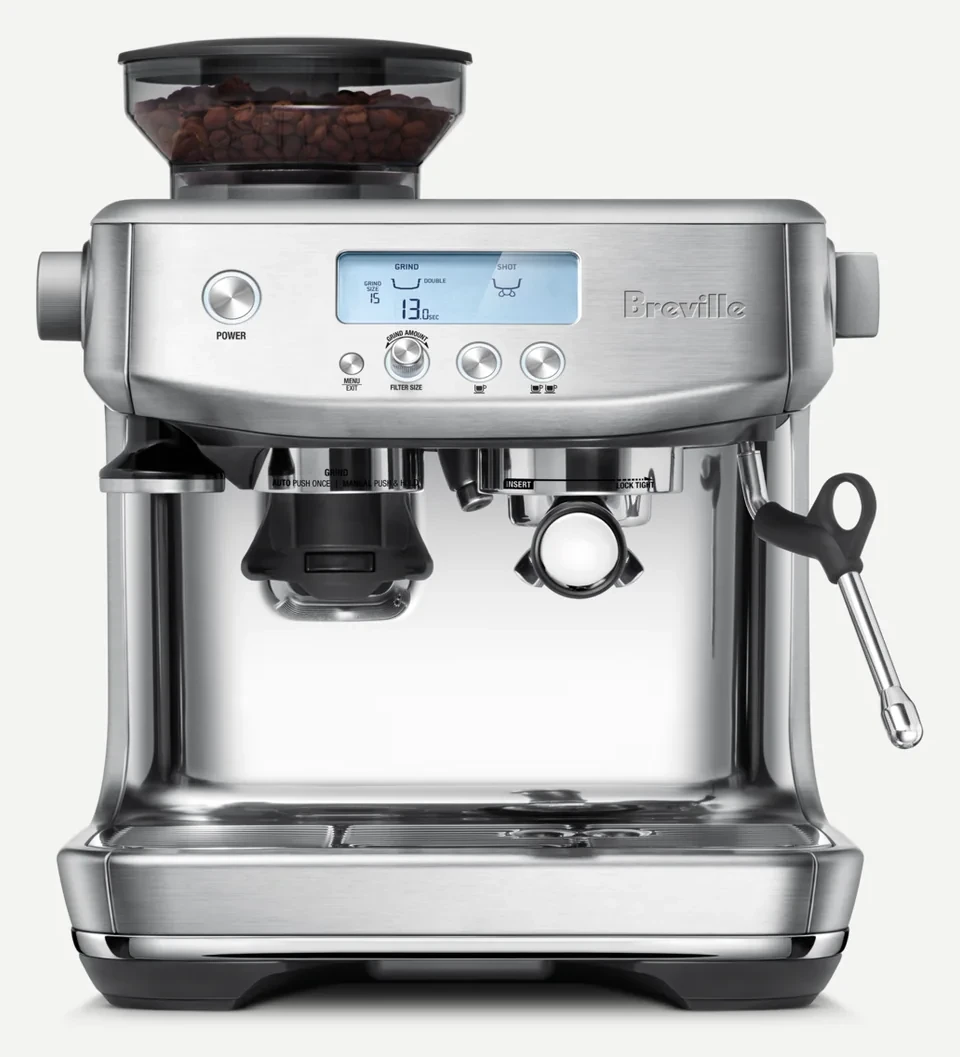
Gevi 20Bar Super Automatic Espresso Machine vs Breville Barista Pro
The 20Bar and the Barista Pro are both integrated-grinder semi-automatics with PID and pre-infusion, separated by $150 and a few key spec differences.
The most concrete difference is portafilter size. The 20Bar uses a 58mm basket, the Barista Pro uses 54mm. Both publish 30 grind settings. The Barista Pro counters with a ThermoJet that heats in three seconds, 30 documented grind settings with dose control, an LCD shot clock, and a two-year warranty backed by Breville's established service network.
The 20Bar lists two boilers against the Barista Pro's single ThermoJet. If the dual-boiler configuration delivers genuine simultaneous brew and steam capability, that is a practical advantage for making multiple milk drinks. The Barista Pro's grinder spec is more detailed, which matters for buyers who want to control grind precisely from day one.
- The 20Bar's 58mm portafilter is wider than the Barista Pro's 54mm, which improves puck evenness.
- The Barista Pro heats in three seconds and adds a documented dose-control grinder; both machines publish 30 grind settings.
- The Barista Pro carries a confirmed two-year warranty and Breville's repair infrastructure, which the 20Bar cannot match on published information.
- The 20Bar costs $150 less and lists two boilers, which could mean faster milk drinks if the spec holds in practice.
Is the Gevi 20Bar Super Automatic Espresso Machine worth it?
The 20Bar is worth considering at $699.99 if the 58mm portafilter and dual boilers are priorities, but the Barista Pro's clearer spec and service network are real competition at $150 more.
On paper, the 20Bar packs a strong extraction spec for $699.99. PID, pre-infusion, a 58mm portafilter, dual boilers, and both basket types is a list that would cost more from an established Western brand. The gap in grinder detail and service track record is the honest trade.
Buyers who prioritise portafilter diameter and dual-boiler convenience, and who are comfortable with less documented grinder control, will find it a reasonable buy. Buyers who want the assurance of a well-documented grinder, a fast heat-up time, and a proven warranty are better served by the Barista Pro despite the higher price.
Who should buy it (and who should not)
The 20Bar suits developing home baristas who want a 58mm dual-boiler machine under $700, and it does not suit buyers who prioritise grinder documentation or brand service coverage.
The included dual-wall baskets make early shots forgiving, and the single-wall baskets give room to grow. Someone moving up from a pod machine or a basic single-boiler will find this a meaningful upgrade without crossing into the four-figure bracket.
Anyone who expects manufacturer service support comparable to Breville or De'Longhi, will find the gaps in the published spec harder to accept at this price.
Buy it if
- You want a 58mm portafilter and dual boilers under $700 and are comfortable researching grinder adjustments independently.
- You are moving up from a pressurised-basket beginner machine and want room to develop technique without buying separates.
- Milk-based drinks matter to you and you want the potential of simultaneous brew and steam without paying over $800.
Skip it if
- You want a fully documented grinder with confirmed settings and dose control before you buy.
- A manufacturer warranty and established repair network are non-negotiable for a machine at this price.
- You make only black espresso and have no use for the dual-boiler steam advantage, making the Barista Pro's grinder spec more relevant.
Frequently Asked Questions
Is the Gevi 20Bar Super Automatic Espresso Machine good for espresso?
The published spec supports genuine espresso. PID temperature control, pre-infusion, and a 58mm non-pressurised basket are all present, and single-wall baskets are included for buyers willing to dial in grind and dose. The result quality will depend on how well the integrated grinder is adjusted, and grinder detail in the published spec is limited.
What size portafilter does the Gevi 20Bar use?
The 20Bar uses a 58mm portafilter, which is wider than the 54mm found on machines like the Breville Barista Pro. The wider diameter allows more even water distribution across the puck. Both dual-wall pressurised and single-wall non-pressurised baskets are included in the box.
Does the Gevi 20Bar have a built-in grinder?
Yes, an integrated coffee grinder is built into the machine. This removes the need to buy a separate grinder, which helps keep the total cost down. The grinder's burr type and number of settings are not detailed in published specification information currently available, so buyers who want precise grind control should research this before purchasing.
Does the Gevi 20Bar have dual boilers?
The machine lists two boilers. A dual-boiler arrangement typically allows brewing and steaming to happen closer together without switching modes or waiting for temperature to recover. Steam output and boiler volume specifics are not detailed in available published information, so real-world performance for back-to-back milk drinks is worth investigating in user reviews.
How do I descale the Gevi 20Bar?
The machine is not plumbable, so descaling is a manual process carried out by the owner. A confirmed descaling interval is not available in the published specification. For a dual-boiler machine, regular descaling is particularly important, as scale buildup affects two heating elements. Following Gevi's instruction manual for frequency and descaling solution type is the safest approach.
How does the Gevi 20Bar Super Automatic Espresso Machine compare to the Breville Barista Pro?
The 20Bar costs $150 less and uses a wider 58mm portafilter, while the Barista Pro heats in three seconds and adds documented grind settings, an LCD shot clock, and a two-year warranty. The 20Bar lists two boilers against the Barista Pro's single ThermoJet. Buyers who prioritise portafilter size and dual boilers at a lower price lean toward the 20Bar; those who want grinder control and service coverage lean toward the Barista Pro.