What is the MiiR Pourigami?
A dripper that is flat until you need it, which no other brewer here manages.
MiiR publishes three interlocking panels that snap together and fold flat, medical-grade stainless steel construction, taller walls credited with holding the filter above the brew for a crisper cup, and a slim carrying case for the panels and filters. It takes paper cone filters and sits over a mug or a carafe.
Why flat-packing is the whole product
Every other brewer is a rigid cone, and a rigid cone is mostly air you have to carry.
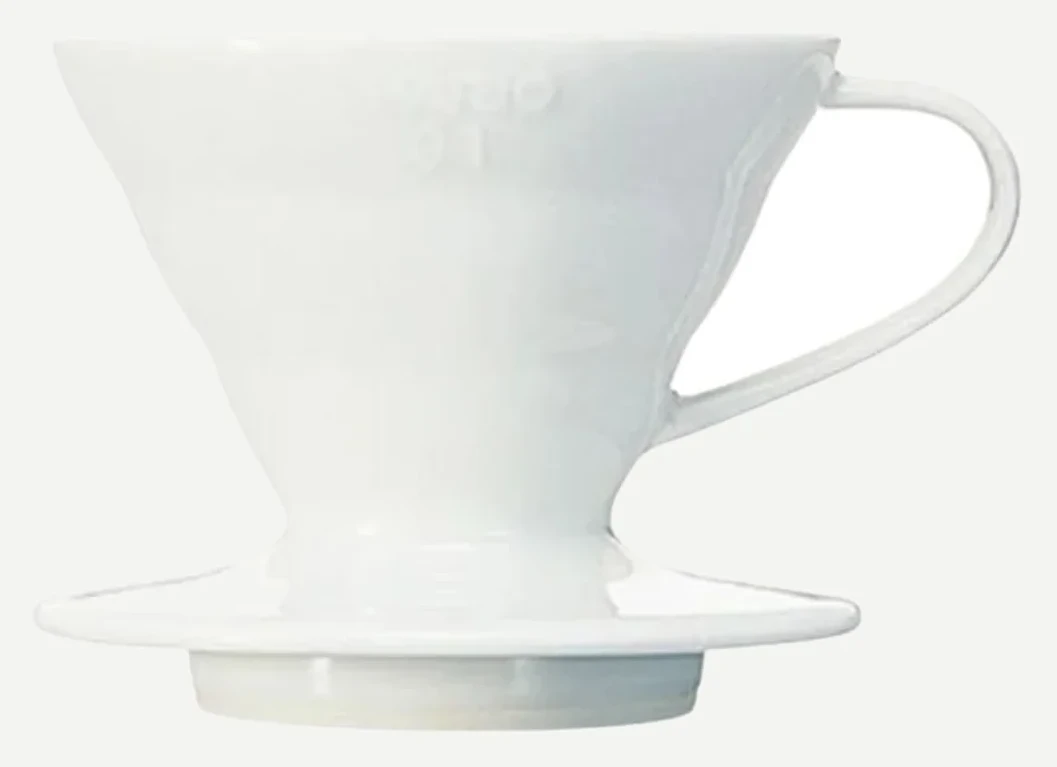
A V60 is ceramic or plastic and takes up a mug's worth of space in a bag, with a point that catches on everything. A Melitta cone is cheaper and nests better but is still a cone. Neither is something you slip into a laptop sleeve.
Three flat panels are close to nothing. They go in a jacket pocket, a pannier or a rucksack lid, and there is no ceramic to crack, no plastic to warp and no moving part to fail. For anybody who wants a proper filter coffee in a hotel room, on a train, at a campsite or at a desk, the format is genuinely better than a rigid dripper rather than a compromise of one.
The taller walls, and what steel does to the brew
The panels hold the paper clear of the bed, which is the same job ribs do in a cone.
MiiR credits the taller walls with positioning the filter above the brew for a crisper cup. Practically, panels that meet at edges leave channels between the paper and the metal, so water can move down the outside of the filter rather than being pressed flat against a wall. It is a rib pattern by another route.
Steel is the honest weakness. It has almost no thermal mass at this thickness, so it neither absorbs much heat from the brew nor holds any, and outdoors in cold air a thin metal cone loses temperature faster than warm ceramic would. Preheating helps less than it does with ceramic, because there is nothing to preheat. Brew quickly and use water hotter than you would indoors.
MiiR Pourigami vs a Melitta cone
Both travel. One survives being sat on.
A Melitta 64007 costs a small fraction as much and is entirely adequate in a suitcase. It is plastic, so it is light, and if it breaks you have lost almost nothing.
The Pourigami packs to nothing, is steel rather than plastic, and comes with a case that keeps the filters flat too. If travel is occasional, the Melitta. If it is constant, and space is measured rather than assumed, the Pourigami earns its price.
Is the MiiR Pourigami worth it?
Worth it only if the packing matters. As a kitchen dripper it is beaten by cheaper things.
On a counter it has no advantage over a ceramic cone and several disadvantages, chiefly heat. Its case is entirely about what it does in a bag, and judged that way there is very little competition.
MiiR publishes no hole count, no hole diameter, no rib design, no capacity, no weight, no country of manufacture and no warranty term on this listing. It also carries only 10 reviews, which is very thin, and it is here because it is the only flat-packing dripper on the site. There is no reusable filter, so you carry papers.
Who should buy it (and who should not)
Buy it for a rucksack, a bike bag, a hotel, or a desk drawer.
It suits somebody who travels regularly, camps, commutes, or simply wants a brewer that stores in the space of an envelope.
Do not buy it as a main brewer, where a Kalita Wave or a ceramic cone brews better for similar money. And do not buy it expecting heat retention, because a thin steel panel has none.
Frequently Asked Questions
How does the MiiR Pourigami assemble?
Three panels interlock by hand in seconds, and separate again to lie flat.
What filters does it take?
Paper cone filters. There is no reusable version, so you carry papers with it.
Does it keep the coffee hot?
No. Thin steel has almost no thermal mass. Outdoors, use hotter water and brew quickly.
Does it come with a case?
Yes, a slim carrying case that holds the panels and filters together.
Can it sit on a carafe as well as a mug?
Yes, it works over either.