What is the Philips 4300 LatteGo?
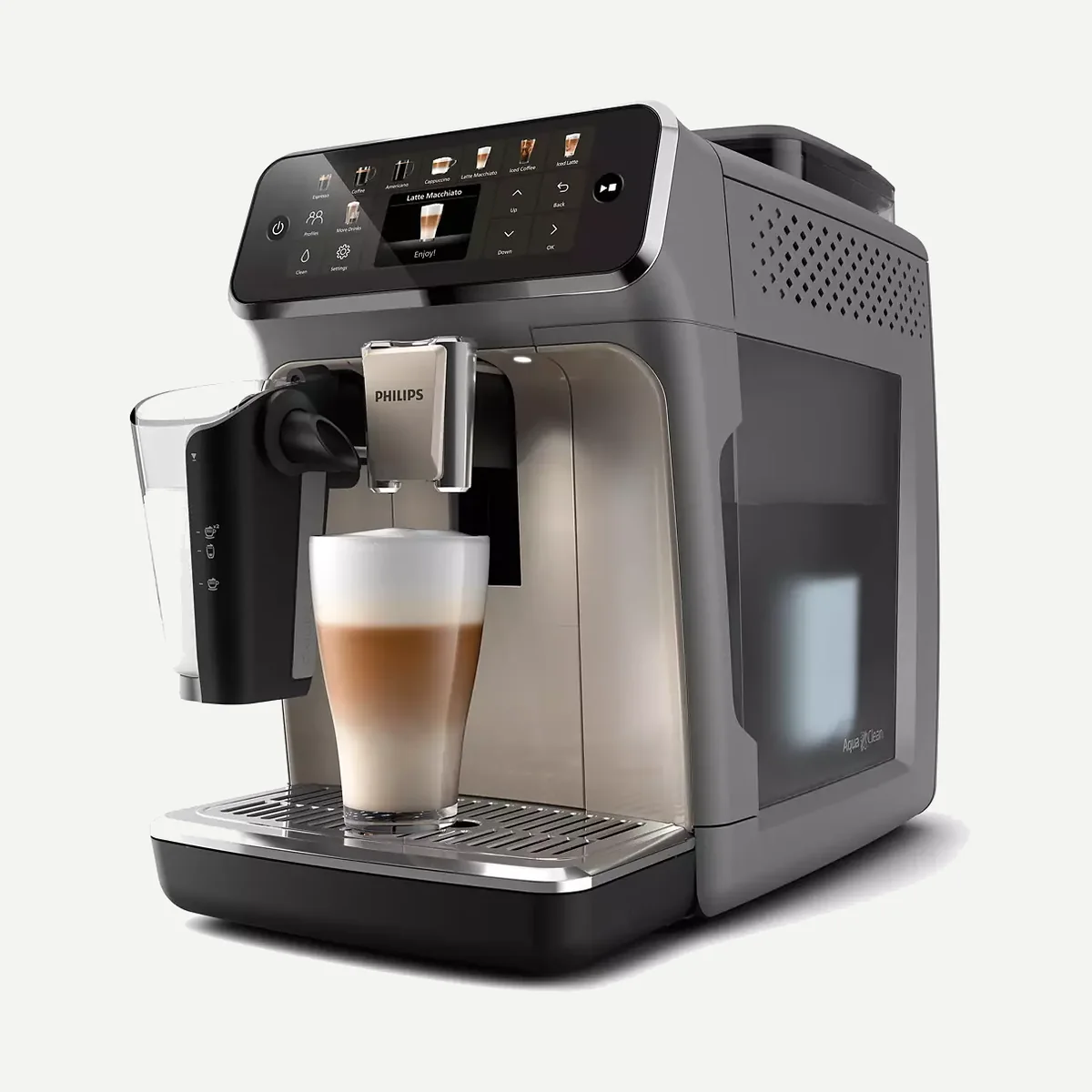
The Philips 4300 LatteGo is a fully automatic bean-to-cup espresso machine with an integrated cyclonic milk frothing system, priced at $999.
It grinds, brews, and froths in sequence without requiring the user to handle a portafilter or steam wand. The ceramic grinder offers 12 settings, and Pre Brew Aroma control introduces a pre-infusion pause before full pressure is applied to the puck.
The LatteGo milk system attaches to the front of the machine, uses a cyclonic frothing method, separates into two parts for cleaning, and is rated dishwasher-safe. Philips lists compatibility with plant-based milks alongside dairy.
Philips 4300 LatteGo grinder and extraction: what reaches the cup
The 4300 pulls espresso with pre-infusion and 15 bars of pump pressure, but gives buyers no visual feedback on extraction quality.
Pre Brew Aroma control wets the grounds before full pressure engages, which mirrors the pre-infusion step found on higher-end machines. Combined with 15 bars of pump pressure, the system has the mechanical foundation to produce balanced shots when the grind setting is correct.
The ceramic grinder runs across 12 settings from fine to coarse, giving meaningful room to adjust for different beans. With no bottomless portafilter option, the only feedback channel is taste, so iterative adjustment takes longer than on a machine where you can watch the pour.
- Pre Brew Aroma control introduces a pre-infusion step that allows grounds to bloom before full pressure is applied.
- Fifteen bars of pump pressure matches the standard across this class of superautomatic machine.
- Twelve ceramic grinder settings give enough range to accommodate lighter and darker roasts, but no burr size is listed.
- No bottomless portafilter means uneven extraction cannot be spotted by eye, only corrected by taste.
What you can brew with it
The 4300 covers espresso-based milk drinks automatically, but it is not designed for manual brewing or wand-textured microfoam.
Every drink that combines ground coffee and frothed milk sits within reach. The LatteGo system handles both dairy and plant-based milks, and frothing is automatic, so lattes and cappuccinos require a single button press after beans are loaded and the tank is filled.
Manual espresso craft is off the menu. There is no steam wand and no pressure gauge, so extraction is not something you can watch or measure. Buyers chasing latte art or wand-textured microfoam will need a different machine entirely.
- Automatic frothing with plant-based milk support covers oat and almond lattes without extra accessories.
- Espresso, lungo, and milk-based drinks are all within range given the grinder and integrated system.
- No steam wand means textured microfoam for latte art is not achievable on this machine.
- No manual brew mode or separate filter basket option limits experimentation beyond espresso-style extraction.
Living with it, day to day
Day-to-day ownership centres on the LatteGo milk system, which is the quickest part to clean, and a 1.8-litre tank that needs regular refilling.
The LatteGo unit separates into two parts and rinses or runs through a dishwasher cycle. Philips rates the full process at under ten seconds for a manual clean, which is faster than any system involving a wand and milk residue inside a steam tube.
The 1.8-litre water tank is larger than the Cadorna Prestige's 1.5-litre reservoir, reducing how often it needs topping up. The ceramic grinder requires less frequent replacement than a steel burr equivalent, though regular cleaning of the grind chamber still applies.
- The LatteGo milk system comes apart in two pieces and is dishwasher-safe, keeping the daily milk clean fast.
- A 1.8-litre water tank means fewer interruptions for top-ups compared with smaller-tank rivals in the same class.
- The ceramic grinder runs without the heat build-up associated with steel burrs, though the grind chamber still needs periodic clearing.
- Internal descaling and brew group maintenance are recurring tasks that any superautomatic at this price level demands on a schedule.
Philips 4300 LatteGo vs Gaggia Cadorna Prestige
The 4300 and the Cadorna Prestige are both automatic bean-to-cup machines near the $1,000 mark, with meaningfully different milk systems and warranty terms.
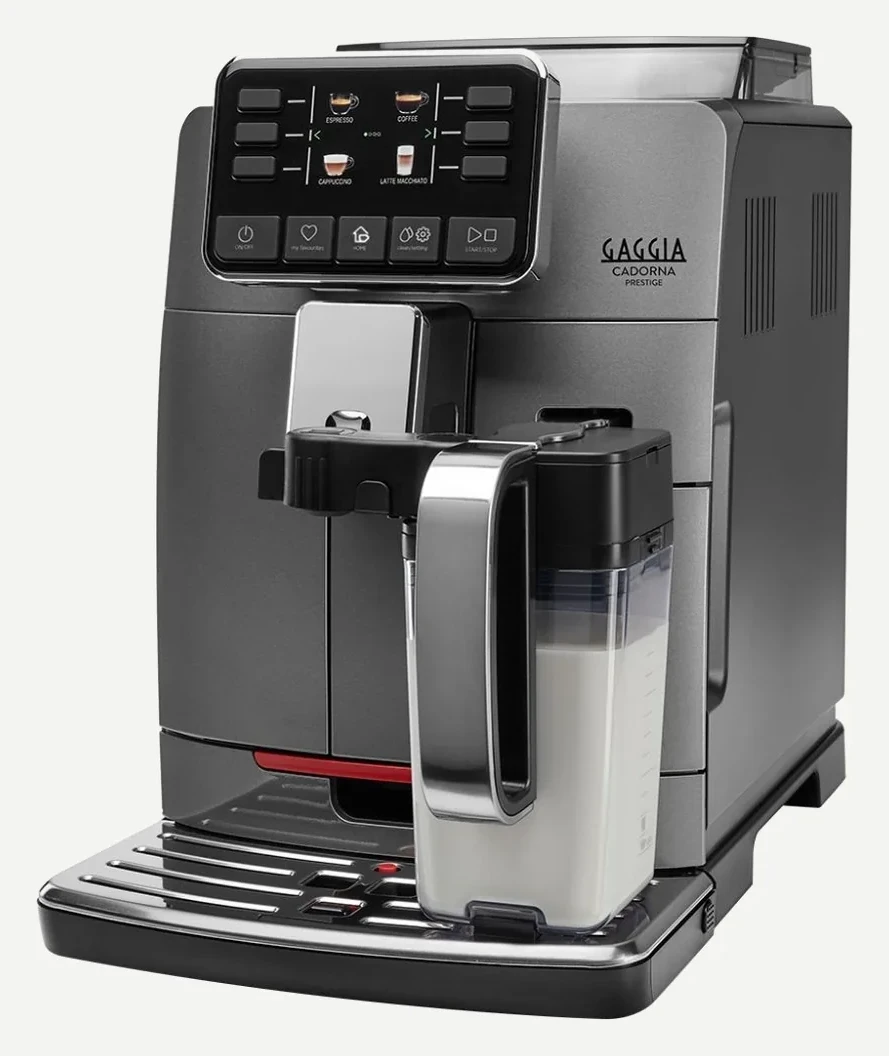
The Cadorna Prestige costs $1,049 and is made in Italy with an aluminium and stainless steel boiler. Its integrated milk carafe froths twice and removes bubbles automatically, and the body uses stainless steel elements alongside ABS. The 4300 costs $50 less, weighs 1.6 kg less, and carries a two-year warranty against the Cadorna's one-year cover.
The Cadorna Prestige has a 1.5-litre tank versus 1.8 litres here, and ten grinder settings versus twelve. Both machines run 15-bar pumps and include pre-infusion. The Cadorna ships in two colour options; the 4300 comes only in black.
- The 4300 carries a two-year warranty versus one year on the Cadorna, which matters if something fails in year two.
- The Cadorna uses a stainless steel boiler element and Italian manufacture, which may appeal to buyers focused on component quality.
- The 4300 offers twelve grinder settings and a 1.8-litre tank; the Cadorna gives ten settings and 1.5 litres.
- The LatteGo system cleans in under ten seconds and is dishwasher-safe; the Cadorna carafe runs an automatic cycle but is a different form factor.
Is the Philips 4300 LatteGo worth it?
At $999 the 4300 is worth considering if fast daily milk drinks and a long warranty matter more than manual espresso control.
The two-year warranty and dishwasher-safe milk system are concrete advantages at this price. For a buyer who wants to press a button before work and collect a finished latte, the machine delivers that without compromise. The ceramic grinder and pre-infusion step give the espresso side a reasonable foundation.
Buyers who want to refine shot quality visually, texture milk by hand, or access the brew group for hands-on dialling in will find the 4300 frustrating. The Cadorna Prestige costs $50 more and offers Italian manufacture and a steel boiler, so the comparison is worth making before committing to either.
Who should buy it (and who should not)
The 4300 suits buyers who prioritise convenience and low-effort cleanup over manual espresso craft or premium build materials.
Households that drink milk-based espresso drinks daily and want cleanup measured in seconds rather than minutes will get the most from this machine. The longer warranty and larger tank reduce friction over the ownership period.
Anyone who wants to grow into manual espresso technique, experiment with latte art, or monitor extraction through a bottomless portafilter should look elsewhere. The machine is built around automation, and that boundary is firm.
Buy it if
- You want automatic lattes and cappuccinos every morning with almost no cleanup afterward.
- A two-year warranty at this price point matters to you more than premium body materials.
- Plant-based milk is part of your daily routine and you need confirmed compatibility out of the box.
Skip it if
- You want to texture milk with a steam wand and develop latte art technique.
- You want more than this machine's drink list or more than one saved profile, which is what the Philips 5500 adds.
- Visual extraction feedback through a bottomless portafilter is part of how you dial in espresso.
- You prefer Italian manufacture or stainless steel construction and are willing to pay a small premium for it.
Frequently Asked Questions
Is the Philips 4300 LatteGo good for espresso?
It produces espresso using a 15-bar pump and Pre Brew Aroma control, which introduces a pre-infusion step before full pressure. The ceramic grinder offers 12 settings to adjust for different beans. Improving the coffee relies entirely on tasting and adjusting the grind, because nothing about the extraction is visible.
Is the Philips 4300 LatteGo dishwasher safe?
The LatteGo milk system is dishwasher-safe. It separates into two parts and Philips rates a manual clean at under ten seconds. The rest of the machine is not submersible, so only the milk unit goes in the dishwasher. This makes the milk side the easiest part of the daily cleanup routine.
Does the 4300 LatteGo work with oat milk?
Philips lists compatibility with plant-based milks for the LatteGo system, so oat milk and similar alternatives are covered. The cyclonic frothing method is designed to handle lower-fat liquids as well as dairy. Results will vary by oat milk brand and fat content, as they do on any automatic frothing system.
How many grind settings does the 4300 LatteGo have?
The built-in ceramic grinder has 12 settings running from fine to coarse. That range is enough to accommodate lighter roasts at finer settings and darker or more oily beans at coarser ones. Twelve steps gives more room for adjustment than the ten settings found on some rival machines at a similar price.
How big is the 4300 LatteGo water tank?
The water tank holds 1.8 litres. That is larger than several competing superautomatics in the same price bracket, including the Gaggia Cadorna Prestige at 1.5 litres. A bigger tank means fewer top-ups per day for households making multiple drinks in the morning, though it still requires regular refilling.
What warranty does the 4300 LatteGo come with?
The machine comes with a two-year warranty, which is longer than the one-year cover offered by several rivals at a similar price, including the Gaggia Cadorna Prestige. A two-year term provides meaningful protection given that internal components on superautomatic machines are not straightforward to repair independently.