What is the YJX Hand-Hammered Copper Cezve?
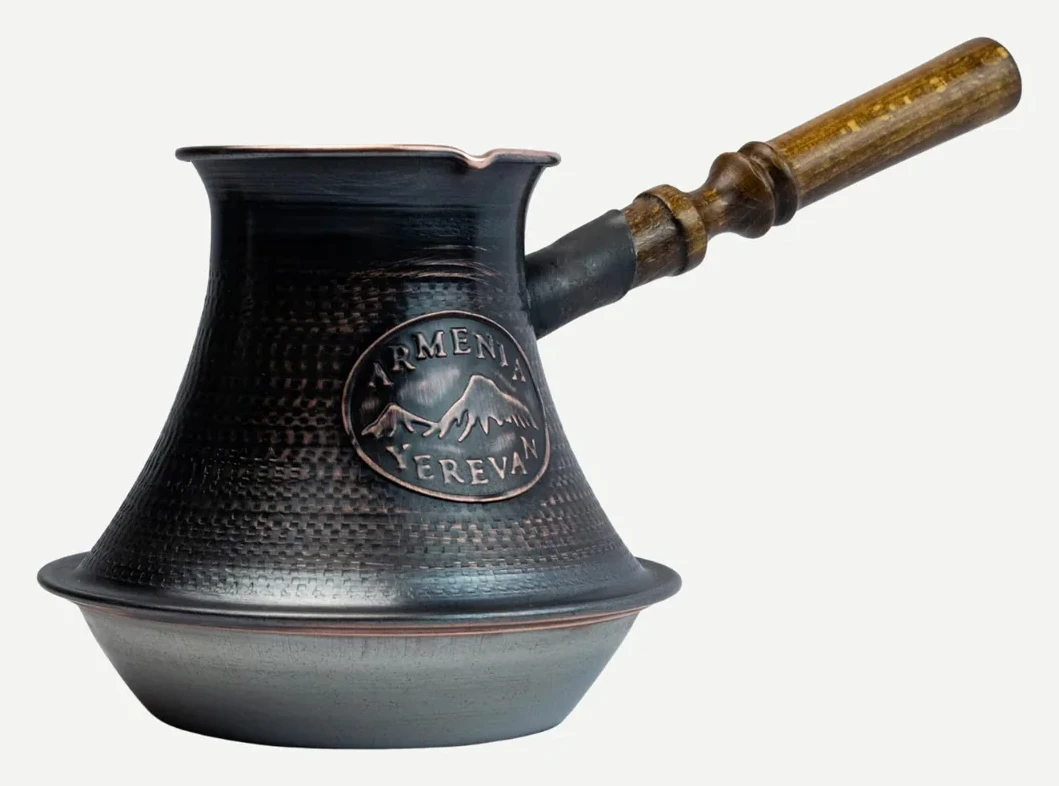
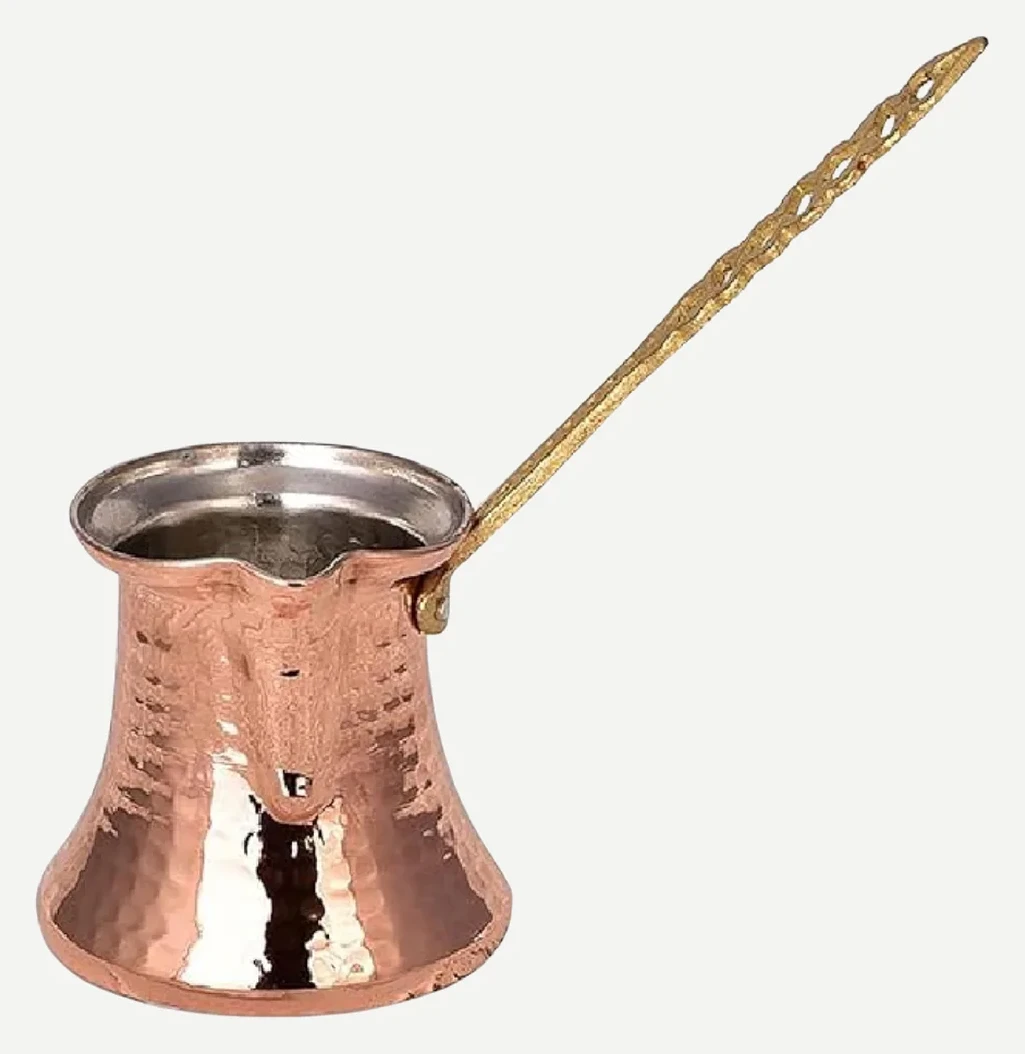
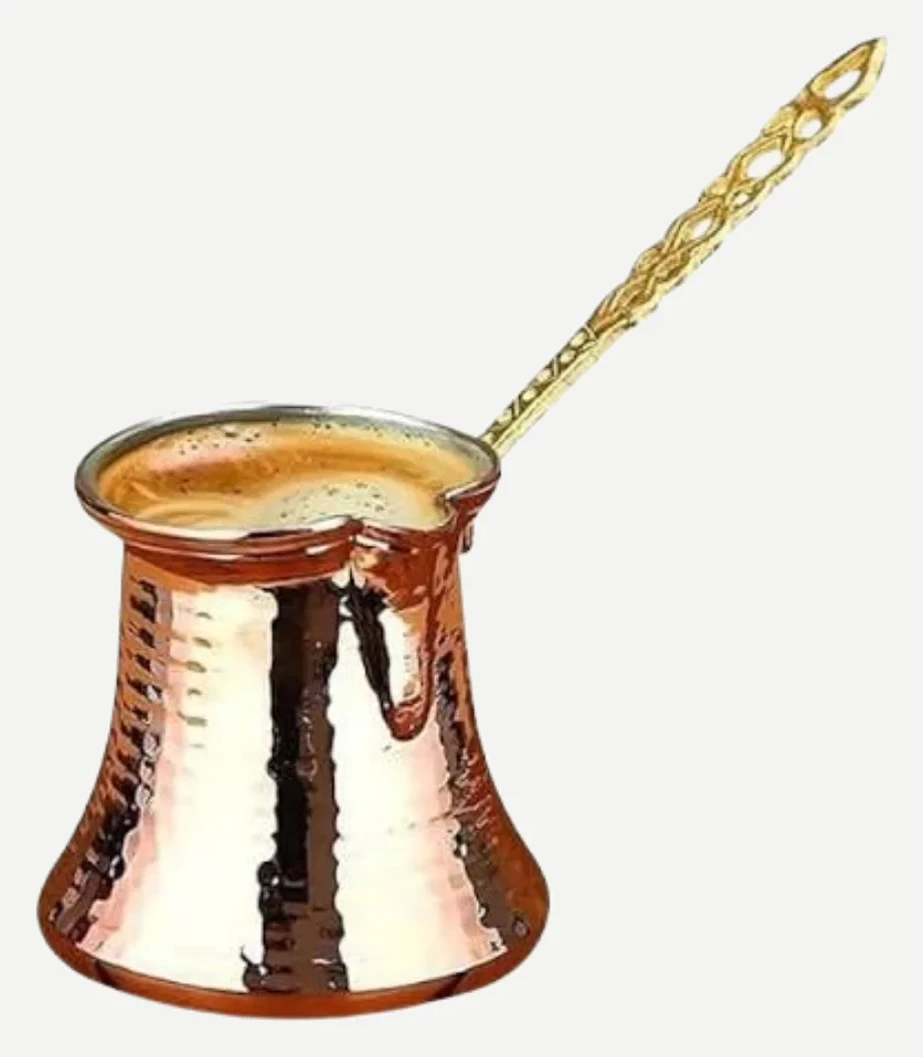
A 580ml hand-hammered copper cezve with a wooden handle, built from 1.2mm copper, at $61.75. It is the thickest copper pot in this category and among the dearest, and it has one open question.
The body is stated as 100% pure copper at 1.2mm, which is thicker than the 1mm the other copper pots here use. The finish is hammered by hand, the handle is wood, and the listed dimensions are 3.94 by 7.87 by 3.94 inches.
YJX name gas, electric and sand as compatible, and rule out induction. Sand is a genuinely interesting inclusion, since brewing a cezve buried in hot sand is how it is done where the method is taken most seriously - see Turkish sand coffee.
The lining question
Nothing in this listing mentions a lining. Every other copper cezve reviewed here states one: the BCS copper cezve is listed with a lead-free tin lining, the Hakan Hammered Copper Cezve comes with a long explanation of its tinning, and the DEMMEX Copper Cezve is tin-lined. YJX describe pure copper, thickness, hammering and the handle, and stop there.
That matters because copper reacts with acidic liquids, and coffee is acidic. A tin lining is the traditional answer and the reason every pot of this kind has one. The absence of the word in a listing is not proof the pot is unlined, and it is the one thing we would want confirmed before spending $61.75.
Ask the seller directly. If the answer is that it is lined, this is a strong pot. If it is genuinely unlined, it is a decorative object rather than a daily brewer, whatever the copper is worth.
Brew quality and what it is made of
Copper is the right material and 1.2mm is a real advantage over 1mm, though a smaller one than the numbers suggest. Thicker copper is more resistant to denting and warms slightly more evenly; it also responds a fraction more slowly, because there is more metal to heat. In practice both are far quicker than any stainless pot.
YJX claim copper "subtly softens water" and improves flavour. Treat that as marketing. What copper genuinely does is conduct heat quickly, which is the whole reason it is used here.
At 580ml this is a larger cezve, suggested for one to three people. That is generous for a method drunk in demitasse servings, so expect to brew it well under capacity most of the time.
Living with it, day to day
The wooden handle is the correct choice and the same one BCS and DEMMEX make. Wood does not conduct, so the pot can be lifted at the moment the foam climbs without reaching for a cloth. Compare the Hakan Hammered Copper Cezve's brass handle, which its own maker says needs mittens.
Care instructions are not given. For any copper pot the rules are the same regardless: hand wash, dry immediately, never scour, and never heat it empty. If it is tin-lined, those rules are not optional.
Sand is listed as a heat source, which is unusual and correct. It is also impractical for most kitchens - the point of sand is control, and a tray of it takes a long time to heat and longer to cool.
YJX Hand-Hammered Copper Cezve vs the BCS Hand-Engraved Copper Cezve
The two premium copper pots here, $61.75 against $49.99.
The BCS Hand-Engraved Copper Cezve is 1mm engraved copper, tin lined and stated lead-free, made in a named town, with a wooden handle, a spoon and a gift box.
The YJX is 1.2mm hammered copper with a wooden handle, larger at 580ml, and silent on lining and origin.
On specification the BCS answers more questions for less money, and that is the recommendation until the lining is confirmed. The YJX has the thicker body and, to many eyes, the better-looking one; a hammered finish is a different object from an engraved one.
Is the YJX Hand-Hammered Copper Cezve worth it?
At $61.75, marked down from $65, only the HandCraftoria at $89.90 is a dearer cezve here, and it is not the best specified. The extra 0.2mm of copper is real and it is not worth $12 on its own.
What you are actually paying for is the look. It is a handsome pot and hammered copper photographs like nothing else in a kitchen, which is a legitimate reason to buy something you will keep on a shelf.
Whether it is worth it as a brewer depends entirely on the answer to one question, and that question is answerable in a single message to the seller.
Who should buy it (and who should not)
Buy it if
- You want the thickest copper and the hammered finish, you brew for two or three, you cook on gas, and you have confirmed the lining
Skip it if
- You want the best copper cezve for the money, which is the BCS engraved copper cezve at $49.99 with every question answered, or the Hakan Hammered Copper Cezve at $23.90 if you can live with a brass handle
- Not at all if your hob is induction
Frequently Asked Questions
Is the YJX copper cezve lined?
The listing does not say. Every competing copper pot reviewed here states a tin lining and this one never mentions one, which is not proof it is unlined but is the single question worth asking the seller before you buy.
Why does copper need a lining at all?
Copper reacts with acidic liquids and coffee is acidic. Tin is the traditional barrier between the metal and the drink. It is soft, so it wears, and it can be renewed by a re-tinner.
Can it be used on sand?
YJX list sand as a compatible heat source, which is how Turkish coffee is brewed where the method is taken most seriously. Sand gives even heat and instant control, and it is impractical in most kitchens.
How thick is the copper?
1.2mm, against the 1mm used by the other copper pots reviewed here. Thicker copper dents less and heats slightly more evenly, and responds a fraction more slowly because there is more metal.