What is the Bosch 300 Series?
A bean-to-cup built around two things most of this shelf gets wrong: the burrs and the cleaning.
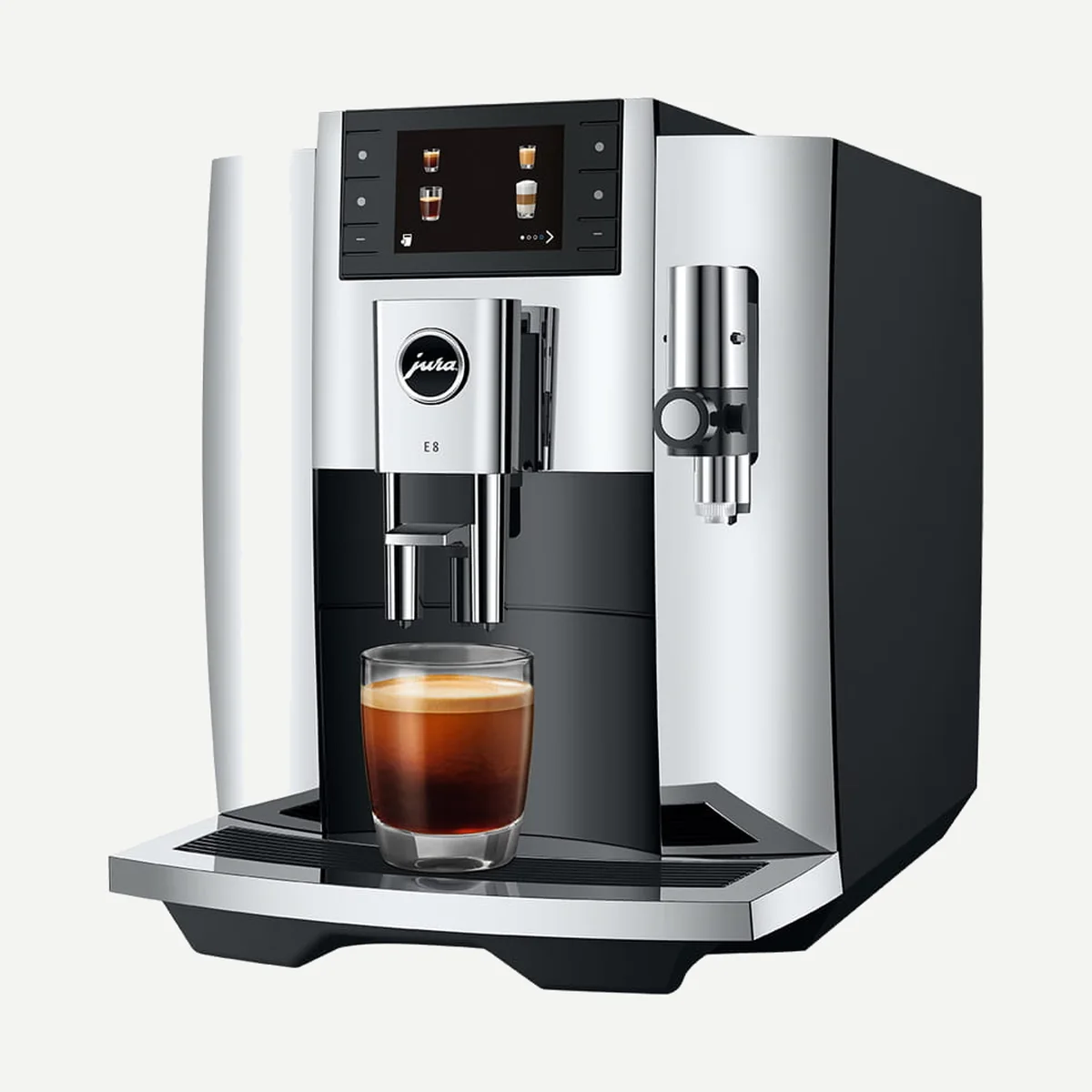
Bosch publishes a durable ceramic grinder said to grind precisely without overheating the beans, an adjustable milk frother that makes foam directly in the cup, one-touch espresso, cappuccino and latte macchiato, a touch control panel, a front-access removable brew unit with a Calc'n Clean cycle, and a 1.33 litre tank.
What a bean-to-cup machine actually trades away
It removes every decision, and the decisions were where the quality came from.
A superautomatic grinds, doses, tamps, brews and ejects the puck without you touching anything. That is a genuine engineering achievement and it is why these sell in the volume they do.
What it cannot do is let you change the things that make espresso good. The dose is set by the machine within a narrow range, the tamp pressure is fixed, and the puck is a small one, usually well under the 18g a home espresso machine with a 58mm portafilter uses. Smaller doses in a fixed chamber give less room for the water to work, which is why superautomatic espresso is generally thinner and less sweet than a good manual shot from the same beans.
The honest framing is that you are buying consistency and speed rather than a ceiling. A superautomatic will make a decent cup every time with no skill at all. A portafilter machine will make a bad cup until you learn it and a much better one afterwards.
Ceramic burrs, and why they suit a machine like this
Ceramic is harder than steel and does not conduct heat the way steel does.
A superautomatic grinds on demand, several times a morning, in a sealed housing next to a hot brew unit. Steel burrs conduct that heat into the beans, and heat drives off the aromatics that make coffee smell like coffee.
Ceramic is a poor conductor, so it stays cooler under repeated use, and it is harder so it holds an edge far longer. The trade is brittleness: a stone in the beans that a steel burr would shrug off can chip ceramic, and a chipped burr grinds unevenly permanently. In a hopper-fed machine that risk is small and the heat advantage is real, which is why ceramic turns up in superautomatics more often than in standalone grinders like the Baratza Encore.
A brew unit that comes out, which is the maintenance question
Superautomatics fail at the brew group, and the ones you cannot open fail sooner.
The brew unit is the chamber that receives the grounds, compresses them, passes water through and ejects the puck. It accumulates coffee oil and fines, and it has seals that need lubricating.
Machines with a sealed brew unit have to be serviced by a technician. A front-access removable unit can be rinsed under a tap weekly, which is the single biggest factor in how long one of these lasts. Bosch publishing it as removable, alongside a descaling cycle, is a longevity claim rather than a convenience one.
Is the Bosch 300 Series worth it?
Worth it for the maintenance story more than the drinks list.
Three one-touch recipes is fewer than the Dinamica's eighteen, and in-cup frothing gives less control than a carafe system. What you get instead is a grinder that will not cook your beans and a brew unit you can clean yourself.
Bosch publishes no pump pressure, no hopper capacity, no grind settings count and no warranty term here, and it is a newer entrant to this category than De'Longhi or Gaggia.
Who should buy it (and who should not)
Buy it if you intend to keep a superautomatic for a decade.
It suits one or two drinkers, which the maker names explicitly, and anybody who has had a bean-to-cup fail on them and wants one they can maintain. The touch panel keeps it simple to operate.
Do not buy it if you want a long drinks menu or a carafe milk system. And if you want the best cup rather than the least trouble, a portafilter machine and a good grinder still beat every machine on this page.
Frequently Asked Questions
Are ceramic burrs better than steel?
In a machine that grinds repeatedly, they run cooler and hold an edge longer. They are also more brittle, so a stone in the beans can chip them.
Can the brew unit be removed?
Yes, from the front, which is what lets you rinse it yourself. Sealed brew units need a technician.
Does it froth milk automatically?
Yes, adjustable and frothed directly in the cup rather than through a carafe and tubes.
How many drinks does it make?
Espresso, cappuccino and latte macchiato at one touch.