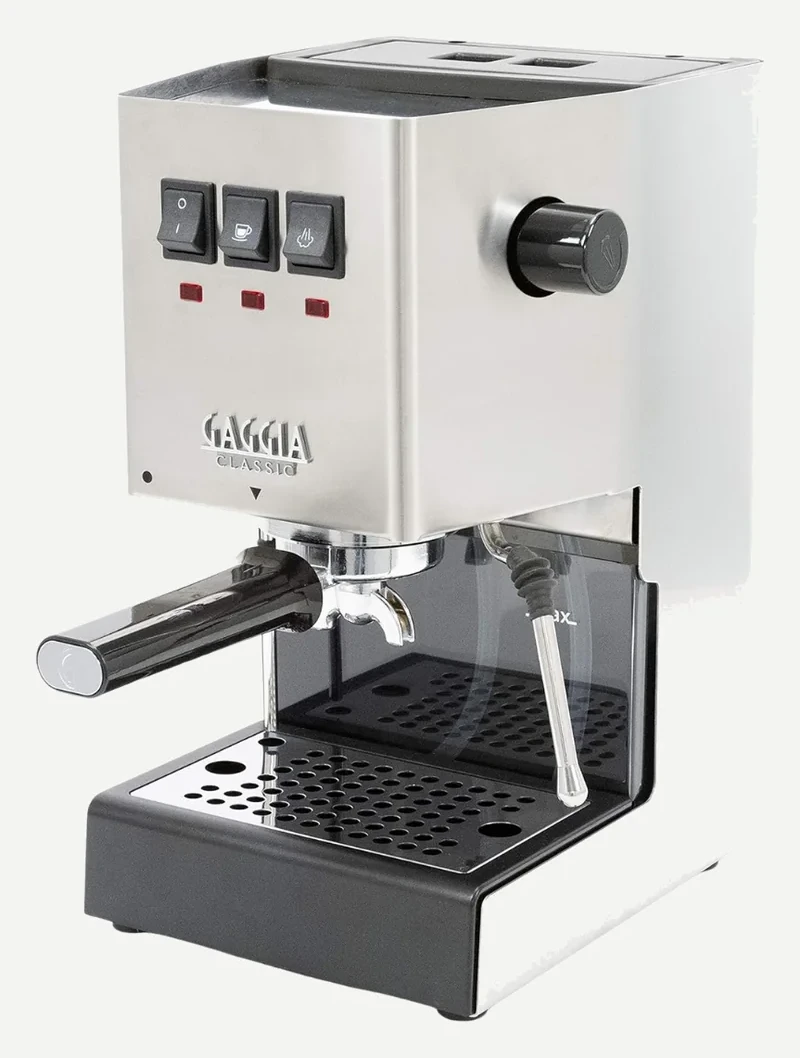
What is the Gaggia E24?
A short specification, and almost every line of it is a commercial part.
Gaggia publishes solid steel housing made in Italy, 9 bar espresso extractions, a stainless steel 58mm commercial portafilter, a commercial three-way solenoid valve, a commercial steam wand, a 2.1 litre capacity and self-serviceability.
58mm is the specification that outlives the machine
It is the commercial standard, and it means every accessory ever made fits.
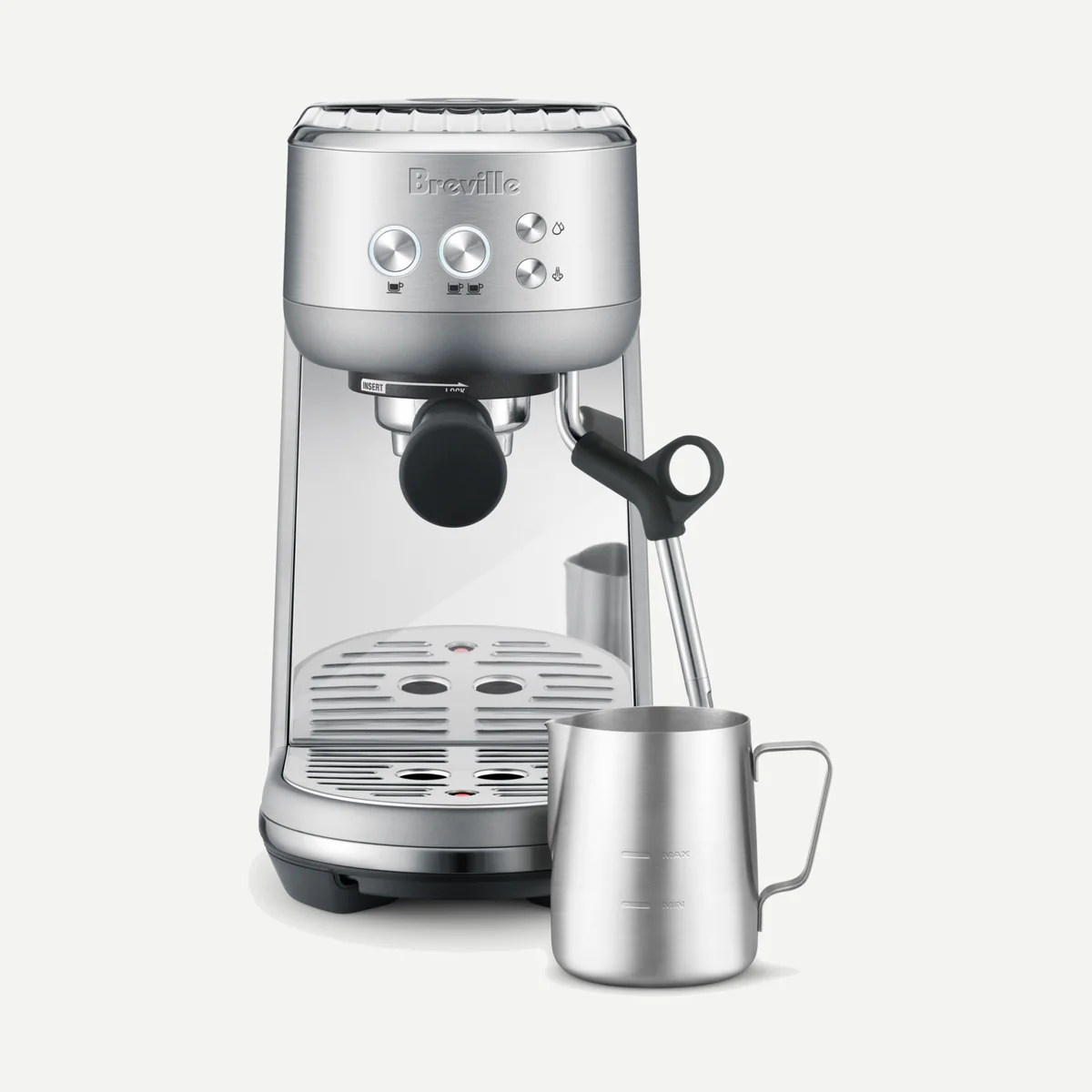
Cafe machines use 58mm portafilters, so the entire ecosystem of baskets, tampers, distributors, bottomless portafilters and puck screens is built around that size. A 54mm Breville Bambino Plus or a 51mm budget machine has a fraction of that choice.
It also means you can improve the machine over time. A better basket is a real upgrade, a bottomless portafilter shows you your extraction, and a 58mm tamper is a thing you buy once and keep. On a proprietary size, each of those is harder to find or unavailable.
For somebody who intends to get better at espresso rather than just make it, 58mm is worth more than most features on a spec sheet.
The three-way solenoid valve, which nobody advertises well
It releases the pressure in the puck the moment the shot ends.
Without one, the puck stays under pressure and soaked when you finish. Knock it out and it comes apart wet and sloppy, leaving grounds in the basket and on the counter, and the machine drips.
A three-way valve vents that pressure back through a drain line, so the puck is left compact and relatively dry and knocks out in one piece. It is a commercial part, it is the difference between a tidy routine and a mess every shot, and it is genuinely rare at domestic prices.
It is also a strong hint about how the rest of the machine is built. Manufacturers do not fit a solenoid to a machine they expect to be thrown away.
Nine bar, stated properly
Gaggia says 9 bar extractions, not 15 bar or 20 bar.
Espresso is brewed at about nine bars. Machines advertising 15 or 20 bar are quoting the pump's maximum with the outlet blocked, which is not the pressure at the coffee and is a marketing number.
Publishing the extraction pressure rather than the pump maximum is a small honesty that tells you the maker expects a buyer who knows the difference. The De'Longhi Classic Signature quotes 15 bar as its pump figure, which is normal and less informative.
Gaggia E24 vs Gaggia Classic Evo Pro
Two Gaggias, and the Classic is the one with the modification community.
The Classic Evo Pro is the famous one, with decades of history and a large community modifying it. Both share the commercial-parts philosophy.
The E24 publishes solid steel housing, the solenoid and the 58mm portafilter at the entry price, with 3,168 reviews behind it. Between them it is a question of which specific model is available and at what price; neither is a bad answer.
Is the E24 worth it?
Worth it, and it is the best-value serious espresso machine on this site.
Commercial portafilter, commercial solenoid, steel housing and Italian manufacture at this price is unusual, and self-serviceability means it can be kept running rather than replaced.
It has no grinder, no PID, no pressure gauge, no shot timer and no automatic milk system, and Gaggia publishes no warm-up time, no warranty term, no power figure and no boiler type. This site's espresso criteria reward exactly the features it lacks, so it will score below machines that are worse at making espresso and better at having buttons. That is worth saying plainly.
Who should buy it (and who should not)
Buy it if you want to learn espresso on parts that will not hold you back.
It suits somebody who already owns a grinder that can do espresso, wants to steam milk by hand, and would rather repair than replace.
Do not buy it expecting convenience: no grinder, no automation, no gauge. And budget for the grinder, because a 58mm commercial basket will show up a bad one immediately.
Frequently Asked Questions
Why does a 58mm portafilter matter?
It is the commercial standard, so every basket, tamper, distributor and bottomless portafilter fits. Proprietary sizes have far less choice.
What does a three-way solenoid valve do?
Releases the pressure in the puck when the shot ends, so it knocks out dry and in one piece instead of wet and messy.
Is 9 bar less than a 15 bar machine?
No. Nine bar is the pressure espresso is brewed at. Fifteen bar is a pump maximum with the outlet blocked, not the pressure at the coffee.
Does it have a grinder?
No. You will need a separate one, and a good one, because a commercial basket exposes a poor grind.
Where is it made?
Italy, and Gaggia lists it as self serviceable.