What is Cooper's Cask Brazil Medium Dark Roast Espresso?
This is a year-round, medium-dark single-origin Brazilian espresso coffee from Cooper's Cask, sold in whole bean and ground formats across three bag sizes.
Cooper's Cask roasts this coffee to a medium-dark level and positions it as an espresso offering, though it is available in grinds suited to cold brew, filter, and French press as well. The smallest bag is 12 oz at $19.95, and the largest is 5 lb at $79.95.
The coffee is unflavoured and not a seasonal release, meaning it is available to reorder consistently. A subscription is offered, which reduces the friction of repeat buying for households that go through coffee quickly.
Cooper's Cask Brazil Medium Dark Roast Espresso Taste: What It Actually Tastes Like
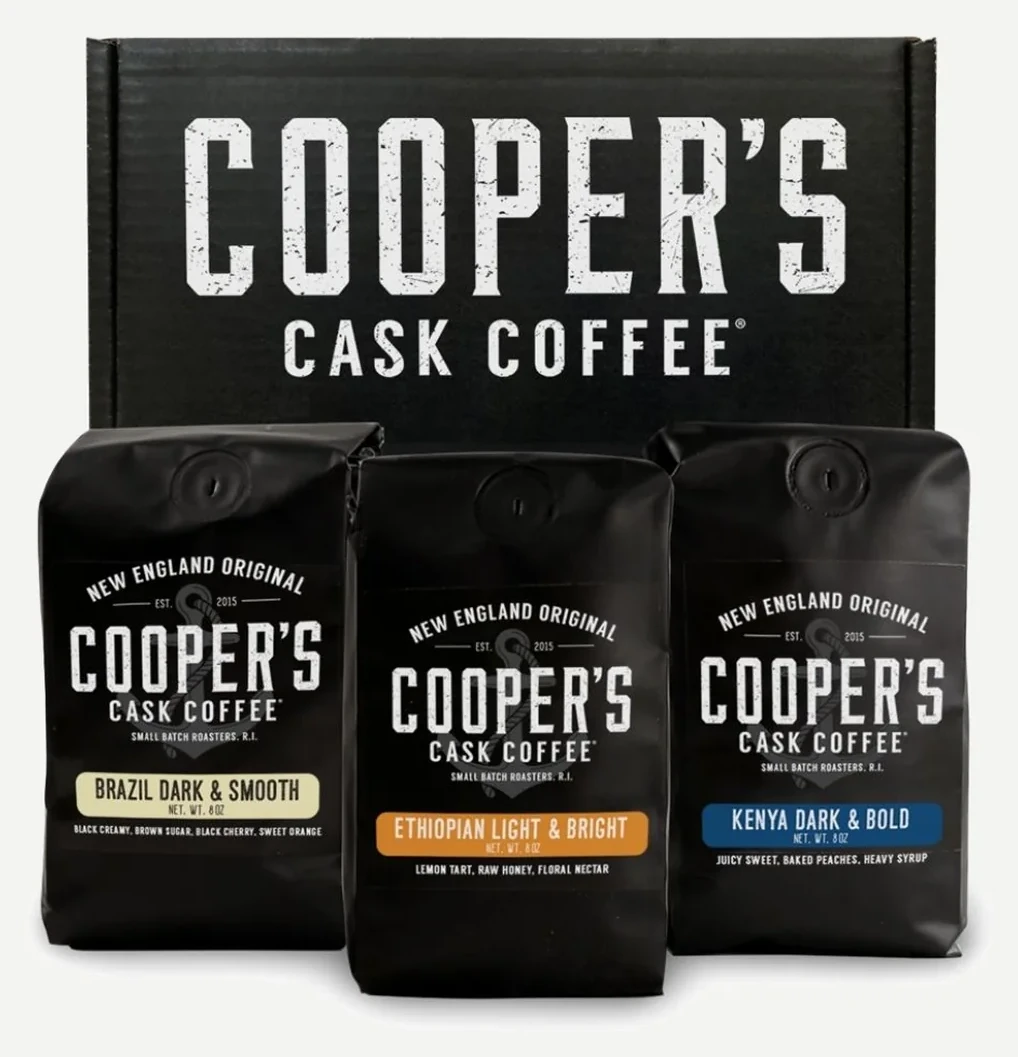
Cooper's Cask describes this Brazil as tasting of creamy brown sugar, black cherry, and sweet orange, which is what a buyer should expect in the cup.
These are the roaster's own words for its own coffee. The medium-dark roast level suggests a full body with reduced acidity, which typically suits milk-based espresso drinks as well as straight shots. The cherry and orange notes point to some fruit brightness surviving the roast.
The brown sugar descriptor aligns with what medium-dark Brazilian coffees often produce: a round, sweet base with enough body to hold up under pressure extraction. Buyers who prefer a lighter, more acidic cup will likely find this roast too developed for their taste.
- Creamy brown sugar is the roaster's lead note, suggesting a sweet, full-bodied base common to medium-dark Brazilian profiles.
- Black cherry adds a fruit element that indicates some brightness remains despite the darker roast level.
- Sweet orange rounds out the profile and points to a mild citrus character rather than sharp acidity.
- These notes come from the roaster's own product description, not from an independent cupping report or published score.
How fresh is it when it arrives?
There is no roast date on the bag, so buyers cannot tell how recently this coffee was roasted before it reaches them.
Cooper's Cask ships through its own website and offers a subscription, which means repeat buyers can time deliveries to suit their consumption rate. What the packaging does not provide is any printed indication of when the coffee was roasted.
For espresso in particular, roast age matters. Most specialty roasters recommend pulling espresso between 7 and 21 days post-roast for peak extraction. Without a date on the bag, buyers have no reference point for where in that window, or outside it, their coffee sits.
- Three bag sizes are available, so buyers can choose a quantity that matches their weekly consumption rather than letting coffee go stale.
- A subscription option lets buyers set a delivery cadence, which partially compensates for the absence of roast date information.
- Whole bean buyers who grind to order will preserve freshness longer than those buying pre-ground, regardless of roast date.
Where the coffee comes from
This coffee is a single origin from Brazil, which is the extent of the geographic detail Cooper's Cask commits to publicly for this product.
Single-origin status means the coffee comes from one country rather than a blend of several, which is a meaningful distinction for buyers who want a consistent, identifiable profile. Brazil is the world's largest coffee producer, covering a wide range of growing regions and farm types.
Cooper's Cask does not name a specific farm or cooperative for this coffee. Buyers who want traceability at the farm level, or who choose coffee based on producer relationships, will find the sourcing information here is broad rather than granular.
- Single-origin Brazil is a concrete commitment: this is not a blended coffee, and the country of origin is stated.
- No farm or cooperative is named, so the supply chain beyond country of origin is not publicly detailed for this product.
- No organic or Fair Trade certification is listed for this coffee, unlike some other Cooper's Cask offerings.
Cooper's Cask Brazil Medium Dark Roast Espresso vs Cooper's Cask Ethiopia Decaf
The Brazil Medium Dark and the Ethiopia Decaf are both single-origin Cooper's Cask coffees at the same per-kilo price, but they target different drinkers.
The Brazil is a fully caffeinated medium-dark with notes of brown sugar, black cherry, and sweet orange. The Ethiopia Decaf is a lighter medium roast with chocolate orange, sweet lemon, and black tea, processed via Swiss Water and certified organic. The roast difference is the most practical fork: the Brazil will pull denser, heavier espresso shots.
Both coffees share the same bag sizes and the same pricing structure, so the per-kilo cost is identical at each size. The Ethiopia Decaf adds organic certification and a decaf option, which matters for buyers who want to cut caffeine without switching roasters. Neither prints a roast date.
- Brazil wins for buyers who want full caffeine and a heavier, sweeter espresso body.
- Ethiopia Decaf wins for buyers who need a caffeine-free option or who prefer a lighter, tea-like cup.
- Ethiopia Decaf carries organic certification; the Brazil does not, which matters to buyers who prioritise that standard.
- Both coffees are priced identically per kilo, so roast preference and caffeine need are the deciding factors, not price.
Cooper's Cask Brazil Medium Dark Roast Espresso price per kilo: how it compares
At $35.25 per kilo on the 5 lb bag, this coffee sits at a mid-range specialty price that is easier to justify when bought in bulk.
The 12 oz bag works out to $58.64 per kilo, which is steep for everyday drinking. The 2 lb bag brings that down to $42.93 per kilo, and the 5 lb bag reaches $35.25. The per-cup cost at 15 grams a shot drops from $0.88 on the smallest bag to $0.53 on the largest. The price argument only becomes comfortable at the 5 lb size.
For a single-origin Brazilian espresso without farm-level traceability or a printed roast date, the 5 lb price is competitive. Buyers who cannot commit to 5 lb before the coffee goes stale are paying a premium that is harder to defend, particularly when roast date transparency is part of what specialty pricing is supposed to cover.
Who should buy it (and who should not)
This coffee suits buyers who want a sweet, full-bodied Brazilian espresso and are comfortable buying in bulk without a roast date on the bag.
The medium-dark roast and the brown sugar and cherry profile make it a practical choice for espresso drinkers who want sweetness and body without sharp acidity. It also works for filter and French press, which broadens its usefulness in a household with more than one brewing method.
Buyers who dial in espresso tightly by roast date, or who want farm-level sourcing information, will find this coffee does not give them what they need. Light-roast drinkers and those who prefer tea-like clarity in the cup should look elsewhere.
Buy it if
- You brew espresso daily and want a sweet, low-acid Brazilian profile you can buy year round.
- You are comfortable buying the 5 lb bag to bring the per-kilo cost to a level that makes specialty pricing feel reasonable.
- You use multiple brew methods and want one coffee that covers espresso, filter, and French press.
Skip it if
- You track roast dates and adjust your espresso dial-in accordingly, because the bag gives you nothing to work with.
- You want farm or cooperative traceability beyond country of origin.
- You prefer lighter, brighter roasts with floral or high-acid profiles.
Frequently Asked Questions
Is the Cooper's Cask Brazil Medium Dark Roast Espresso good for espresso?
It is marketed as an espresso coffee and the medium-dark roast level supports that use. The roaster's notes, creamy brown sugar, black cherry, and sweet orange, describe a profile that typically extracts well under pressure and holds up in milk-based drinks. It is also available pre-ground for espresso if you do not have a grinder.
Cooper's Cask Brazil Medium Dark Roast Espresso vs Cooper's Cask Ethiopia Decaf: which should I buy?
Buy the Brazil if you want full caffeine and a heavier, sweeter espresso profile. Buy the Ethiopia Decaf if you want a lighter medium roast, a Swiss Water decaf option, or an organic-certified coffee. Both cost the same per kilo at each bag size, so the decision comes down to roast level, caffeine, and certification rather than price.
How many cups does the 5 lb bag make?
At 15 grams a cup, the 5 lb bag (2.27 kg) makes roughly 151 cups. At a lighter 10-gram dose for filter brewing it stretches further, to around 227 cups. The per-cup cost at 15 grams works out to $0.53, which is the most economical way to buy this coffee.
Can you use this coffee for French press or filter brewing?
Yes. Cooper's Cask sells it pre-ground for French press and filter as well as espresso, and in whole bean if you grind at home. The medium-dark roast level will produce a full-bodied, low-acid cup in a French press, which suits drinkers who want sweetness and body over brightness.
Does Cooper's Cask offer a subscription for this coffee?
A subscription is available through the Cooper's Cask website. It lets buyers set a delivery cadence to match their consumption rate, which is the most practical way to manage freshness when the bag carries no roast date. Locking in the 5 lb subscription size also secures the lowest per-kilo price.
What roast level is this Brazilian espresso?
Cooper's Cask roasts it to medium-dark. That sits between a light specialty roast and a dark Italian-style roast, typically producing lower acidity, a fuller body, and more caramel or chocolate character than a light roast would. The roaster describes the profile as creamy brown sugar, black cherry, and sweet orange.