
What is Cooper's Cask Tanzania Peaberry Medium Light Roast?
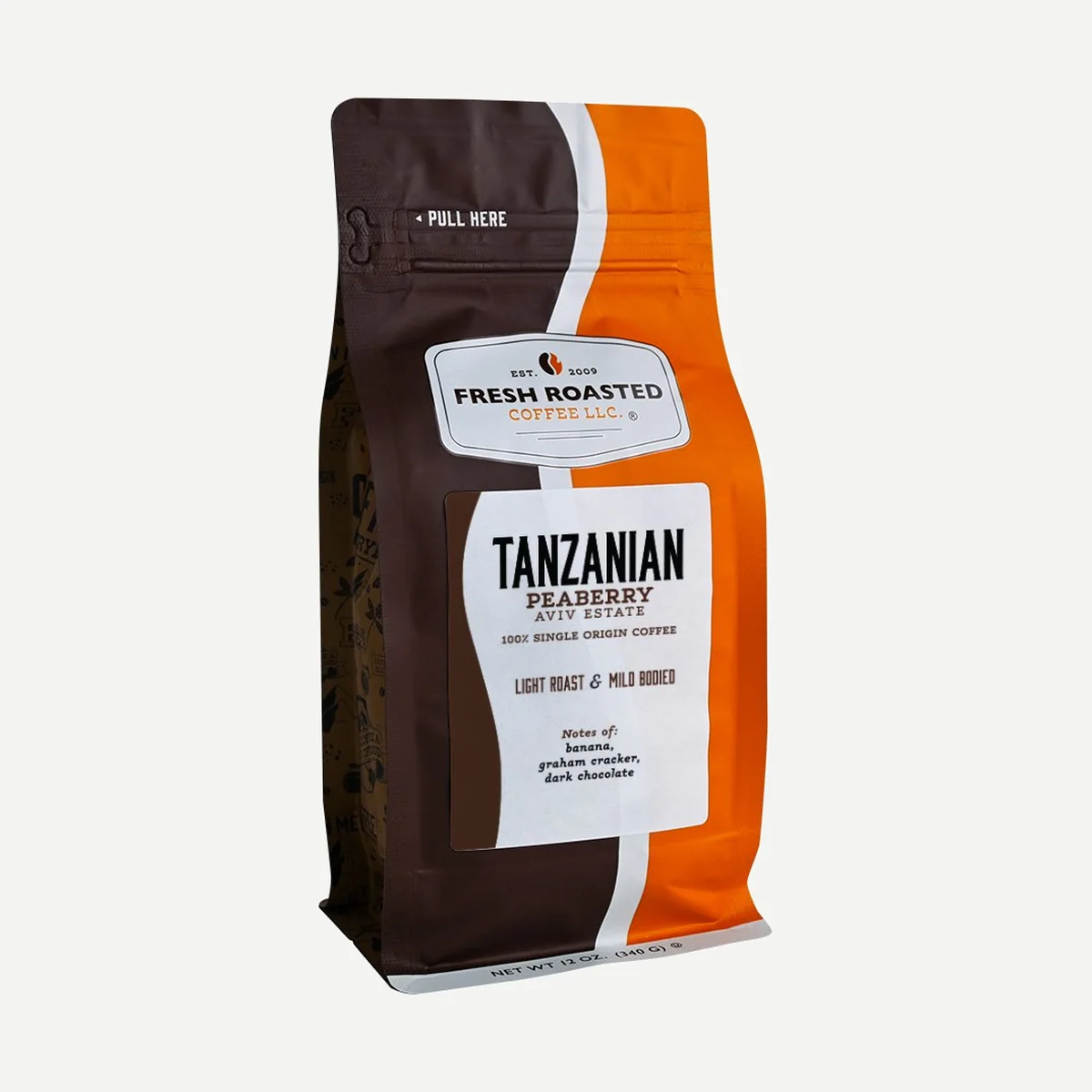
This is a medium-light roast coffee made from Tanzanian peaberry beans, sold by Cooper's Cask Coffee in whole-bean and pre-ground formats.
Peaberry is a naturally occurring mutation where a coffee cherry produces one round seed instead of two flat-sided halves. Tanzania is a well-regarded East African origin known for bright, fruit-forward profiles, and the peaberry format is associated with consistent roast development across the smaller, denser bean.
Cooper's Cask sells it year-round in three bag sizes, with a subscription option available. The entry price is $18.95 for 12 oz, and buyers can choose from several grind options, including whole bean, espresso, filter, French press, and cold brew.
Cooper's Cask Tanzania Peaberry Medium Light Roast Taste: What It Actually Tastes Like
Cooper's Cask describes this Tanzania peaberry as tasting of orange, raspberry, and wine, a fruit-forward profile typical of East African medium-light roasts.
The three published notes, orange, raspberry, and wine, point to a bright and moderately complex cup. That combination is consistent with what Tanzanian washed or natural peaberries often deliver at a medium-light roast level, where acidity is preserved and body stays light to moderate.
These are the roaster's own words for its own coffee. They reflect how Cooper's Cask describes the cup, and buyers should treat them as a guide to the general flavour direction rather than a cupping laboratory result.
- Orange and raspberry notes suggest lively acidity, which a medium-light roast level tends to preserve rather than mellow.
- Wine as a tasting note often signals a ripe, slightly fermented fruit quality, more prominent in natural-processed East African beans.
- The peaberry bean type roasts evenly due to its round shape, which roasters associate with clarity in the cup rather than uneven flavour development.
- These flavour descriptors come from Cooper's Cask directly and are the roaster's own characterisation of the coffee.
How fresh is it when it arrives?
Freshness on arrival depends entirely on Cooper's Cask's roast-to-ship schedule, because the bag carries no roast date for the buyer to check.
The bag is available in three sizes, and a subscription option exists, which suggests regular fulfilment cycles. Buyers who order on subscription may receive coffee more reliably close to roast than those placing one-off orders, though the interval is the same in either case.
For a medium-light roast, freshness matters more than it does for a darker profile. Lighter roasts express their brightness and fruit character most clearly in the first few weeks after roasting, and a buyer has no printed reference point to work from here.
- The bag offers three size options; smaller 12 oz bags suit buyers who want to cycle through stock quickly and keep coffee fresher.
- A subscription option is available, which can help ensure more regular delivery than ad hoc ordering.
- Grind options include whole bean, which gives buyers control over oxidation after opening, the most practical freshness lever available here.
Where the coffee comes from
This coffee comes from Tanzania and is built around the peaberry bean type, a specific and identifiable selection within the Tanzanian crop.
Tanzania is the named origin, and the peaberry designation narrows that further to a particular bean form rather than a general regional blend. East African coffees from Tanzania are typically grown at high altitude on the slopes of Kilimanjaro and in the Mbeya region, producing the fruit-forward profiles the tasting notes describe.
Cooper's Cask commits to the country and the bean type. The roaster does not name a specific farm or cooperative for this coffee. Buyers who want that level of traceability will find the sourcing story stops at the country and bean-type level.
- Single-origin Tanzania means the coffee comes from one country rather than a multi-origin blend, which supports consistency across orders.
- Peaberry selection is a meaningful designation, indicating a specific physical bean type sorted from the broader harvest.
- Cooper's Cask does not name a farm or cooperative for this coffee, so traceability ends at the country level.
Cooper's Cask Tanzania Peaberry Medium Light Roast vs Cooper's Cask Ethiopia Decaf
The Tanzania Peaberry and the Ethiopia Decaf share the same roaster and bag sizes, but differ on roast level, flavour profile, and caffeine content.
The Tanzania Peaberry is a medium-light roast with orange, raspberry, and wine notes. The Ethiopia Decaf is a medium roast with chocolate orange, sweet lemon, and black tea notes. The Tanzania is brighter and fruitier. The Ethiopia Decaf is warmer and more rounded, and it is decaffeinated via the Swiss Water process, which is the decisive difference for buyers watching caffeine.
The Ethiopia Decaf also carries an organic certification, which the Tanzania Peaberry does not. Both are priced identically at $35.25 per kilo on the 5 lb bag, so price does not separate them. The choice comes down to caffeine preference, roast character, and whether organic certification matters to the buyer.
- The Tanzania Peaberry suits buyers who want caffeine and a brighter, fruit-forward cup at a medium-light roast.
- The Ethiopia Decaf is the better fit for anyone avoiding caffeine, with a warmer chocolate-and-citrus profile at a medium roast.
- The Ethiopia Decaf carries organic certification, which the Tanzania Peaberry does not, relevant to buyers with that priority.
- Both share the same bag-size options and price per kilo on the 5 lb size, so the decision is about the cup rather than the cost.
Cooper's Cask Tanzania Peaberry Medium Light Roast price per kilo: how it compares
At $35.25 per kilo on the 5 lb bag, this Tanzania peaberry sits at a price point typical of direct-to-consumer specialty single-origin coffees.
The 12 oz bag costs $18.95, which works out to $55.74 per kilo, a steep entry price for a trial purchase. The 2 lb bag at $37.95 brings that to $41.83 per kilo. Only the 5 lb bag at $79.95 reaches $35.25 per kilo, which is where the value case becomes reasonable for a specialty single-origin. Buyers who plan to drink it regularly should size up.
Without a published roast date, a buyer is accepting some uncertainty about how fresh the coffee is relative to that price. Specialty single-origin coffee at this price tier typically comes with roast-date transparency. Here it does not, which is worth factoring into the decision, particularly at the small-bag premium.
Who should buy it (and who should not)
This coffee suits buyers who want a bright, fruit-forward East African cup and are comfortable buying in bulk to get fair value per kilo.
The medium-light roast and fruit-driven notes make it a good match for filter brewing and pour-over methods, where acidity and clarity come through most clearly. The peaberry selection appeals to buyers who appreciate a specific and traceable bean type even without full farm-level detail.
It is less suited to anyone who prioritises roast-date transparency, needs organic certification, or wants to taste it at a reasonable cost-per-kilo without committing to a 5 lb bag. The small-bag price is high for what the sourcing story delivers.
Buy it if
- You brew filter or pour-over and enjoy bright, fruit-forward East African coffees.
- You are comfortable buying a 5 lb bag to get the price down to a fair per-kilo rate.
- You want a year-round single-origin option that is consistently available on subscription.
Skip it if
- Roast-date transparency matters to you, because the bag gives you no reference point.
- You need organic certification, as this coffee does not carry one.
- You want to trial a small bag without paying a significant small-bag premium.
Frequently Asked Questions
Is the Cooper's Cask Tanzania Peaberry Medium Light Roast good for espresso?
Cooper's Cask lists espresso as one of the available grind options for this coffee, so it is offered in an espresso grind. Medium-light roasts can work for espresso but tend to produce a brighter, more acidic shot than a darker roast would. Buyers who prefer sweeter, heavier espresso may find the fruit-forward profile takes some dialling in.
Cooper's Cask Tanzania Peaberry Medium Light Roast vs Cooper's Cask Ethiopia Decaf: which is better?
The Tanzania Peaberry is a caffeinated medium-light roast with orange, raspberry, and wine notes. The Ethiopia Decaf is a medium roast, Swiss Water decaffeinated, with chocolate orange, sweet lemon, and black tea notes. If caffeine is not a factor, the Ethiopia Decaf also carries organic certification, which the Tanzania Peaberry does not. Both cost the same per kilo on the 5 lb bag.
What grind size should I use for this Tanzania peaberry in a French press?
Cooper's Cask offers a French press grind option at purchase, so buyers who prefer pre-ground can select it directly. If buying whole bean, a coarse grind is standard for French press, typically around 800 to 1000 microns on a burr grinder. The medium-light roast level means the grind consistency matters more here than it would with a darker, more forgiving roast.
How much coffee does the 5 lb bag make?
A 5 lb bag contains approximately 2,270 grams of coffee. At a standard dose of 15 grams per cup, that yields around 151 cups. At a lighter 12 gram dose, common for filter brewing, the bag stretches to roughly 189 cups. The 5 lb size also brings the cost down to $35.25 per kilo, compared to $55.74 per kilo on the 12 oz bag.
Does this Tanzania peaberry have any certifications?
Cooper's Cask does not list any certifications, such as organic or fair trade, for this particular coffee. The Ethiopia Decaf in the same range does carry an organic certification. Buyers for whom certification is a purchase requirement should note that distinction between the two coffees.
Can I get this coffee on subscription?
Yes, Cooper's Cask offers a subscription option for this coffee. A subscription can help buyers maintain a more regular delivery cadence, which is worth considering given that the bag carries no roast date. Regular deliveries reduce the chance of sitting on an older bag without knowing it.