What is Beija Flor?
A sweet, bold Brazilian from four farms run by women.
Beija Flor, Portuguese for hummingbird, is a natural-process coffee from Sul de Minas, the southern Minas Gerais region that grows much of Brazil's best coffee. It comes from four women-led farms: Idivane Araujo, Ciomara de Carvalho, Julia Ribeiro do Valle and Carmen Lucia Chaves de Brito. The varieties are red and yellow Catuai and yellow Catucai, grown at 1,000 to 1,280 metres.
Origin Coffee lists apricot, hazelnut and milk chocolate, with a round, pear-like acidity, a rich, creamy body and a medium, biscuity finish. It scores it 85 and has bought from these producers since 2019. Origin notes that this coffee is sent in its mailer bags.
The project behind it
Women's leadership, across farms of different sizes.
Origin describes Beija Flor as shared through a project that centres women's leadership in coffee and supports producers across different farm sizes. Women do much of the work on coffee farms worldwide but own far fewer of them, so a lot built around women producers is a deliberate choice. Carmen Lucia Chaves de Brito, one of the four, also grows Origin's Caxambu, the coffee it shipped by sail, and Julia Ribeiro do Valle grows part of its Stronghold espresso.
Origin says it paid $3.16 a pound free on board, 76% above the Fairtrade minimum.
Origin is a certified B Corp and publishes a Transparency panel that almost no other roaster on this site offers: the price it paid for the green coffee (free on board, per pound), how far that sits above the Fairtrade minimum, the cup score, and how long it has bought from the producer. Those figures are on the page as facts. We do not score them, because too few roasters publish them for a fair comparison, but they are the clearest evidence of how a roaster treats its farms that you will find on a bag.
How to brew it
Origin brews it as filter; it shines as espresso too.
Origin's own recipe is for an Orea O1 dripper: 18 g of coffee to 300 g of water at 94 degrees, ground coarse. The rich body and chocolate also make it a sweet espresso, and a natural Brazilian is a classic base for milk drinks. Our list of the best coffee beans for espresso covers others in this style.
Beija Flor vs Los Altos
Natural and creamy against washed and crisp.
Los Altos is a washed Nicaraguan with green apple and lemon. Beija Flor is heavier and sweeter, with stone fruit and chocolate. Both cost the same. Choose Beija Flor for body and sweetness, especially with milk; choose Los Altos for a clean, bright filter cup.
Why the roast date matters
Coffee is at its best for weeks, not the year a best-before date implies.
Roasted coffee gives off carbon dioxide for days after roasting, which is why espresso tastes harsh and filter coffee bubbles hard in the first few days. After that it is at its sweetest for a few weeks, then slowly goes flat as the aromatic oils oxidise. A best-before date, usually set a year or more after packing, tells you nothing about where a bag sits on that curve. A printed roast date does. We list every coffee on the site that prints one in coffee with roast dates, and our scores give real weight to it; Origin stamps it on every bag.
Buy only what you will drink in about a month, keep it in the bag it came in or an airtight container, away from light and heat, and grind just before brewing. Do not keep beans in the fridge: they pick up moisture and smells.
Is Beija Flor worth it?
For a well-sourced, sweet Brazilian, yes.
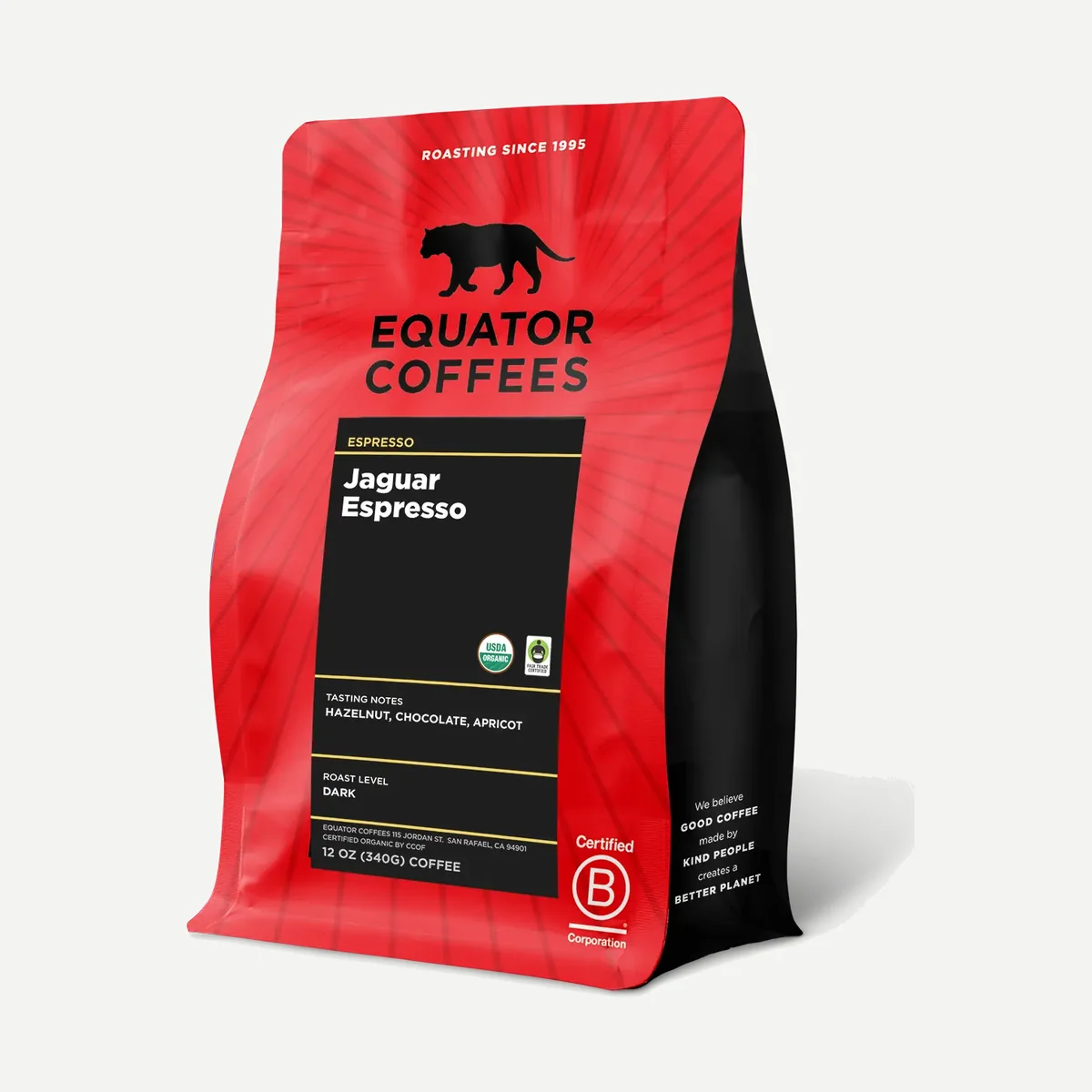
It names its producers and its price, is roasted to order, and suits most brew methods. US buyers should weigh the postage; Equator's Dipsea Espresso has a natural Brazilian base too and ships within the US.
Who should buy it (and who should not)
Buy it if
- You like sweet, chocolatey coffee with body.
- You want to support women-led farms, with names on the bag.
- You drink espresso with milk.
Skip it if
- You like bright, acidic coffees.
- You are in the US and want to avoid international postage.
- You want a roast level printed on the bag.
Freshness and shipping
Roasted the day after you order, with the date stamped on the bag.
Origin roasts in Cornwall and says an order placed before midnight is roasted and despatched the next working day. The roast date is stamped on the bag, and Origin suggests resting the coffee for five to fourteen days from that date before brewing. Delivery in the UK is free over £35. International orders go by Royal Mail and must weigh under 1.75 kg, so one 1 kg bag fits but two do not. Origin does not publish what international postage costs; the checkout prices it. Its subscriptions are for UK addresses only.
What it costs
Two bag sizes, priced in pounds.
| Bag | Price | Per kilo | Per cup (15 g) |
|---|---|---|---|
| 250 g | £12.50 | £50.00 | £0.75 |
| 1 kg | £36.50 | £36.50 | £0.55 |
Per-cup figures assume 15 g of coffee. The 1 kg bag works out at £36.50 a kilo against £50.00 in the 250 g bag, so it is the better buy if you can finish it while it is fresh. Prices are in pounds because Origin sells from the UK; a US order pays international postage on top, priced at checkout.
Frequently Asked Questions
Who grows Beija Flor?
Four women producers in Sul de Minas, Brazil: Idivane Araujo, Ciomara de Carvalho, Julia Ribeiro do Valle and Carmen Lucia Chaves de Brito.
What does Beija Flor taste like?
Origin lists apricot, hazelnut and milk chocolate, with a rich, creamy body.
Is Beija Flor good for espresso?
Origin's recipe is for filter, but a natural Brazilian with this much body also makes a sweet espresso.
How much is Beija Flor?
£12.50 for 250 g and £36.50 for 1 kg.