What are Stella Blue cold brew coffee bags?
Ground coffee in a filter bag, sized for a jug rather than a cup.
Stella Blue publishes six packets of medium roast ground Arabica, a Big Cat Blend with caramel, toasted hazelnut and a fruity finish, Rainforest Alliance certification and ethical sourcing.
What a coffee bag is, and why it is not instant
Ground coffee in a filter bag. You steep it and take it out, like tea.
This is the distinction that decides which shelf a single-serve product belongs on. Instant coffee is soluble: it was brewed, dried and turned into a solid that dissolves back into water. Nothing is left behind and nothing is removed.
A coffee bag is real ground coffee that has never been brewed. Hot water goes in, the grounds stay inside the bag, and you lift the bag out and bin it. What you drink is brewed coffee, made the same way a cafetiere makes it, with the filter doing the separating instead of a plunger.
That is why they taste different and why they are scored differently here. Freeze-drying against spray-drying is the biggest quality question in instant and means nothing at all for a bag, which has no drying step. What matters instead is the dose in the bag, the roast, and whether the bag was sealed.
Why the bag format suits cold brew particularly well
Cold brew's worst chore is straining it, and a bag removes that entirely.
Cold brew is coffee steeped in cold water for twelve to twenty-four hours. The method is trivially easy; the mess is not. Straining a litre of saturated grounds through a filter is slow, and it is why most people who try cold brew once buy a dedicated maker like the Takeya Deluxe cold brew maker or the Primula Burke afterwards.
A bag skips the maker. Drop it in any jar of cold water, leave it overnight in the fridge, lift it out in the morning. There is no filter to rinse and no equipment to store, and for somebody making cold brew occasionally rather than weekly that is the better answer.
It is also why these bags are larger than a cup-sized coffee bag: they hold enough coffee for a jug.
Is it worth it?
Worth it if you make cold brew occasionally. A maker wins if you make it weekly.
Six packets is six jugs, and the cost per jug is higher than grinding your own into a cold brew maker. What you are buying is not owning one.
Stella Blue publishes a roast level, tasting notes and a certification. It does not publish the weight of coffee per bag, the water volume each is meant for, or a steep time, all three of which you need to actually use them without guessing.
Who should buy them (and who should not)
Buy them if you want cold brew a few times a summer.
They suit somebody curious about cold brew who does not want to buy a maker first, a small fridge, and travel where a jug is not coming with you.
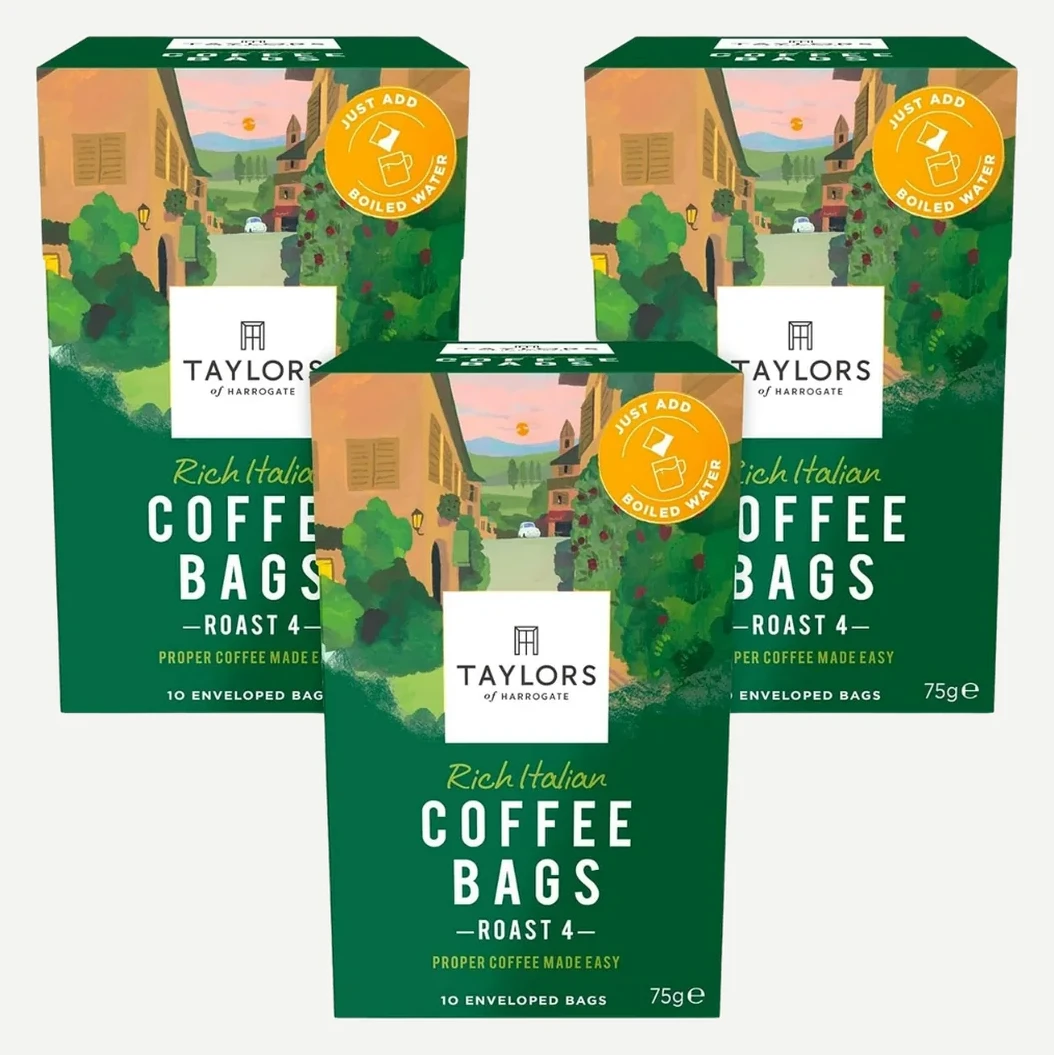
Do not buy them if cold brew is a habit; a maker plus fresh grounds is far cheaper and lets you control the ratio. And note these are cold brew bags rather than cup-sized ones, so they are not a substitute for Taylors of Harrogate Rich Italian bags in a mug.
Frequently Asked Questions
How do you use a cold brew coffee bag?
Put it in a jar of cold water, refrigerate overnight, then lift the bag out. Stella Blue does not publish a water volume or steep time, so start at about 500ml per bag and adjust.
Can I use them for hot coffee?
They are sized and ground for cold brewing. A cup-sized coffee bag like Taylors is the product for a hot mug.
How many bags in a box?
Six packets.
Is it better than a cold brew maker?
Cheaper to start and more expensive per jug. If you make cold brew regularly, a maker and your own grounds wins on both cost and control.