What is Volcanica Tanzania Peaberry?
Volcanica's most-bought coffee, and the only peaberry on this site.
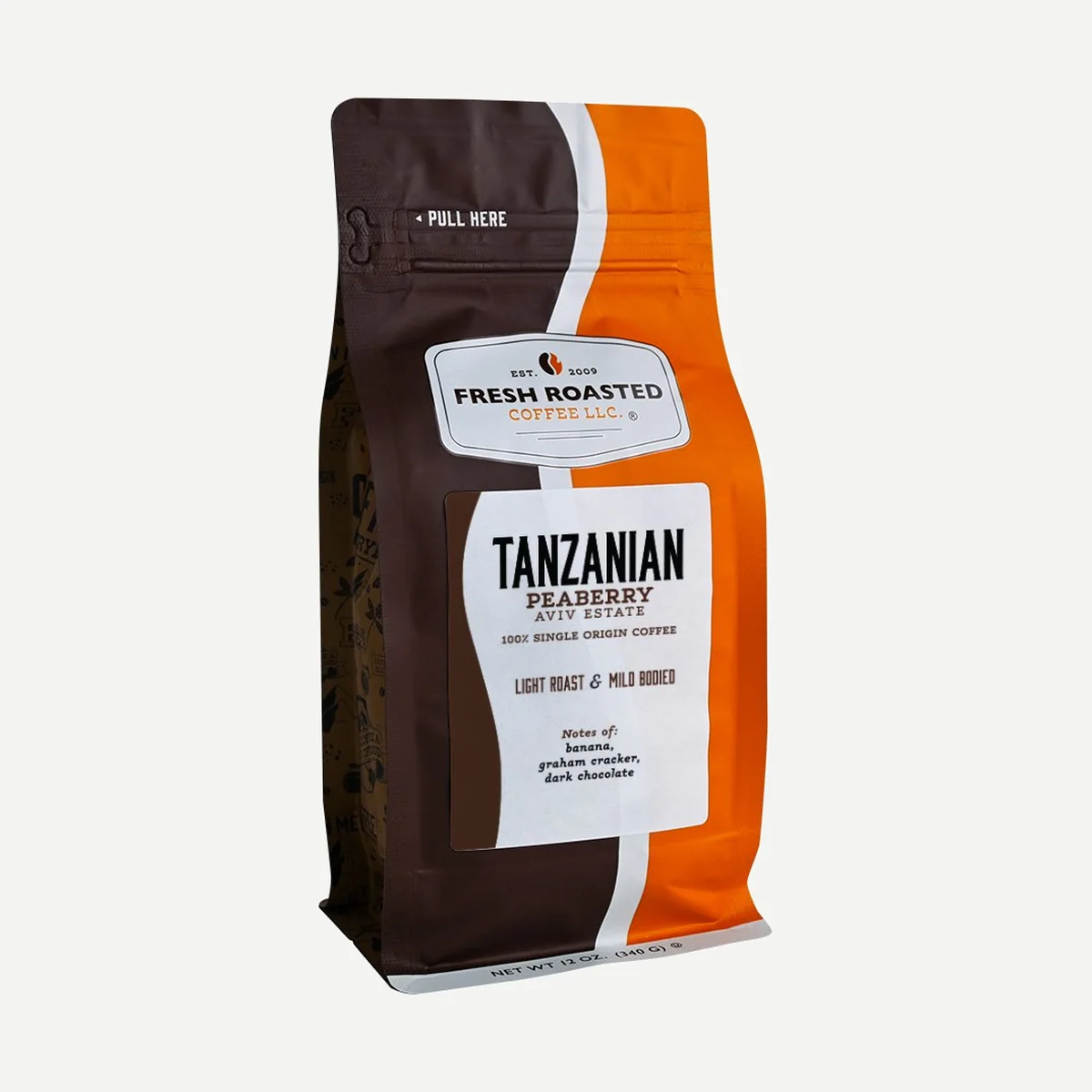
Volcanica publishes 100% Tanzanian peaberry from the slopes of Mount Kilimanjaro, medium roasted, in 16oz bags, with notes of dried fruit, savoury chocolate and orange. It calls the cup wonderfully acidic with a rich body, intense flavour and fragrant aroma.
A peaberry is a bean shape, not a variety
This is the thing every peaberry listing assumes you know and none of them explain.
A coffee cherry normally holds two seeds, each flat on one side where they press together. Roughly 5% of the time only one seed develops, and having the whole cherry to itself it grows round instead of flat. That is a peaberry.
They are separated out by size after processing, so peaberry is a grade rather than a varietal or an origin. The same tree produces both.
The practical argument for buying them is roasting. A round bean tumbles evenly in a drum and heats from all sides, where a flat bean has a face that shields itself. That should mean a more even roast. Whether it produces a better cup is genuinely contested among roasters, and anyone telling you it definitely does is overselling a 5% sorting quirk.
What is not contested is that a peaberry lot is a smaller, hand-sorted fraction of a harvest, which is part of why it costs more.
Kilimanjaro is the region, and that is as specific as it gets
A mountain is named. A farm is not.
Tanzanian coffee from the Kilimanjaro slopes is a real and recognised origin, and naming it puts Volcanica ahead of a roaster that says "beans from around the world".
But no farm, cooperative, altitude figure, varietal or processing method is published. Volcanica describes the coffee as high grown elsewhere in its range and gives no metres anywhere. Against Stumptown or the Intelligentsia roastery, which publish farm-level detail, this is region-level sourcing.
The buyer rating is 4.1, and that is worth saying out loud
Most coffee on this site sits at 4.5 to 4.7.
1,656 ratings is a substantial record, which makes the 4.1 meaningful rather than noise. It is the lowest-rated flagship of any roaster covered here.
This site cannot tell you why from a listing. What it can tell you is that a deep range, a good origin story and an unusual bean grade did not translate into buyers scoring it as highly as a Kicking Horse Kick Ass or a Stumptown Hair Bender. Weigh that against the interest of the coffee itself.
Volcanica Tanzania Peaberry vs Stumptown Hair Bender
Two medium roasts at specialty prices, and they publish different things.
Stumptown Hair Bender publishes a roast date and comes from a roaster with a named Direct Trade programme. Volcanica publishes neither: no roast date on any bag, and no trade relationship beyond certifications on some coffees.
Volcanica answers with a genuine single origin and an unusual grade, where Hair Bender is a blend.
If freshness and traceability decide it, Stumptown. If you want a specific bean from a specific mountain, this.
Is it worth it?
Hard to price, because Amazon will not resolve one.
Volcanica's listings are multipack parents where the title says Pack of 3, the buy box shows a different figure, and Amazon reports options with no featured offers. This site records no price rather than publishing one that cannot be checked. Check the listing before ordering.
On the coffee: a named region, an unusual grade, published flavour notes and stated mycotoxin and mould testing before export and on arrival. That last point is a process Volcanica describes, recorded here as a process and not as a health benefit.
Against it: no roast date, no altitude, no varietals, no farm, no certifications on this particular bag, and a 4.1 rating.
Who should buy it (and who should not)
Buy it if you want to taste what a peaberry lot is like.
It suits someone working through origins, anyone who likes bright African coffee, and anyone curious about the grade.
Do not buy it for certifications, which this bag has none of, where the Tarrazu has two. Do not buy it if you want a roast date. And go in knowing the buyer rating is below the field.
Frequently Asked Questions
What is peaberry coffee?
A peaberry is the single round bean that forms when only one seed develops in a cherry instead of two. It happens in about 5% of cherries and the beans are sorted out by size, so it is a grade rather than a variety.
Does peaberry taste better?
Roasters argue about it. The round shape roasts more evenly than a flat bean, which is the real mechanism, but whether the cup is better is contested and this site will not claim it is settled.
Where is it from?
Tanzania, the slopes of Mount Kilimanjaro. No farm, cooperative or altitude figure is published.
Is it certified?
No certification is stated on this bag. Volcanica's Tarrazu is Fair Trade and Rainforest Alliance, and its Sumatra is USDA Organic.
What does it taste like?
Volcanica publishes dried fruit, savoury chocolate and orange, with a rich body and pronounced acidity.