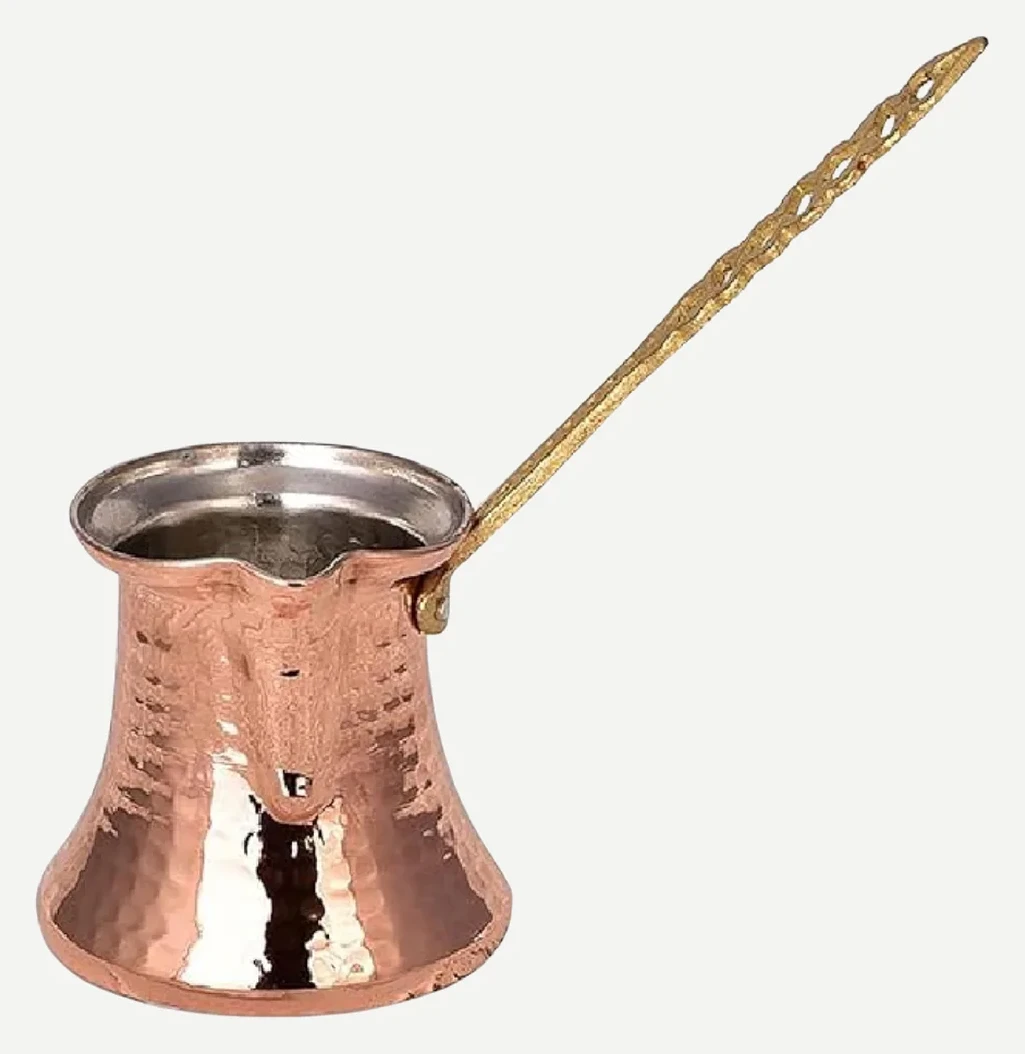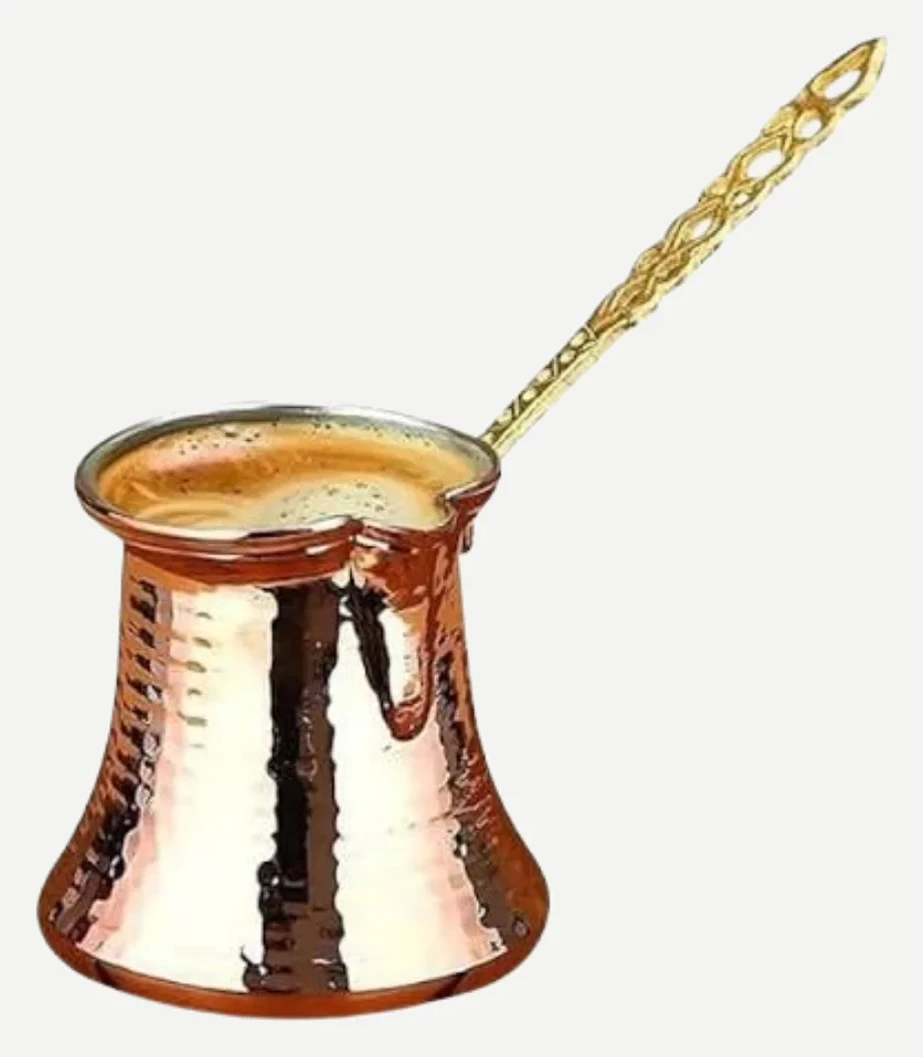
What is the Jatisse Copper Cezve?
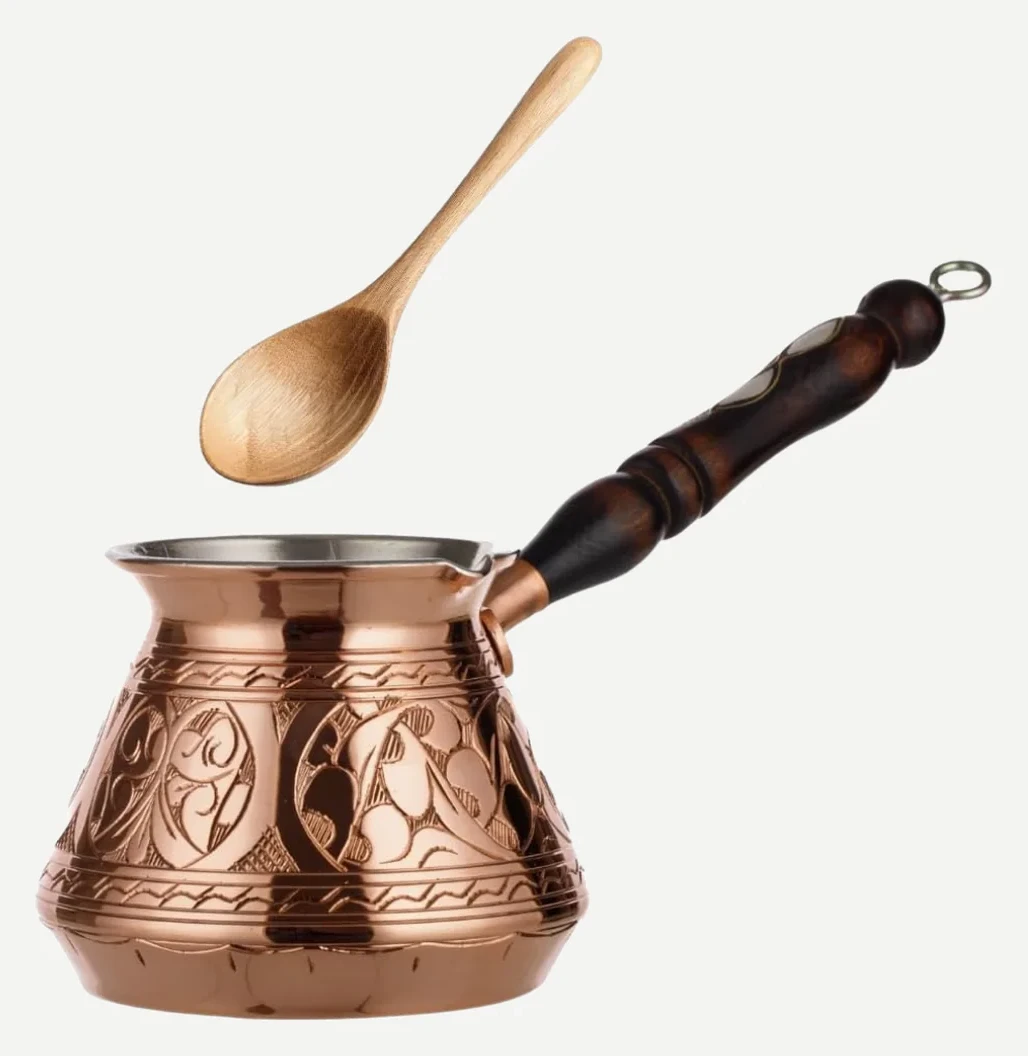
A copper pot with a copper handle and a copper spoon, sold as a set.
Jatisse publishes copper construction described as high quality with excellent heat conductivity, a 12 fluid ounce capacity, a classic Turkish shape, a copper handle, four servings per pot, and a copper measuring spoon included. It measures roughly 200mm across the handle.
How well does it brew Turkish coffee?
Copper does the work, and 355ml is the right amount of it.
Copper's conductivity is the reason it has been the metal for this drink for centuries. Heat spreads across the whole base rather than concentrating under the burner, so the grounds do not scorch in a ring and the foam rises evenly across the surface instead of erupting from one side.
355ml at four cups is a household serving, and the pot is small enough that a single cup still fills enough of it to behave. The included spoon is a genuinely useful touch: Turkish coffee is dosed by the small spoon rather than weighed, and having the right one saves the guesswork most beginners start with.
Build quality and materials
The lining is not mentioned, and on a copper pot that is the question you want answered.
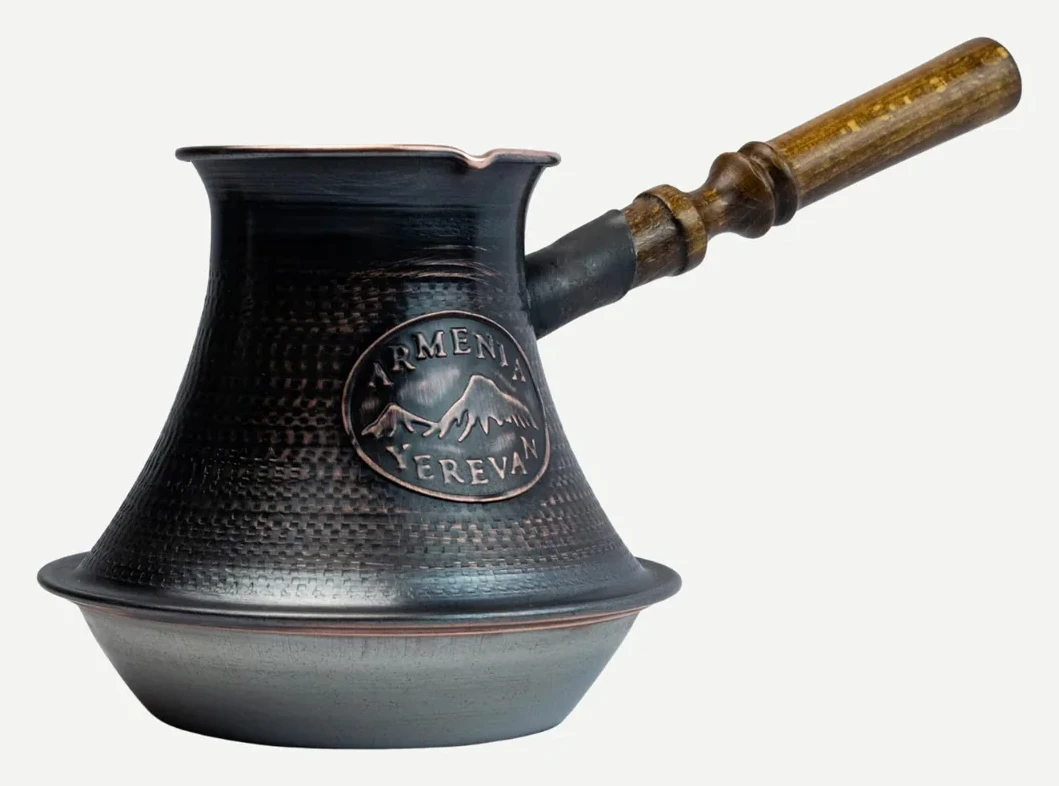
Copper reacts with acids, and coffee is acidic. Traditional cezves are therefore lined, almost always with tin, and the makers who do it say so: the HandCraftoria copper jazva, the Silk Road Trade PC Series cezve and the Volarium copper cezve all publish tin linings.
Jatisse does not mention a lining at all. That is not proof there is none, and we have recorded nothing rather than assuming either way, but it is the first thing to ask the seller before buying. A bare copper cezve is a different proposition from a lined one and should be priced as such.
The copper handle is the other trade. Copper conducts heat superbly, which is exactly what you want in the base and exactly what you do not want in the part you hold. Expect to need a cloth, where a bakelite handle, as on the Sukkar Pasha Stainless Steel Ibrik, or a wooden one stays cool.
Will it work on your hob?
Gas and electric, almost certainly. Induction, almost certainly not.
Jatisse publishes no hob compatibility. Copper is non-ferrous, so unless a maker has bonded a steel disc to the base, a copper cezve will not heat on induction at all. No such base is mentioned here, so assume it will not.
On gas this is where copper earns its price, and on an electric plate it is fine.
Jatisse Copper Cezve vs Jatisse 1L Stainless Cezve
Same brand, opposite materials, and very different jobs.
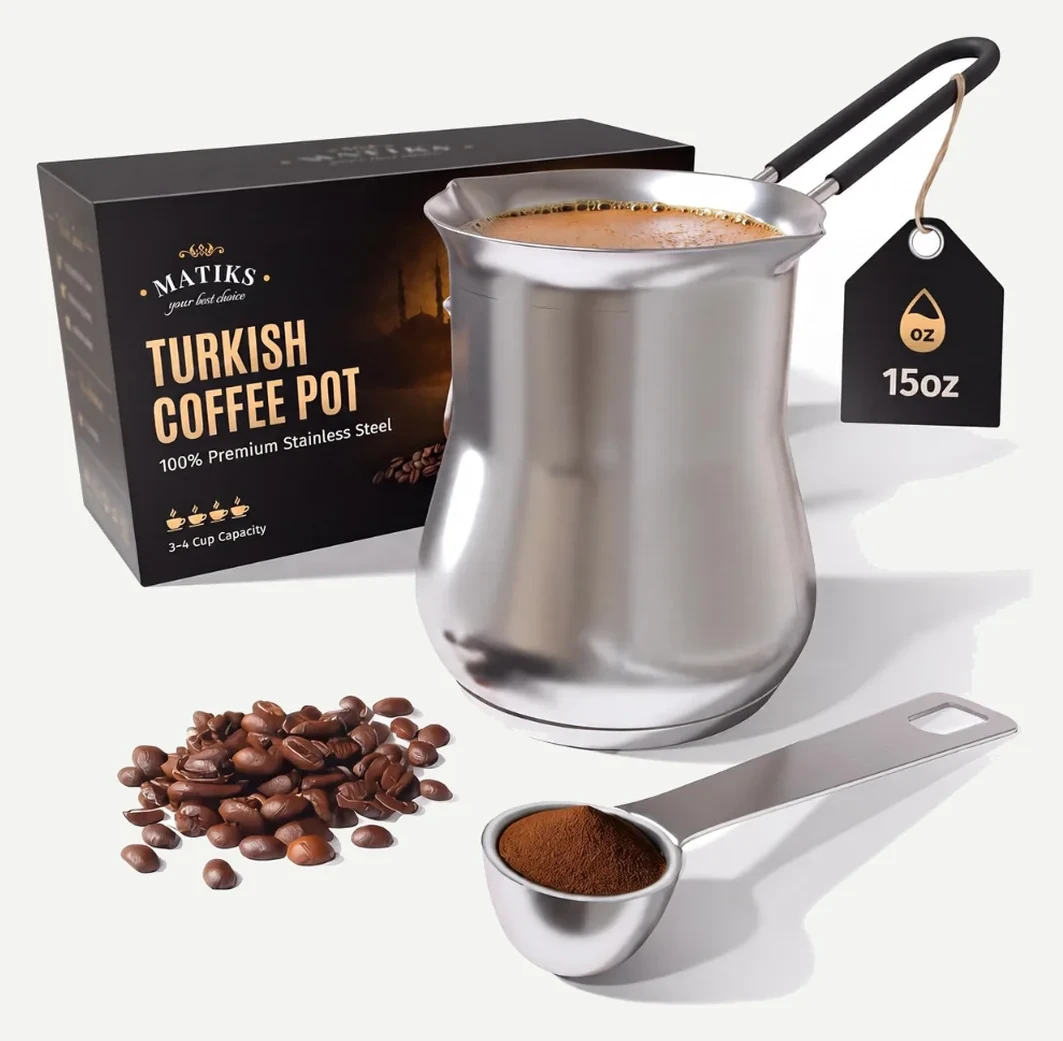
The Jatisse 1L stainless already on this list is nearly three times the volume and made of steel. It is the pot for a crowd and for indifference to maintenance.
This is the pot for the coffee. Copper heats better, 355ml is the correct size for the drink, and the spoon means you can start properly. If you are buying one Jatisse, buy this one unless you genuinely need a litre.
Is the Jatisse Copper Cezve worth it?
Worth it on the copper and the size, held back by what is not published.
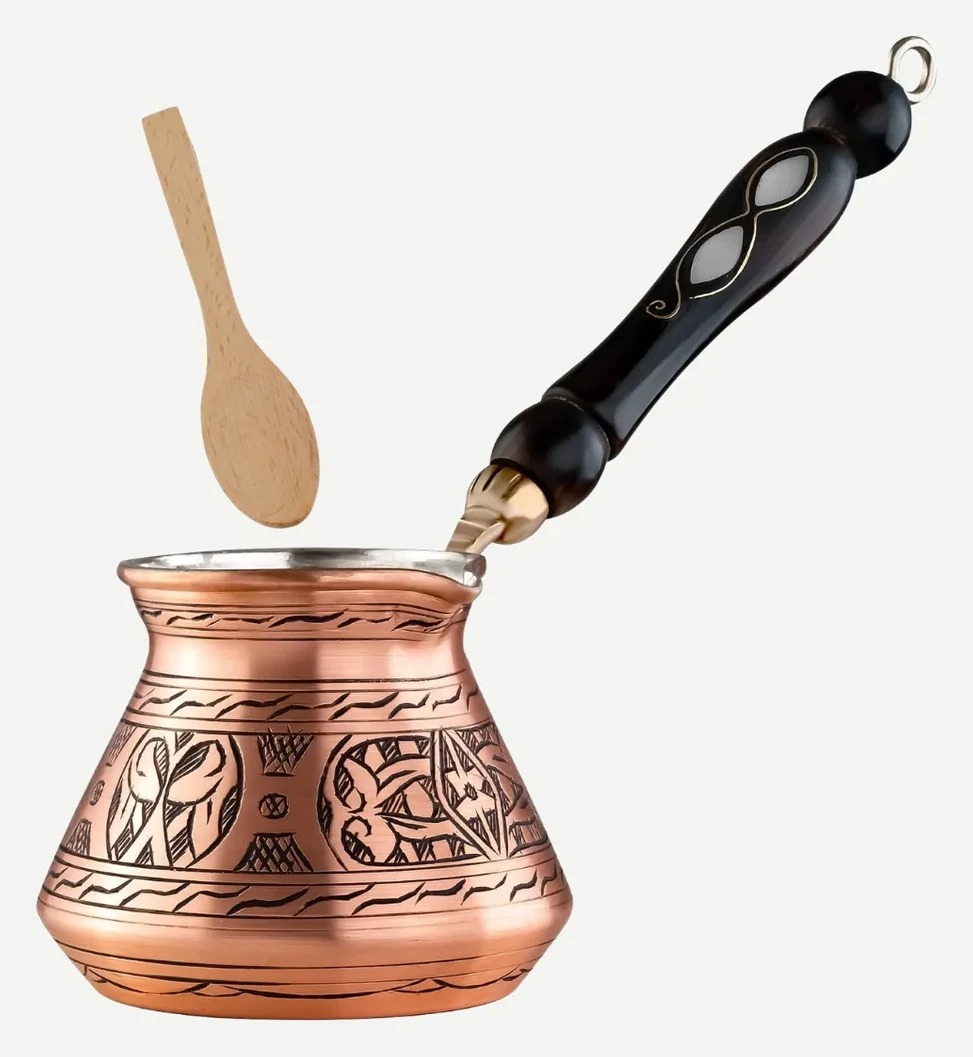
Copper at this size with a dosing spoon included is a good starting kit, and it is priced well below the handmade engraved pots.
Against that, no lining, no thickness, no weight, no warranty and no hob compatibility are stated, and the copper handle will get hot. Our score reflects a page that publishes little, which is fair: an unstated lining cannot be credited.
Who should buy the Jatisse (and who should not)
Buy it if you want copper on a gas hob and are starting from nothing.
It suits somebody making their first proper Turkish coffee who wants the traditional metal and the traditional spoon in one purchase, at a price that does not commit them.
Do not buy it for induction. Do not buy it if an unstated lining bothers you, and it reasonably might. And keep a cloth by the hob for the handle.
Frequently Asked Questions
Is the Jatisse copper cezve lined?
The listing does not say, which is why we record nothing for it. Most traditional copper cezves are tin lined and their makers state it, so it is worth asking before buying.
How many cups does it make?
The maker rates its 355ml at four servings, in the small cups Turkish coffee is served in.
Does the copper handle get hot?
Copper conducts heat very well, so yes, expect it to. Wooden and bakelite handles stay far cooler.
Can it be used on induction?
No hob compatibility is published, and copper is non-ferrous, so assume not unless a ferrous base plate is confirmed.